

Last updated October 31, 2026
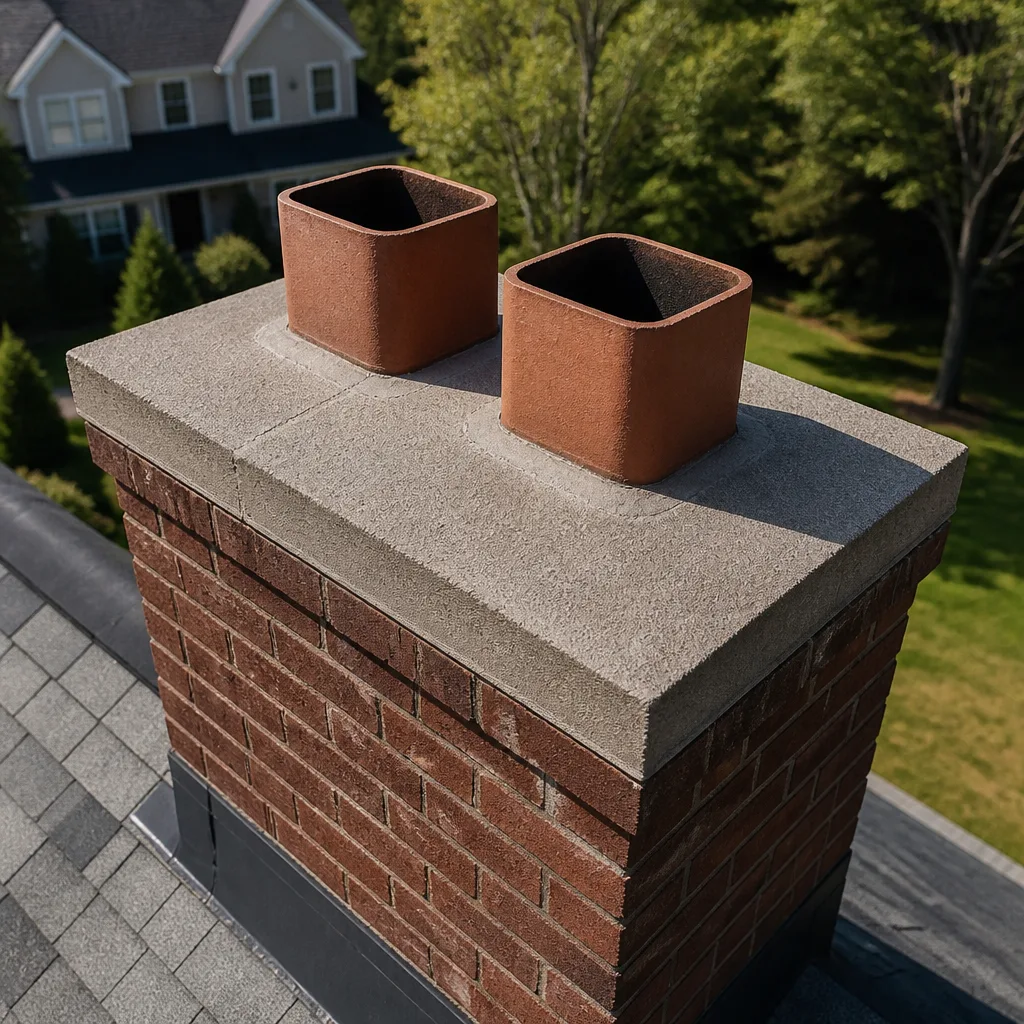 Sweep & inspection
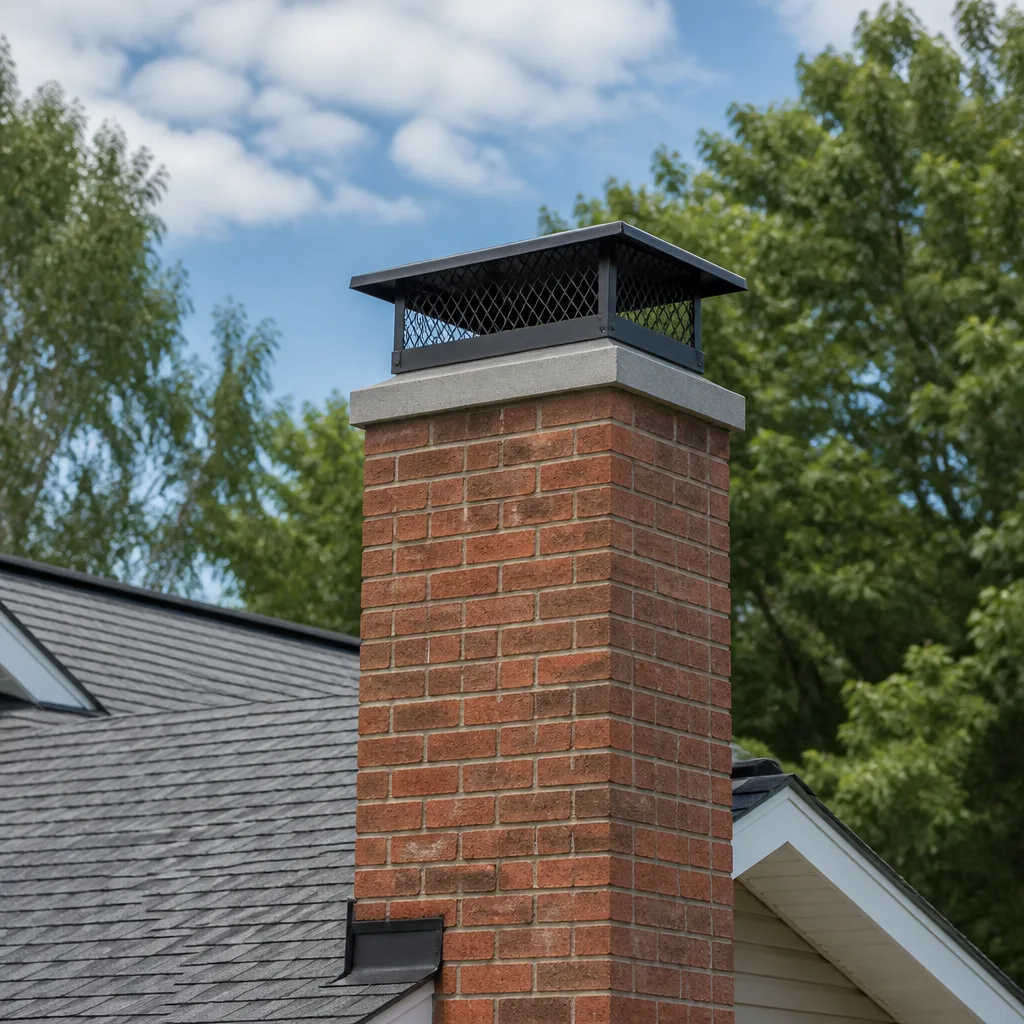 Caps & crowns
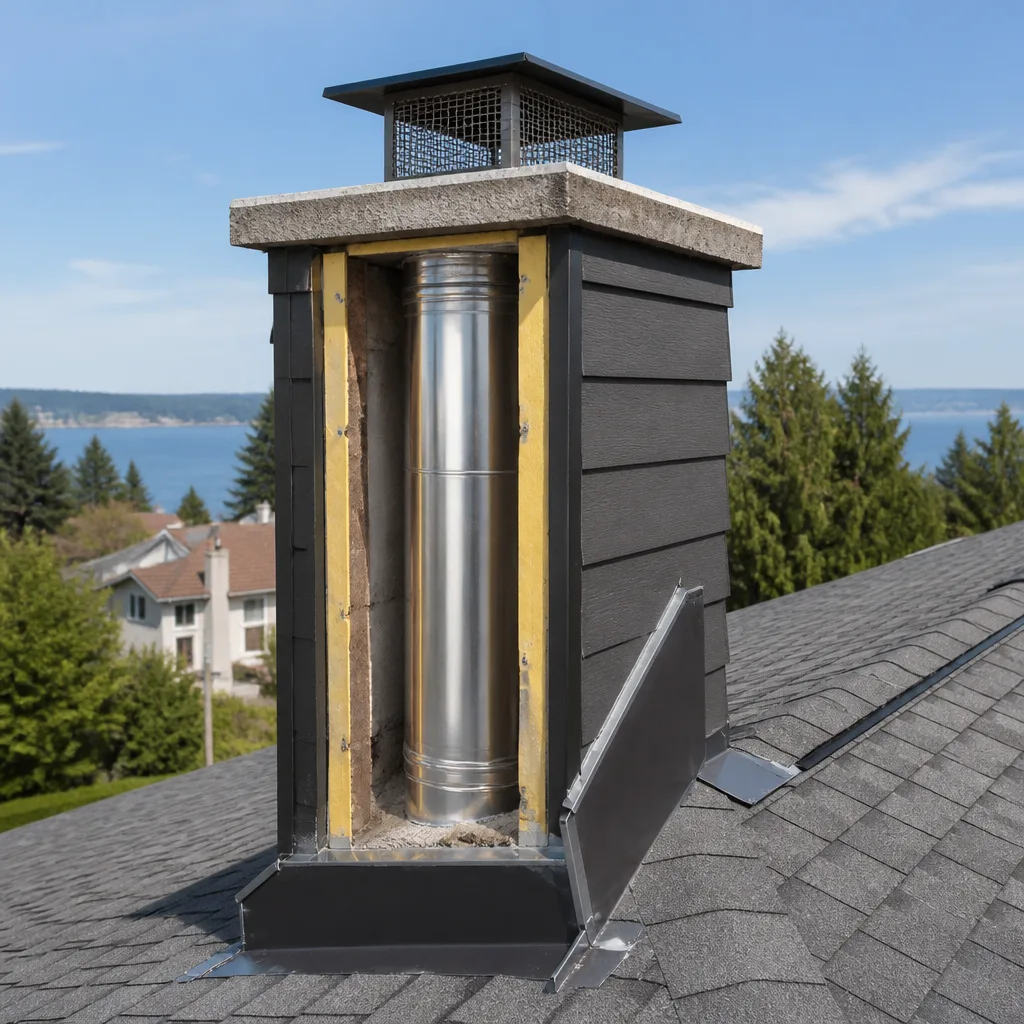 Flue relining
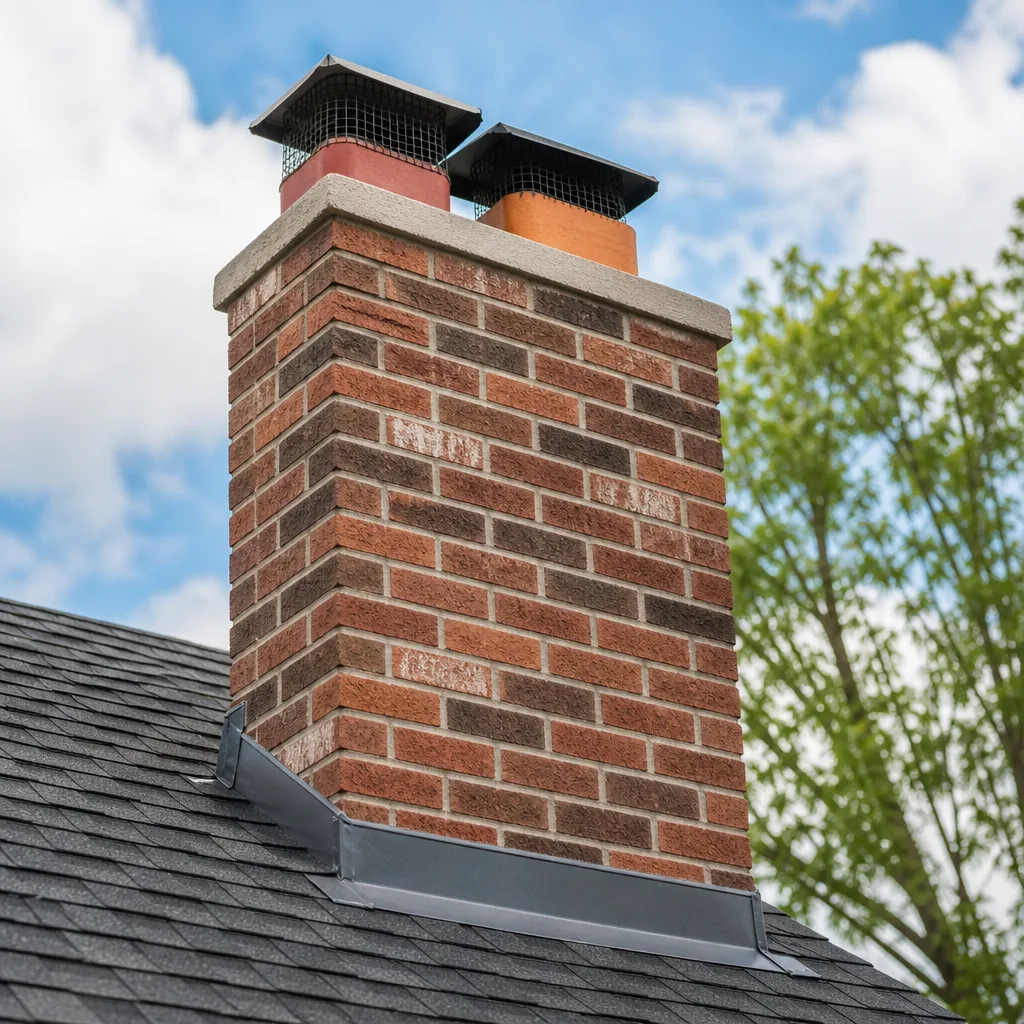 Masonry repair
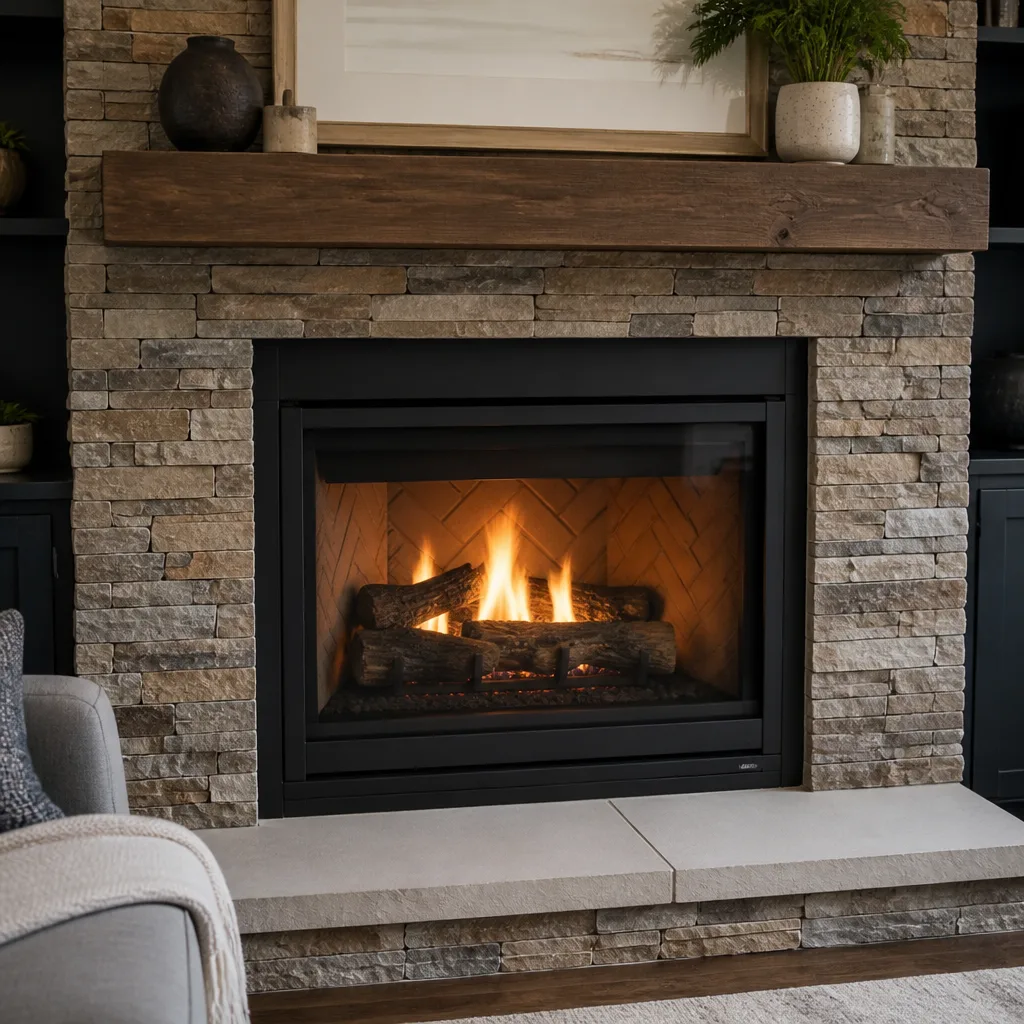 Gas fireplace service
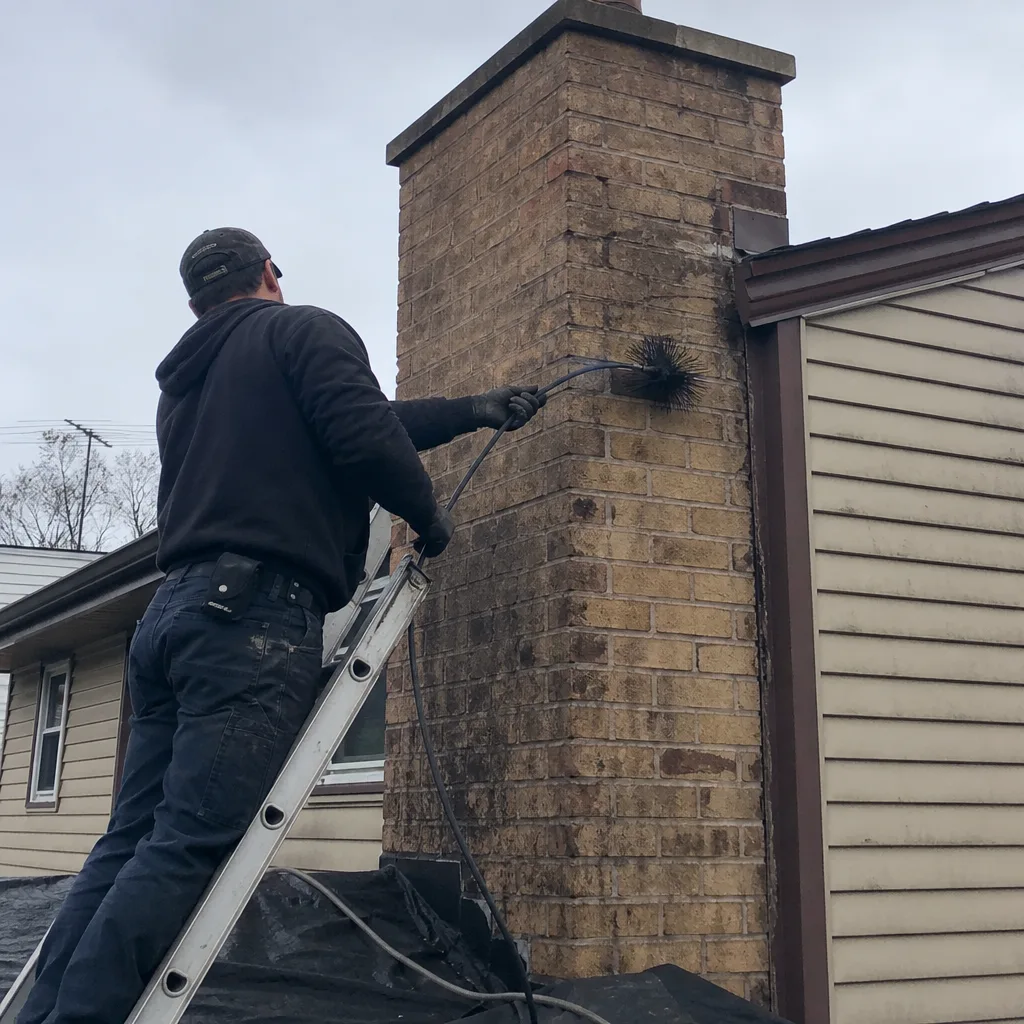
Level 1 sweep and inspection to the NFPA 211 annual standard - flue, crown, cap, and flashing checked and photographed
Chimney sweep logs do not sweep chimneys. They loosen some creosote - which then falls where a brush and vacuum still have to collect it.
The Complete Guide to Chimney Cleaning in Schaumburg
Most chimney fires don’t start because homeowners skipped cleaning. They start because the cleaning that was done didn’t account for the stage of creosote already present inside the flue. Third-degree glazed creosote, the hard, shiny, tar-like substance that forms under specific burning conditions, can survive a standard brush sweep entirely. The brush passes over it, the sweep reports a clean chimney, and the homeowner goes back to building fires with a false sense of security. This guide explains how flue gases, creosote chemistry, and Schaumburg’s specific freeze-thaw cycle interact to determine what your chimney actually needs and when, and you can find seasonal chimney cleaning care for Schaumburg in our year-round homeowner’s guide. By the end, you’ll understand creosote stages, inspection levels, local soil dynamics, and what a complete professional cleaning should include.
Quick Answer
A complete chimney cleaning in Schaumburg requires understanding what stage of creosote has formed inside your flue, not just running a brush through it. Third-degree glazed creosote requires chemical treatment or mechanical removal beyond standard brushing. Homeowners should schedule a Level 1 inspection annually and expect documentation showing liner condition, creosote measurements, and cap and crown status after every professional sweep.
Styles & brands we work with
Table of Contents
- The Three Stages of Creosote and Why Stage Matters More Than Frequency
- How Schaumburg’s Clay Soil and Freeze-Thaw Cycle Damage Chimneys
- Level 1, Level 2, and Level 3 Inspections Explained
- Brush-Only Sweep vs. Full System Approach: What Actually Gets Checked
- What Your Chimney Professional Should Document After a Cleaning
- How Often Should You Clean Your Chimney in Schaumburg?
- DIY Chimney Cleaning: Why the Risks Outweigh the Savings
The Three Stages of Creosote and Why Stage Matters More Than Frequency
Creosote isn’t one substance. It’s a family of combustion byproducts that condense on flue walls in three distinct forms, each requiring a different removal strategy. Understanding which stage has formed in your chimney determines cleaning method, frequency, and safety urgency.
First-degree creosote is the stage most homeowners picture: a light, dusty, soot-like coating that brushes off easily with a standard chimney brush. It forms during hot, efficient fires with good airflow. In this stage, an annual sweep is usually sufficient. A technician in Schaumburg can typically remove first-degree creosote in under an hour, and it poses minimal immediate risk.
Second-degree creosote is a flaky, granular deposit that resembles dry coffee grounds or corn flakes. It adheres more stubbornly to flue walls and often accumulates in the upper third of the chimney where flue gases cool. A rotary brush or loop system, not a flat wire brush, is usually required for complete removal. Left unaddressed, second-degree creosote restricts flue diameter, reduces draft, and increases fire risk.
Third-degree creosote, also called glazed or vitrified creosote, is the stage that causes most catastrophic chimney fires. It forms when burning conditions are poor: unseasoned wood, restricted airflow, or chronically cool flue temperatures. The creosote bakes into a hard, shiny, tar-like glaze that can be more than an inch thick. A standard wire brush cannot remove it. This stage requires chemical treatments like ACS or PCR products, followed by mechanical removal, or in the worst cases a resurfacing procedure like HeatShield to restore a serviceable flue surface. We regularly encounter third-degree creosote in Schaumburg homes where fireplaces were used as supplemental heat for years without proper air supply, particularly in older 1970s and 1980s subdivisions where original fireplace construction predates modern efficiency standards.
Here’s what each stage means for your cleaning plan:
- Stage 1: Standard brush sweep. Annual service is adequate. No special treatment required.
- Stage 2: Rotary cleaning recommended. Consider more frequent sweeps (every 6 to 10 months) and review burning habits.
- Stage 3: Chemical treatment plus mechanical removal. A resurfacing product like HeatShield may be needed. An immediate fire hazard exists until resolved.
How Schaumburg’s Clay Soil and Freeze-Thaw Cycle Damage Chimneys
Schaumburg sits on glacial till with significant clay content. Clay soil expands when wet and contracts when it dries, but the bigger structural threat comes from frost heave. During a typical Schaumburg winter, temperatures fluctuate around the freezing point dozens of times, not just a few hard freezes. Each freeze-thaw cycle exerts upward pressure on the footing and lower masonry of an exterior chimney. Over years, this repeated micro-movement creates hairline cracks in mortar joints, shifts crown alignment, and can unseat clay flue liners.
This local dynamic changes what a chimney cleaning should include. In regions with stable soil and mild winters, a sweep can reasonably focus on creosote removal alone. In Schaumburg, a cleaning that ignores the structural consequences of frost action misses the point. A thorough professional will check:
- The chimney crown for hairline cracks where freeze-thaw water penetration begins
- Mortar joints at the roofline and upper third of the structure, where movement concentrates
- Flue liner seams for signs of shifting or separation
- The smoke shelf and damper area for debris dislodged by freeze movement
What happens if these issues go unnoticed? Water enters through crown cracks, soaks into the masonry, and freezes. The expansion force opens the cracks wider. A cycle begins that eventually requires crown replacement, tuckpointing, or even partial rebuild. We’ve seen Schaumburg chimneys where a $400 crown repair would have prevented a $6,000 rebuild three years later. None of this shows up on a brush-only sweep report.
Level 1, Level 2, and Level 3 Inspections Explained
The National Fire Protection Association defines three levels of chimney inspection under NFPA 211. Most homeowners have never heard of these levels, yet understanding the difference determines whether a hidden problem gets caught before it becomes dangerous.
Level 1 inspection is the baseline evaluation performed during every routine cleaning. It covers the readily accessible portions of the chimney, fireplace, and connector pipes. The technician verifies basic soundness, checks for obstructions and creosote accumulation, and confirms the system meets current clearance standards. If you’re using your chimney exactly as before, with no changes, a Level 1 is all you need. This is standard practice for an annual chimney sweep in Schaumburg.
Level 2 inspection becomes necessary when conditions change. Selling a home, experiencing a chimney fire, a lightning strike or seismic event, or changing fuel type (for example, converting from wood to gas logs) all trigger the Level 2 requirement. This inspection includes everything in Level 1 plus access to attic, crawl space, and basement areas of the chimney, along with a video scan of the flue interior. The camera reveals what eyes alone cannot: hidden cracks, deteriorated mortar, improper liner installation, or unseen blockages. In Schaumburg’s real estate market, a Level 2 inspection is now a standard contingency item for home sales involving a fireplace.
Level 3 inspection is the most invasive and least commonly needed. It’s warranted when a Level 1 or Level 2 inspection reveals a suspected hazard that requires removing building components, such as masonry, drywall, or siding, to access the concealed portion of the chimney. A Level 3 inspection usually precedes major repair or rebuild. We don’t perform Level 3 inspections casually. They’re reserved for situations where structural damage is suspected but cannot be confirmed by video scan alone.
Here’s a straightforward decision guide:
- Routine annual cleaning, no changes: Level 1 is standard and included with your sweep.
- Buying or selling a home in Schaumburg: Level 2 is required by most lenders and insurance policies. A camera scan should be part of it.
- Chimney fire, lightning strike, or suspected structural damage: Level 2 initially, escalating to Level 3 if the scan reveals hidden problems requiring invasive access.
- Converting from wood to gas: Level 2 before the conversion. Liner sizing and material compatibility matter and are not always correct in older Schaumburg homes.
Brush-Only Sweep vs. Full System Approach: What Actually Gets Checked
The difference between a $99 brush-only special and a complete chimney cleaning is not the quality of the brushing. It’s what gets evaluated while the brush is in the flue. A brush-only sweep removes loose debris from the flue liner and nothing else. The technician may never see the crown, may not inspect the firebox masonry, and will not measure liner clearance or check damper function.
A full system approach treats the chimney as an integrated assembly: liner, cap, crown, flashing, smoke chamber, damper, and firebox. Each component affects the others. A warped damper creates poor draft that accelerates creosote accumulation. A cracked crown lets in water that deteriorates the firebox. A missing or damaged cap invites animals and debris that block the flue and create carbon monoxide risk.
When we clean a chimney in Schaumburg, the sweep itself is the central task, but the evaluation covers the full assembly. Here’s what a complete system check includes:
- Flue liner measurement: Is the liner the right size for the appliance? An oversized liner cools flue gases too quickly, accelerating creosote formation.
- Liner material assessment: Clay tile liners crack under freeze-thaw stress. Stainless steel liners corrode in acidic gas conditions. Each material fails differently.
- Cap and spark arrestor inspection: Is the cap present, properly sized, and clear of mesh blockages? Schaumburg’s suburban population means squirrel and bird intrusion is a year-round issue.
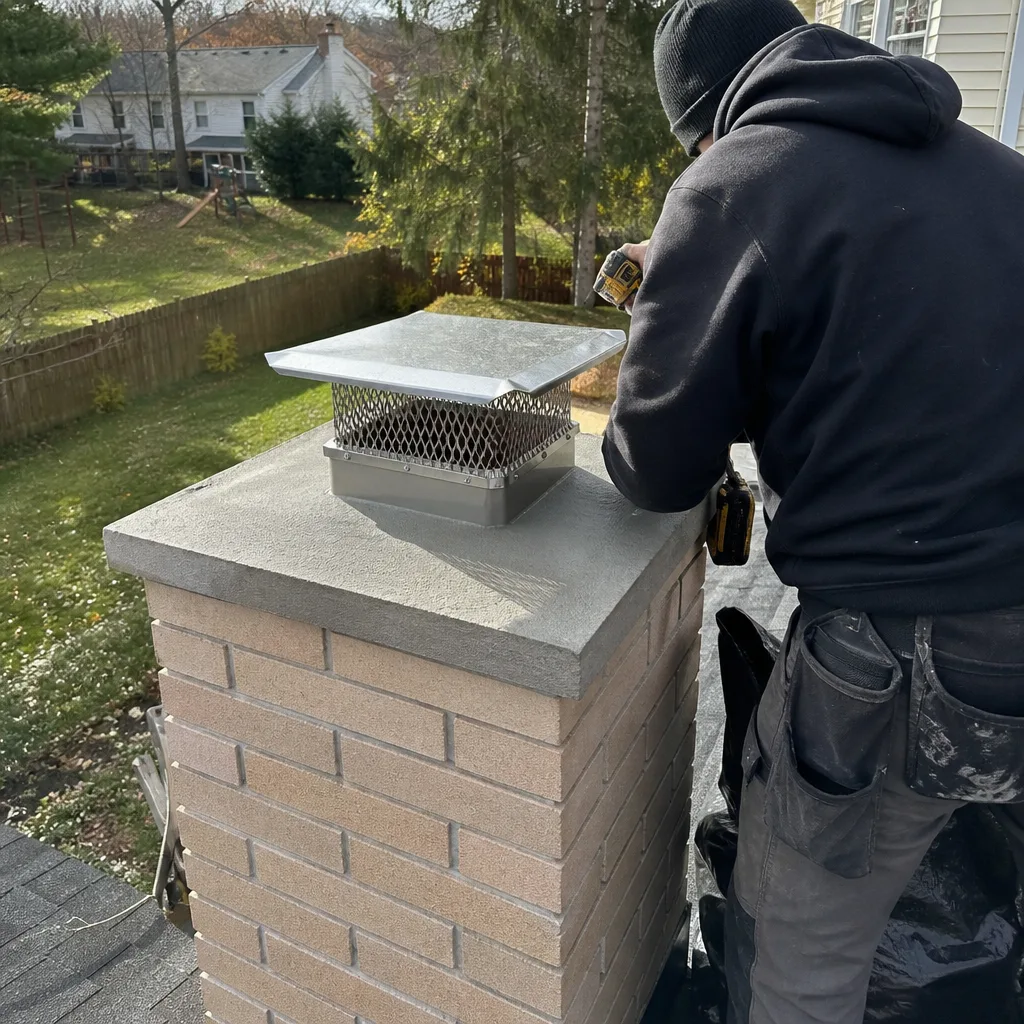
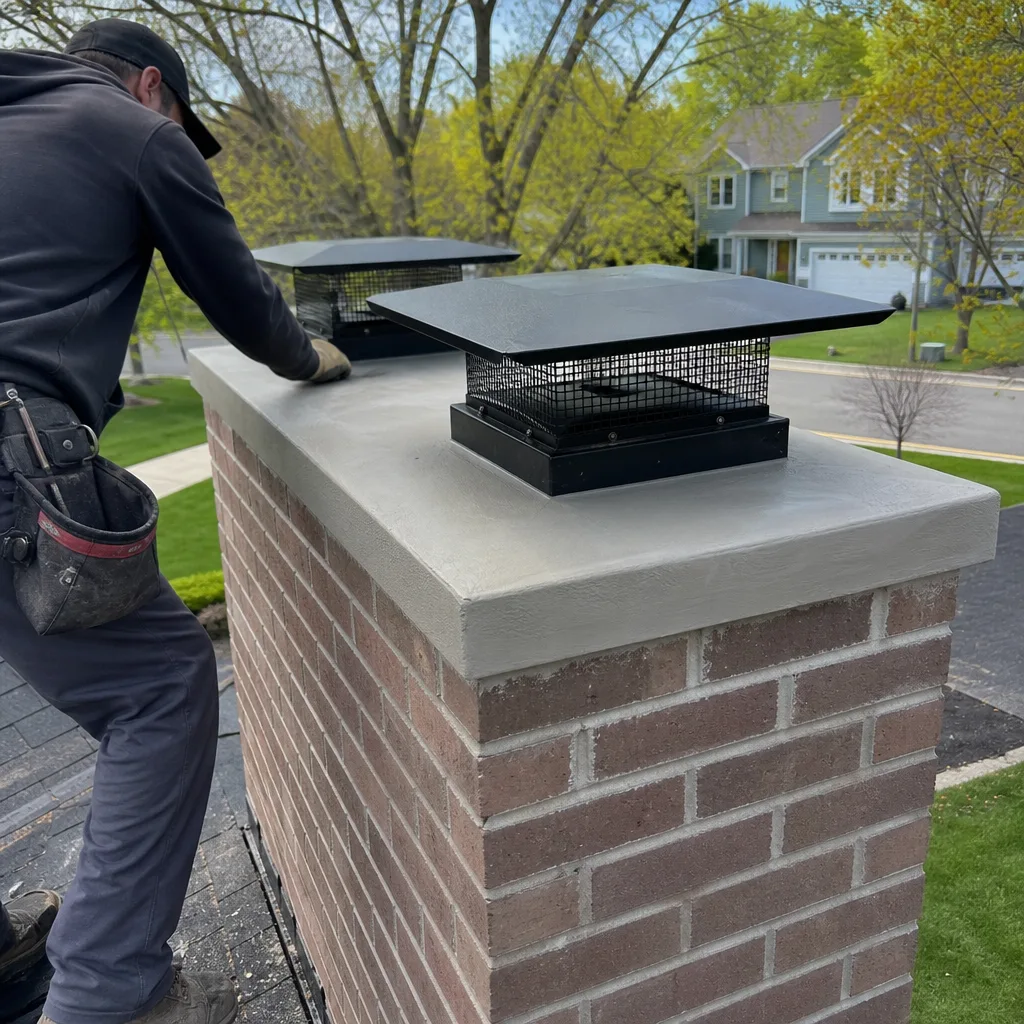
- Crown condition: Hairline cracks are the earliest sign of water intrusion. Sealant can address minor cracking early.
- Firebox and mortar joint evaluation: Crumbling refractory mortar in the firebox is often mistaken for a cosmetic issue. It’s not. Deteriorated firebox mortar exposes the home’s framing to radiant heat.
- Smoke chamber and damper function: A damper that won’t fully open or close changes combustion airflow and wastes heated air year-round.
Many Schaumburg homeowners tell us their previous sweep “took 30 minutes and they never went on the roof.” That’s a brush-only service. A complete system evaluation takes longer because it should. The roof access, crown inspection, and video documentation are not optional add-ons for a chimney that will burn wood safely for another decade.
What Your Chimney Professional Should Document After a Cleaning
A receipt that says “chimney swept” tells you nothing about the condition of your flue. Professional chimney work in Schaumburg should produce documentation that would allow another qualified technician to understand the exact state of your system without ever seeing it. If your sweep doesn’t offer this, ask why.
After a proper cleaning, expect to see:
- Creosote measurement before and after: Measured in inches or millimeters of accumulation, or by stage classification. “Light, moderate, heavy” is vague and inadequate. Ask for the stage and approximate thickness.
- Liner condition assessment: Noted cracks, spalling, offset, or deterioration. If repair is recommended, the specific location and severity should be documented.
- Video scan summary or images: Before and after photos of the flue interior, particularly if a Level 2 inspection was performed. You should be able to see the condition yourself.
- Cap and crown status: Photographs or clear notation of condition, including any cracks, missing mortar, or animal intrusion evidence.
- Firebox and damper evaluation: Condition of refractory panels, mortar joints, and damper operation.
- Recommendations with rationale: Any suggested repair should include the reason, the specific component affected, and whether the issue is urgent or can wait. You should never hear “you need a new liner” without seeing the evidence on camera.
Documentation matters for more than peace of mind. When you sell your home, buyers in Schaumburg are increasingly sophisticated about chimney inspections. A stack of dated reports showing consistent maintenance and documented condition gives you leverage in negotiations. It also gives us, or whichever company services your chimney next, a baseline for tracking changes over time.
How Often Should You Clean Your Chimney in Schaumburg?
The familiar “once a year” rule is a starting point, not a mandate. Frequency depends on how you burn, what you burn, and what your specific chimney system looks like. In Schaumburg, where winter burning season runs from October through April, the answer for most wood-burning fireplaces is once per year, before the heaviest burning months begin.
Here are the factors that shorten the interval:
- Burning unseasoned wood: Wood with moisture content above 20 percent produces cooler fires and dramatically more creosote. Schaumburg’s humid summers mean that wood stored uncovered or directly on the ground absorbs moisture even if it was seasoned when purchased.
- Supplemental heating use: A fireplace used as a primary or supplemental heat source, burning daily or near-daily from November through March, may need cleaning twice per season. The sheer volume of combustion byproducts exceeds what an annual cleaning can manage.
- Airflow restrictions: Homes in Schaumburg built tight for energy efficiency, especially newer construction with sealed windows and modern insulation, can starve a fireplace of combustion air. This creates cooler, smokier fires and faster creosote accumulation.
- Older construction with oversized flues: Many 1960s and 1970s Schaumburg homes have masonry chimney flues sized for wood-burning fireplaces that are too large for efficient modern inserts. Oversized flues cool gases too quickly, accelerating Stage 2 and Stage 3 creosote formation.
A practical rule: if you burn more than two cords of wood in a Schaumburg winter, you should be on a twice-yearly cleaning schedule. If you burn occasionally, a few fires per month or less, annual service is usually sufficient. Gas fireplaces produce no creosote, but they still accumulate dust, spider webs, and debris that can block vents and create carbon monoxide risk. An annual check is appropriate for gas systems too, though the cleaning process itself is lighter.
DIY Chimney Cleaning: Why the Risks Outweigh the Savings
We understand the appeal. A chimney brush kit costs less than $100, and the basic motion of running a brush up and down a flue looks simple enough on video. But before you decide, read our DIY vs Professional Chimney Cleaning: The Schaumburg Homeowner’s Decision Guide. But chimney cleaning involves roof access, ladder work, and the handling of caustic creosote residue. The risks concentrate in three areas:
First, the roof itself. Schaumburg homes range from low-slung ranches to steeply pitched two-story builds. Working on a roof with a wire brush in hand, often in cold temperatures when ice and frost are present, is genuinely dangerous. Falls from roof height are a leading cause of serious injury for homeowners attempting chimney work. We use proper roof brackets, harness systems, and spotter protocols. That equipment costs more than the brush kit.
Second, creosote chemistry. The dust and debris removed during a proper sweep is not ordinary soot. It’s a caustic, carcinogenic material that should not be inhaled or allowed to settle throughout your home. Professional sweeps use HEPA-filtered vacuums and containment systems to keep creosote dust out of living spaces. A DIY sweep with an open fireplace and a drop cloth will inevitably release creosote dust into the room, where it settles on furniture, floors, and in the air you breathe.
Third, incomplete assessment. The most expensive chimney problems are the ones nobody sees while they’re small and cheap to fix. A DIY sweep removes visible soot but documents nothing, measures nothing, and evaluates nothing. The cracked crown, the deteriorating flue liner, the improperly sized damper, the animal nest blocking the upper flue: all remain invisible until they fail. In Schaumburg’s freeze-thaw climate, that failure tends to arrive in February, during the coldest part of the burning season, when emergency repairs cost more and take longer to schedule.
We’re not saying homeowners shouldn’t understand the cleaning process. Understand it thoroughly. Ask questions. Demand documentation. But the physical work belongs on a professional roof with professional containment equipment and a trained eye for structural assessment. The savings from a DIY sweep evaporate quickly when a missed problem becomes a four-figure repair.
Common Mistakes to Avoid
- Assuming “swept” means “sound”: A brush removes creosote. It does not evaluate liner integrity, crown condition, or structural stability. In Schaumburg’s freeze-thaw climate, structural evaluation is non-negotiable, not optional.
- Burning unseasoned wood because it was cheap: Wet wood produces far more creosote per fire than dry wood. What you save on a cord of green wood, you spend on more frequent cleanings and potentially on removing glazed creosote.
- Ignoring the cap and crown between cleanings: Every chimney issue starts small. A hairline crack in the crown widens with each Schaumburg freeze-thaw cycle. A visual check from the ground takes two minutes.
- Treating the chimney and dryer vent as unrelated systems: They’re both exhaust pathways for combustion byproducts. A blocked dryer vent and a creosote-lined chimney are two versions of the same problem: flammable material accumulating in a confined exhaust space. Homes with both wood-burning fireplaces and long dryer vent runs should consider a dryer vent cleaning on the same maintenance schedule.
- Skipping the Level 2 inspection when buying a home: Schaumburg home sales involve rigorous inspection protocols for good reason. A pre-purchase chimney inspection without a camera scan misses hidden damage. The cost of a Level 2 inspection is a rounding error compared to discovering a cracked flue liner after closing.
- Waiting for visible smoke backdraft before calling: By the time smoke spills into the room, the draft problem is usually advanced. Creosote buildup, animal obstruction, or a failing damper all cause symptoms long before visible backdraft. Small performance changes are the early warning sign.
- Choosing the cheapest sweep and skipping documentation: A $99 sweep that produces no report leaves you without a maintenance baseline. In Schaumburg’s competitive market, a documented chimney history adds real value to your home.
See the difference
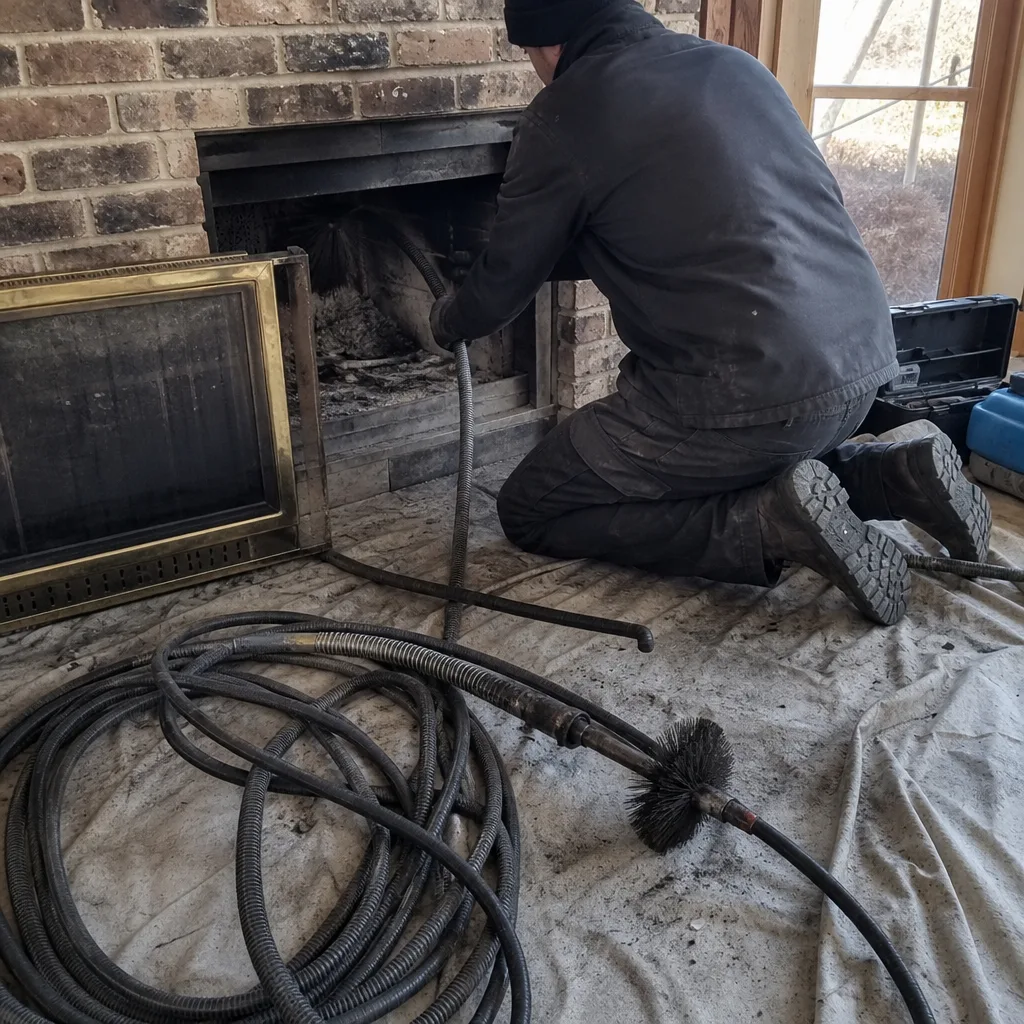 Before
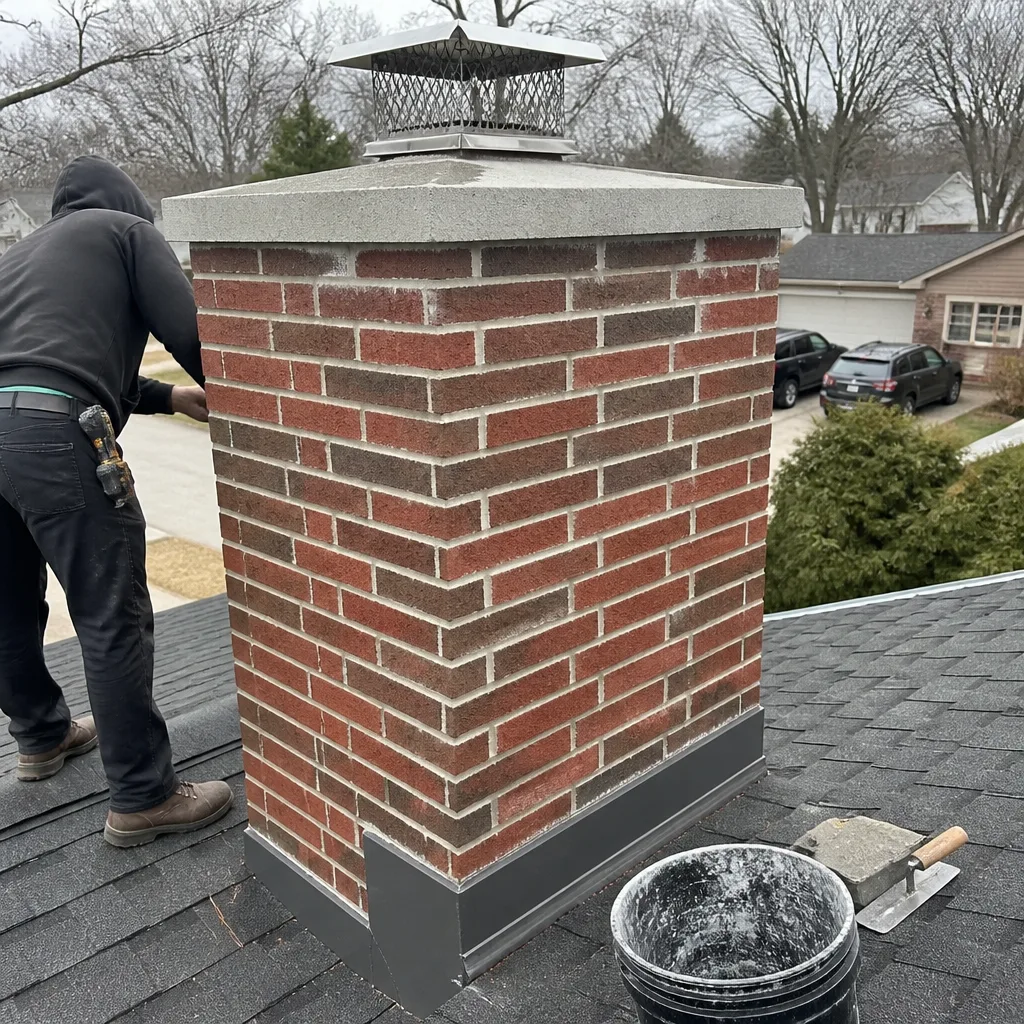 After
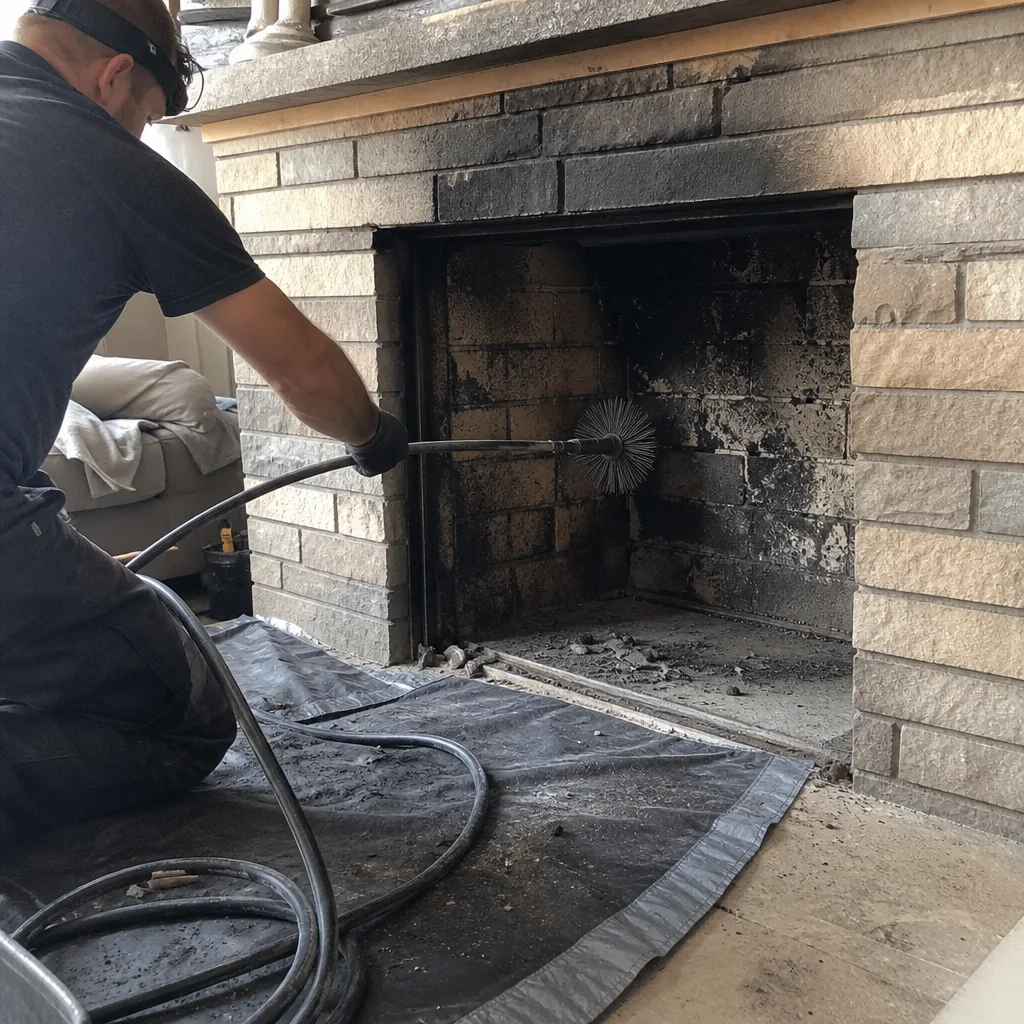 Before
 After
 Before
 After
When to Call a Professional
Call a professional chimney company when you see dark, shiny creosote residue that won’t brush off easily with a fireplace poker, when you notice smoke spilling into the room during use, when you smell a campfire-like odor in your home during humid Schaumburg summers, or when you’ve experienced any chimney fire, however small. Also call before buying or selling a home with a fireplace, and any time you convert from wood to gas or vice versa. If you’re in Schaumburg, Duke Chimney Sweep home offers free estimates and camera-documented inspections for every service visit. Call (844) 660-6510 to schedule.
Frequently Asked Questions
A standard chimney sweep in Schaumburg typically costs between $180 and $350 depending on chimney height, creosote stage, and accessibility. Glazed creosote removal, which requires chemical treatment and mechanical agitation, adds $150 to $400 in most cases. Any quote significantly below $150 should be treated with skepticism: it almost certainly represents a brush-only service without roof access, crown inspection, or documentation. Our How to Hire a Chimney Cleaning Contractor in Schaumburg: A Step-by-Step Guide explains what to look for. Call (844) 660-6510 for a specific quote for your Schaumburg chimney. Estimates are free and include a full system evaluation, not just a brushing.
A complete chimney cleaning in Schaumburg takes 60 to 90 minutes when first-degree creosote is the primary deposit. Second-degree or mixed-stage creosote extends the visit to two hours or more. If a camera inspection is included, which we recommend for any first visit or real estate transaction, add another 20 to 30 minutes. Companies that finish in 20 minutes are providing a brush-only service without structural evaluation or documentation.
You should never accept a liner replacement recommendation without seeing camera evidence yourself. Cracked clay tile, corroded stainless steel, or offset liner sections are visible on a video scan. If the damage is minor, products like HeatShield can resurface the existing flue rather than replacing it entirely, often at a fraction of the cost. Ask to see the scan, ask why replacement is necessary versus resurfacing, and get a second opinion if the explanation doesn’t hold up. For Schaumburg homes, freeze-thaw damage to clay liners is common, but the right repair method depends on the specific crack pattern and location.
You can, but the risks in Schaumburg’s climate and housing stock usually outweigh the savings. Roof access, especially on two-story homes with steep pitches and winter ice, is hazardous. Creosote dust is caustic and requires HEPA containment to keep out of living spaces. And a DIY sweep documents nothing, which means hidden structural issues progress unseen. The value of professional service is not the brushing itself. It’s the evaluation, measurement, and documentation that happens around the brushing.
The specific answer depends on how much you burn. Occasional use, a few fires per year, may produce first-degree creosote that remains manageable even if cleaning is delayed. Daily supplemental burning in a Schaumburg winter can produce second or third-degree creosote within a single season. By year three of neglect, you’re likely looking at glazed deposits that require chemical treatment, possible flue restriction, reduced draft, and elevated fire risk. The longer the delay, the more likely a simple sweep becomes a multi-step restoration.
Gas fireplaces don’t produce creosote, but they still require annual inspection and light cleaning. Dust, spider webs, and debris accumulate in gas vents and can block proper exhaust flow, creating carbon monoxide risk. Gas log sets also produce acidic combustion byproducts that can corrode older flue liners over time. A Level 1 inspection for a gas system is faster and less involved than for wood, but it’s still recommended annually. If you’re converting from wood to gas, a Level 2 inspection with camera scan should precede the conversion.
The Bottom Line
A complete chimney cleaning in Schaumburg is not a checkbox task. It’s a system-level evaluation that accounts for creosote chemistry, local freeze-thaw dynamics, and the documented condition of every component from firebox to crown. Understanding the three stages of creosote tells you why a standard brush doesn’t solve every problem. Understanding NFPA inspection levels tells you when a camera scan should be included. And understanding Schaumburg’s clay soil tells you why structural inspection matters as much as creosote removal. The cleanest chimney is not necessarily the safest one. The safest one is the one where every component has been examined, measured, and documented. If you’re ready for that level of evaluation, we work throughout the Schaumburg area and the surrounding suburbs, including Chimney Sweep in Wheeling and Chimney Repair in Wheeling. Call (844) 660-6510 for a free estimate, and expect a thorough, documented inspection every time.
Written by the team at Duke Chimney Sweep, serving Schaumburg since 2016. Explore more guides & resources on chimney care.