
Last updated October 31, 2026
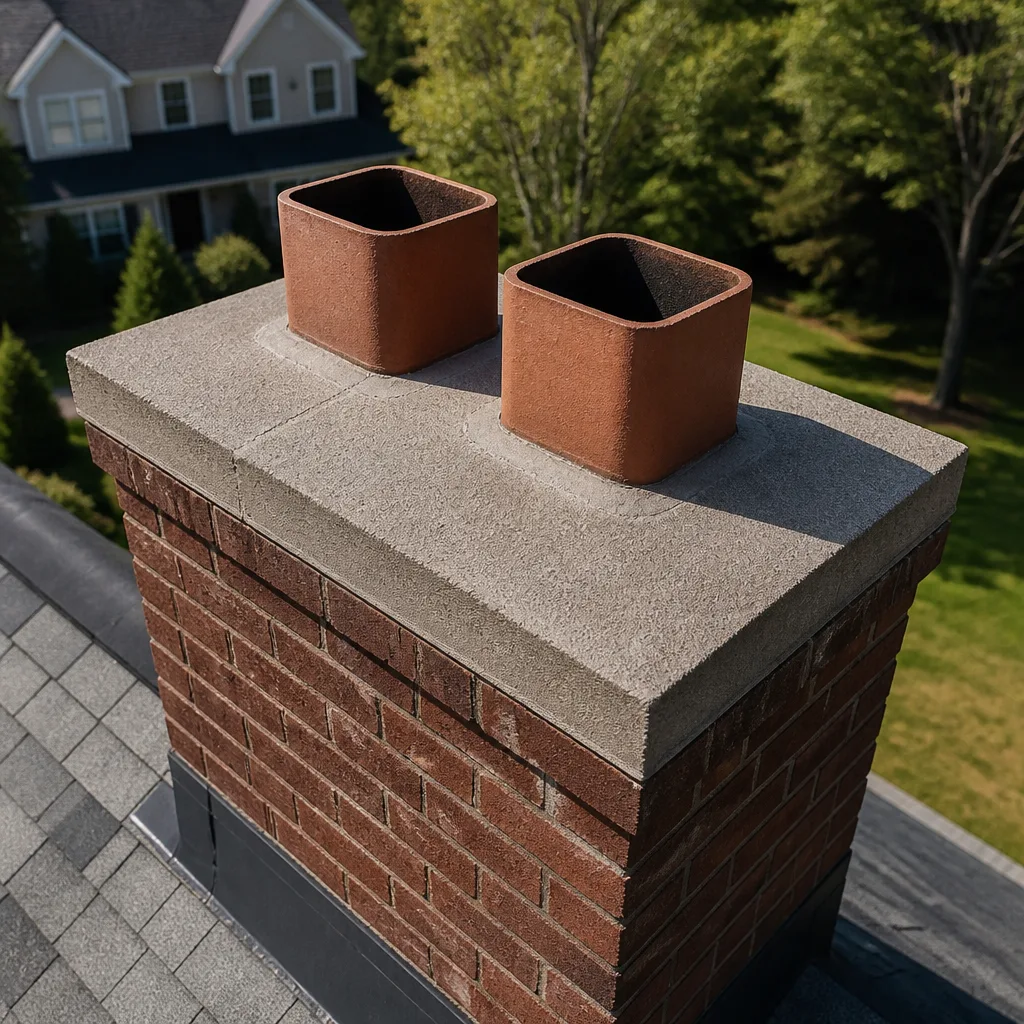 Sweep & inspection
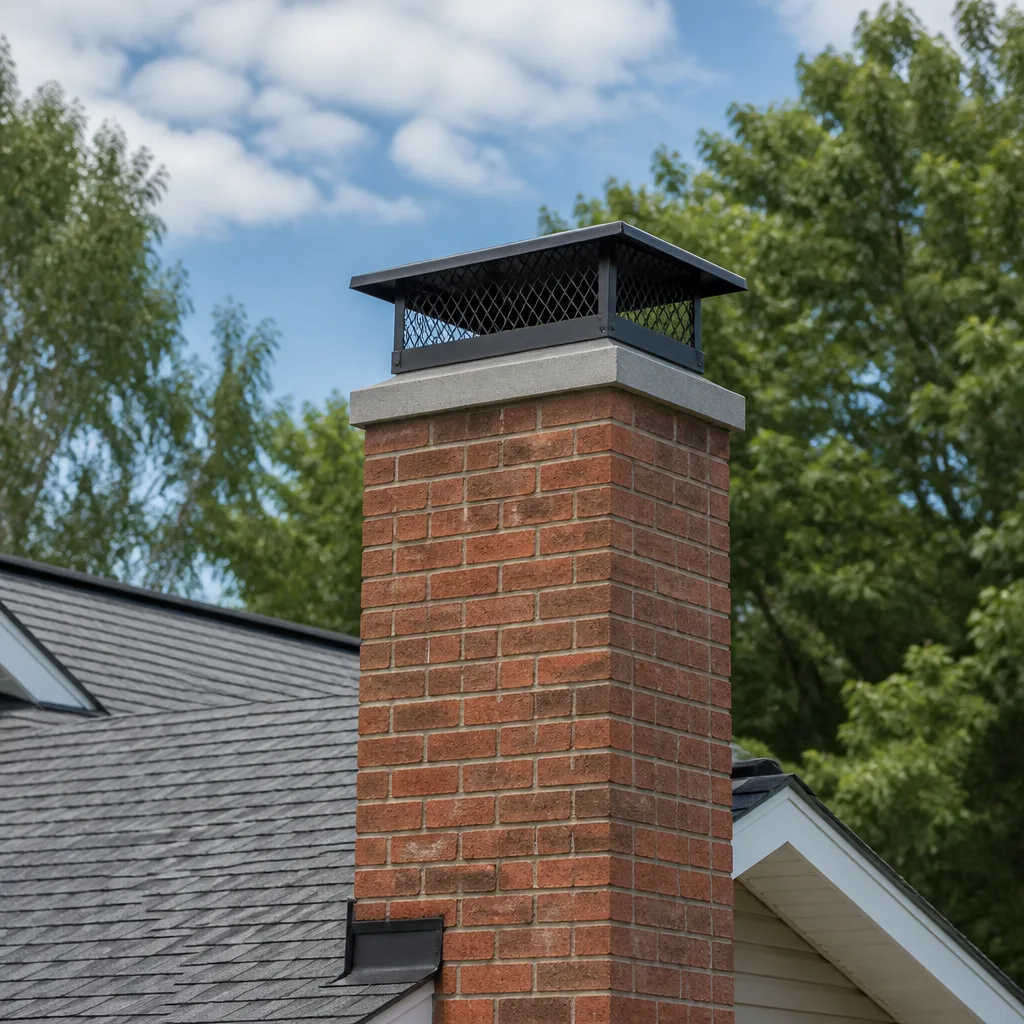 Caps & crowns
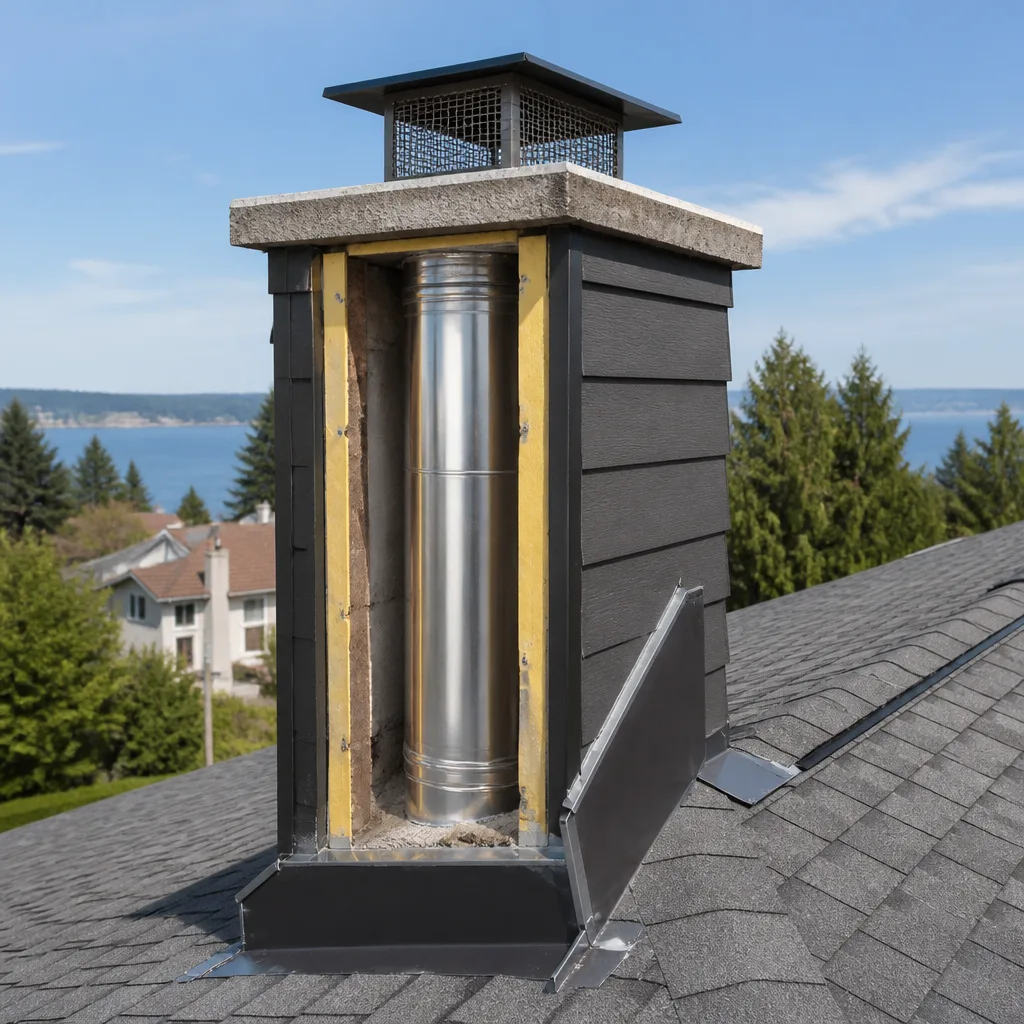 Flue relining
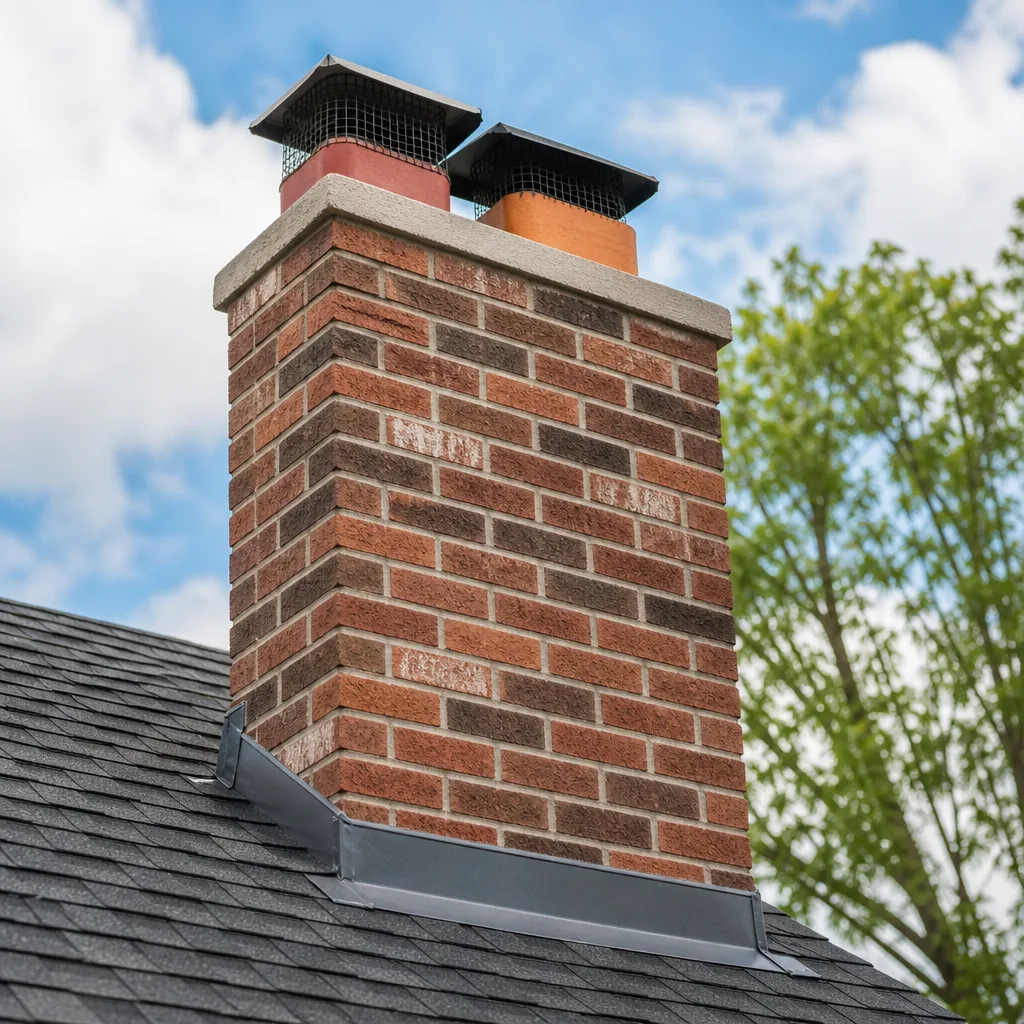 Masonry repair
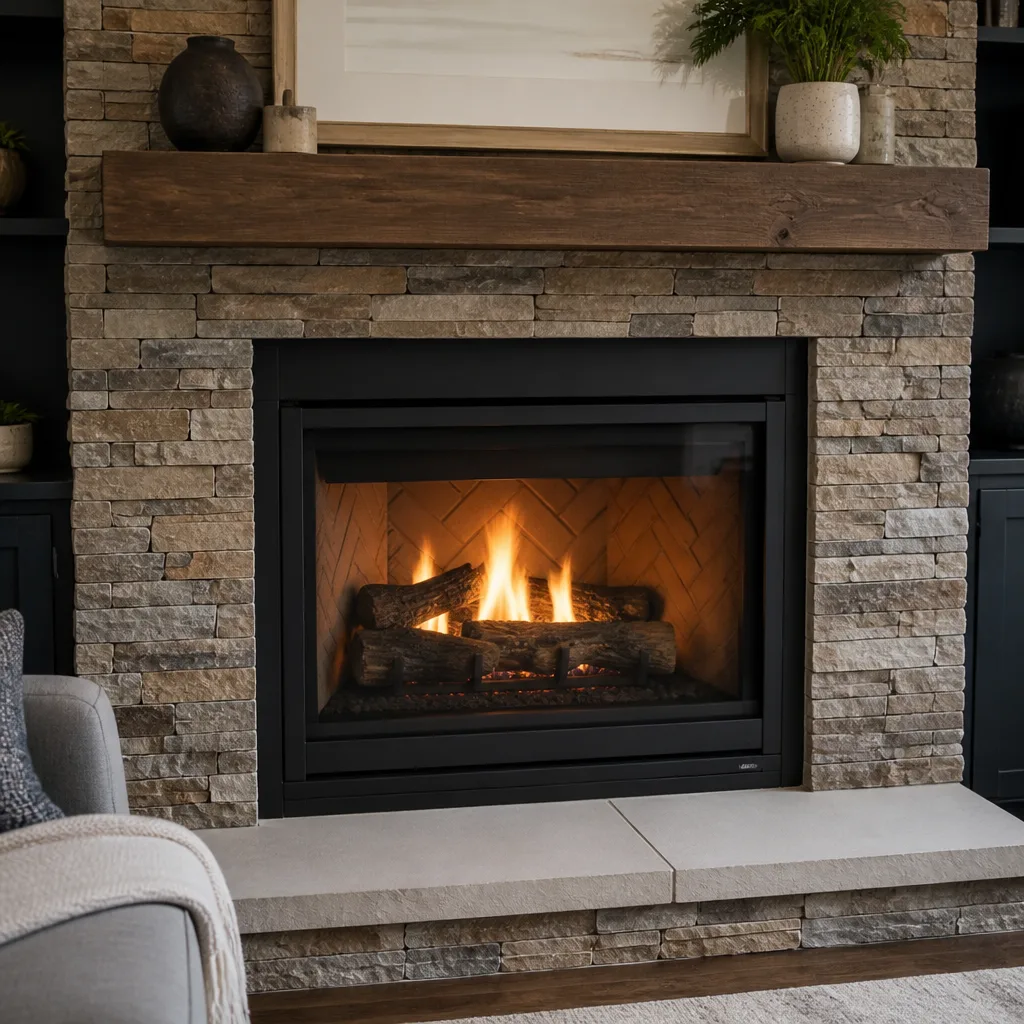 Gas fireplace service
Level 1 sweep and inspection to the NFPA 211 annual standard - flue, crown, cap, and flashing checked and photographed
Chimney sweep logs do not sweep chimneys. They loosen some creosote - which then falls where a brush and vacuum still have to collect it.
The Complete Chimney Sweep Guide for Schaumburg Homeowners
Most chimney sweeps take under an hour. If yours took 20 minutes and the technician never looked up your flue with a camera, you didn’t get a sweep – you got a bill. Schaumburg homeowners often discover this only after a failed inspection or a chimney fire scare, when the creosote they paid to have removed turns out to still be there, glazed onto the flue walls like lacquer. This guide walks through what a specification-grade sweep actually involves, from draft testing to deposit classification, so you know exactly what you’re paying for and why. You’ll learn what separates a diagnostic sweep from a brush-and-go visit, how Schaumburg’s climate and housing stock affect your chimney, and how to read an inspection report without guessing.
Quick Answer
A chimney sweep in Schaumburg isn’t just a brushing – it’s a diagnostic process that includes deposit removal, flue inspection, and draft testing to confirm your system vents safely. Most homeowners should book a Level 1 sweep and inspection annually if they burn wood, or every two years for gas-only systems. In Schaumburg, where freeze-thaw cycles stress masonry and newer builds are tightly sealed, a Level 2 inspection is the responsible default when you buy a home, switch fuel types, or suspect hidden damage.
Styles & brands we work with
Table of Contents
- What a Specification-Grade Sweep Actually Includes
- Level 1 vs. Level 2 Inspections: What Schaumburg Homeowners Need
- The Three Degrees of Creosote and What They Mean
- Draft Testing: What It Catches That a Visual Sweep Can’t
- Why Specification-Grade Materials Matter During Repairs
- A Seasonal Sweep Calendar for Schaumburg
- The Dryer Vent Connection: Your Second Venting System
- Common Mistakes to Avoid
What a Specification-Grade Sweep Actually Includes
The difference between a real sweep and a drive-by brushing comes down to process. A specification-grade chimney sweep in Schaumburg follows a defined sequence that treats the fireplace as a system, not a chore. Here’s what should happen on every visit, in order:
- Interior protection setup: Drop cloths, HEPA vacuum, and sealing around the firebox opening so ash and soot never enter your living space. If a crew walks in without a vacuum capable of filtering fine particulate, they’re not a sweep service – they’re a dust redistribution service.
- Visual pre-inspection: The technician looks up the flue with a flashlight, checking for obvious obstructions, animal nests, and visible liner damage before tools go up.
- Mechanical cleaning: Sized wire or poly brushes matched to your flue dimensions, worked systematically from the firebox upward or from the top down. A properly sized brush is critical – an undersized brush leaves creosote in the corners, which is where chimney fires start.
- Deposit removal: All loosened creosote, soot, and debris is vacuumed out. The technician should show you what came out of your flue.
- Post-sweep inspection: Here’s where the diagnostic work happens. At minimum, the technician runs a camera or spotlight scope up the flue to verify the walls are clean and check for cracks, gaps, or deterioration.
- Draft test: Smoke or pressure testing to confirm the chimney draws properly. This is the step that catches backdrafting issues in Schaumburg’s newer, tightly-sealed homes.
If your last sweep took under 30 minutes and no one put a camera up your flue, you didn’t get this process. You got a brush run. The distinction matters because the cleaning is only valuable if it’s paired with verification – otherwise, you’re paying for the illusion of safety.
Our own crews at Duke Chimney Sweep home follow this sequence on every job, because the diagnostic step is where the real value lives. A clean chimney with a cracked liner is still a hazard. The sweep exposes the condition of the system.
Level 1 vs. Level 2 Inspections: What Schaumburg Homeowners Need
Chimney inspections in Schaumburg follow the NFPA 211 standard, which defines three levels. Most homeowners need to understand Level 1 and Level 2, because those cover the overwhelming majority of residential scenarios.
Level 1 Inspection: Performed during a routine annual sweep. The technician examines the readily accessible portions of the chimney – firebox, damper, flue interior, exterior chimney cap and crown – using a flashlight or basic scope. No special equipment, no confined access. A Level 1 is appropriate when the system hasn’t changed since the last inspection and you burn the same fuel the same way.
Level 2 Inspection: Required when you buy a home, change fuel type (gas to wood, wood to gas insert), experience a chimney fire, earthquake, or severe weather event, or when the previous inspection is unknown. A Level 2 includes everything in Level 1 plus video scanning of the entire flue interior, inspection of accessible attic, crawlspace, and basement portions, and a check of clearances from combustibles.
Here’s what matters for Schaumburg specifically. The village has a substantial stock of homes built between 1970 and 1995, many with masonry chimneys now entering their fourth or fifth decade. Winter freeze-thaw cycles – typically 30 to 40 cycles per season in the northwest suburbs – have had decades to work on mortar joints and brick faces. What looks fine from the ground often isn’t fine close up. Add to that the reality that Schaumburg sees heavy fireplace use from October through March, and the case for a Level 2 at reasonable intervals writes itself.
The practical guidance: if you’ve owned your home more than three years and have never had a Level 2 inspection, you don’t actually know the condition of your flue. A Level 1 catches what’s visible. A Level 2 catches what’s hidden – and in Schaumburg’s housing stock, hidden is where the problems live.
We see this pattern often: homeowner calls us for a sweep, mentions they’ve been in the home for eight years, never had a camera in the flue. The sweep goes fine. The camera finds a spalled brick or a gap between flue tiles that’s been quietly leaking heat into the framing. That’s the difference between cleaning and diagnosis.
The Three Degrees of Creosote and What They Mean
Creosote isn’t one substance. It’s a family of combustion byproducts that varies dramatically in composition, flammability, and removal difficulty. Chimney technicians classify it into three degrees – and the degree is what determines whether you need a sweep, a chemical treatment, or a repair conversation.
- First-degree creosote: A fine, dusty, soot-like deposit. Removed easily with standard brushing. This is what you’d expect after a season of moderate burning with seasoned hardwood. Low ignition risk.
- Second-degree creosote: Flaky, granular, or crunchy. Often shiny in patches. This builds up when fires smolder, wood isn’t fully seasoned, or flue temperatures run low. Brushable, but requires more effort and thoroughness. Moderate ignition risk if left unaddressed.
- Third-degree creosote: Glazed, tar-like, hard. This is what chimney professionals call “glaze creosote.” A standard brush will not remove it – it’s chemically bonded to the flue wall. High ignition risk. Removal typically requires chemical treatments, mechanical scraping, or in severe cases, resurfacing.
Here’s the point that most guide content misses: the degree of creosote isn’t about how often you should have swept. It’s about what condition your burning habits and flue temperatures have created. A homeowner who burns unseasoned wood in a cold flue can produce third-degree creosote in a single season. Another homeowner burning seasoned oak with good draft might go two seasons and only have first-degree buildup.
When our technicians classify deposits during a Schaumburg sweep, that classification drives the recommendation. First-degree: clean and done. Second-degree: clean thoroughly and adjust burning habits – we’ll tell you what to change. Third-degree: clean, then evaluate whether the flue surface itself has been compromised. That’s where materials like HeatShield resurfacing enter the conversation, because you’re no longer dealing with a coating. You’re dealing with a surface that has changed.
Draft Testing: What It Catches That a Visual Sweep Can’t
A visual inspection tells you what the flue looks like. A draft test tells you whether the chimney actually works. Those are different questions, and Schaumburg’s building stock makes the distinction unusually important.
Draft is the negative pressure that pulls combustion gases up the flue and away from your living space. It’s created by the temperature difference between flue gases and outdoor air, combined with the chimney’s height. When draft fails, you get backdrafting – combustion gases and carbon monoxide entering the home instead of exiting through the chimney.
What a proper draft test catches that a visual sweep never can:
- Competing negative pressure: Newer Schaumburg homes built to tighter energy standards – think post-2000 construction with sealed combustion appliances, exhaust fans, and vapor barriers – can depressurize the house enough to overcome chimney draft. The chimney looks clean. The draft fails anyway.
- Flue sizing issues: A flue that’s too large for the appliance won’t heat up enough to establish stable draft. A flue that’s too small can’t move the volume of gas produced. Both conditions are invisible to the eye but obvious under testing.
- Stack effect reversals: In some Schaumburg two-story homes, warm air rising through the house creates pressure differentials that pull air down the chimney when the fireplace isn’t in use. You smell smoke. No amount of brushing fixes that – it’s a pressure problem.
- Damper leakage: A damper that doesn’t seat properly allows conditioned air to escape constantly. The chimney might draw fine during a fire, but you’re losing heated air through a 1/4-inch gap every hour the furnace runs.
A competent Schaumburg chimney sweep tests draft after cleaning, not before – the cleaning changes the flue’s surface and airflow characteristics. The post-sweep draft test confirms the system works at the moment you need it to. If we can’t establish adequate draft, you’ll know that before the first fire of the season, not after you’ve filled the living room with smoke.
Why Specification-Grade Materials Matter During Repairs
Most Schaumburg homeowners will face a repair recommendation at some point – a damper replacement, a chimney cap, a flue tile repair, a crown resurfacing. When that happens, the material choices matter as much as the workmanship. A generic hardware-store damper and a contractor-grade component serve the same nominal function, but they’re not the same product.
The difference lives in the details: metal thickness, seal quality, thermal tolerance, corrosion resistance. A specification-grade damper from a manufacturer like Gelco is built to tolerate hundreds of heating cycles without warping. A big-box damper might warp within two seasons, at which point you’re back to paying for replacement labor. The component was cheaper. The system cost more.
This is why Duke Chimney Sweep stocks and trains on professional-tier brands – DuraFlex, HeatShield, Gelco, Olympia Chimney, Famco, and Copperfield. These are the same suppliers specified by chimney engineers and building contractors, not the consumer-grade alternatives sold at retail. When we replace a damper or install a chimney cap, the component is rated for the duty it will actually see.
The philosophy is simple: restore before you replace, and when you replace, use materials built for the long run. A HeatShield resurfacing, for instance, can restore a damaged flue without a full teardown – a meaningful cost and time advantage over contractors who default to complete relining or rebuilding. Not every flue needs replacement. Many need resurfacing. Knowing the difference requires tools and training to assess the actual condition, not a default to the most expensive option.
For homeowners in Schaumburg and neighboring suburbs, this matters because the work shows in the details. A properly installed Olympia Chimney cap will shed rain and keep animals out for decades. A generic cap will rust through in five years. The initial price difference was modest. The lifetime cost difference is enormous.
A Seasonal Sweep Calendar for Schaumburg
Schaumburg’s climate dictates a predictable chimney maintenance rhythm. Here’s how to think about your sweep schedule through the year:
April – May: Post-winter assessment. Your chimney has just survived another freeze-thaw season. This is the window to have any water-related damage evaluated – spalling brick, deteriorated crowns, flashing gaps. And it’s the cheapest time to book a sweep, because crews aren’t handling seasonal rush demand. Schaumburg homeowners who schedule in spring get faster availability and more flexible scheduling.
June – August: Repair season. Masonry work, crown repairs, liner installations, and HeatShield resurfacing projects are easiest to execute in warm, dry weather. Materials cure faster. Crews can work safely on roofs without ice. If you noticed damage in the spring, this is when to have it fixed – before the burning season begins.
September – October: Pre-season sweeps. This is the rush. Every Schaumburg homeowner realizes simultaneously that the burning season is two weeks away. Book in September if you can. An October sweep is better than none, but you’ll compete for scheduling and may wait two or three weeks.
November – March: Burning season maintenance. If you burn regularly – multiple fires per week – have your creosote level checked mid-season, especially if you notice reduced draft or smoke spillage. Some homeowners burn enough to warrant a second sweep in January. Most don’t.
Documentation for insurance: After every sweep and inspection, keep your report. Schaumburg homeowners who maintain a documented sweep history are in a far better position if they ever file a chimney-related insurance claim. The report proves due diligence – that the system was professionally maintained, inspected, and serviced. That’s the difference between a straightforward claim and a contested one.
The Dryer Vent Connection: Your Second Venting System
Your chimney and your dryer vent are two parts of the same system – the network that moves combustion byproducts, moisture, and heated air out of your home. Schaumburg homeowners who treat them as separate chores miss the point. They’re connected safety infrastructure.
A clogged dryer vent is a fire hazard, plain and simple. Lint accumulates in the vent pipe, restricts airflow, raises dryer operating temperatures, and eventually ignites. The Schaumburg Fire Department responds to dryer-related fires every year, and virtually every one traces back to a vent that hadn’t been cleaned in years. The dryer runs hotter, takes longer, and the homeowner doesn’t notice the change because it’s gradual.
What distinguishes a real Dryer Vent Cleaning in Wheeling service from a brush-on-a-stick is the same distinction that applies to chimney sweeps: diagnostics, verification, and proper equipment. A proper dryer vent cleaning includes:
- Full-length vent inspection to identify transitions, sags, and improper materials (white plastic or foil vents that should be rigid metal)
- Mechanical brushing through the entire vent run, not just the first few feet
- Airflow verification at the exterior termination
- Lint trap and housing cleaning
- Documentation of restriction levels before and after
Most chimney-only companies don’t offer dryer vent cleaning with this level of rigor. Duke Chimney Sweep treats it as a dedicated fire-safety service, not an add-on afterthought. If your dryer takes longer than 45 minutes to dry a normal load, the vent needs attention. That’s the symptom to watch. The chimney and the dryer vent deserve the same standard of care, because they fail in the same way: slowly, invisibly, and without warning.
If you’re in the northwest suburbs, our Chimney Sweep in Wheeling service covers both chimneys and dryer vents with the same specification-grade equipment and documentation standard. The systems are different. The standard isn’t.
Common Mistakes to Avoid
- Skipping the camera inspection: A brush cleaning without a video sweep tells you nothing about the condition of your flue lining. You’ve paid for the appearance of maintenance without the information that matters.
- Burning unseasoned wood in Schaumburg: Fresh-cut wood creates cool, smoky fires that deposit second- and third-degree creosote at an accelerated rate. Schaumburg’s firewood suppliers sell seasoned wood, but it’s on you to verify moisture content. Split wood should read below 20 percent on a moisture meter.
- Assuming a new house means a clean chimney: Newer Schaumburg construction often includes prefabricated chimneys that accumulate creosote faster than masonry. Gas fireplaces still produce acidic condensation that corrodes flue interiors. “New” doesn’t mean “maintenance-free.”
- Replacing instead of resurfacing: When a contractor tells you the flue needs a full liner replacement, get a second opinion on whether resurfacing is viable. HeatShield technology restores many flues that would otherwise be torn out – at a fraction of the disruption and cost.
- Using the wrong damper replacement: A bargain damper that warps within two seasons costs more in labor than the original component. Specify contractor-grade hardware like Gelco or Olympia Chimney components, even on small repairs.
- Ignoring dryer vent symptoms: Clothes that take two cycles to dry, a dryer that’s hot to the touch, a laundry room that smells like heated lint – these are not normal wear. They’re vent restrictions. Schaumburg homeowners who catch them early avoid dryer fires and energy waste.
- Cleaning the chimney but not the chase: For Schaumburg homes with factory-built chimneys, the metal chase housing the flue needs inspection too. Water intrusion through a failed chase cover causes more damage than creosote ever will.
See the difference
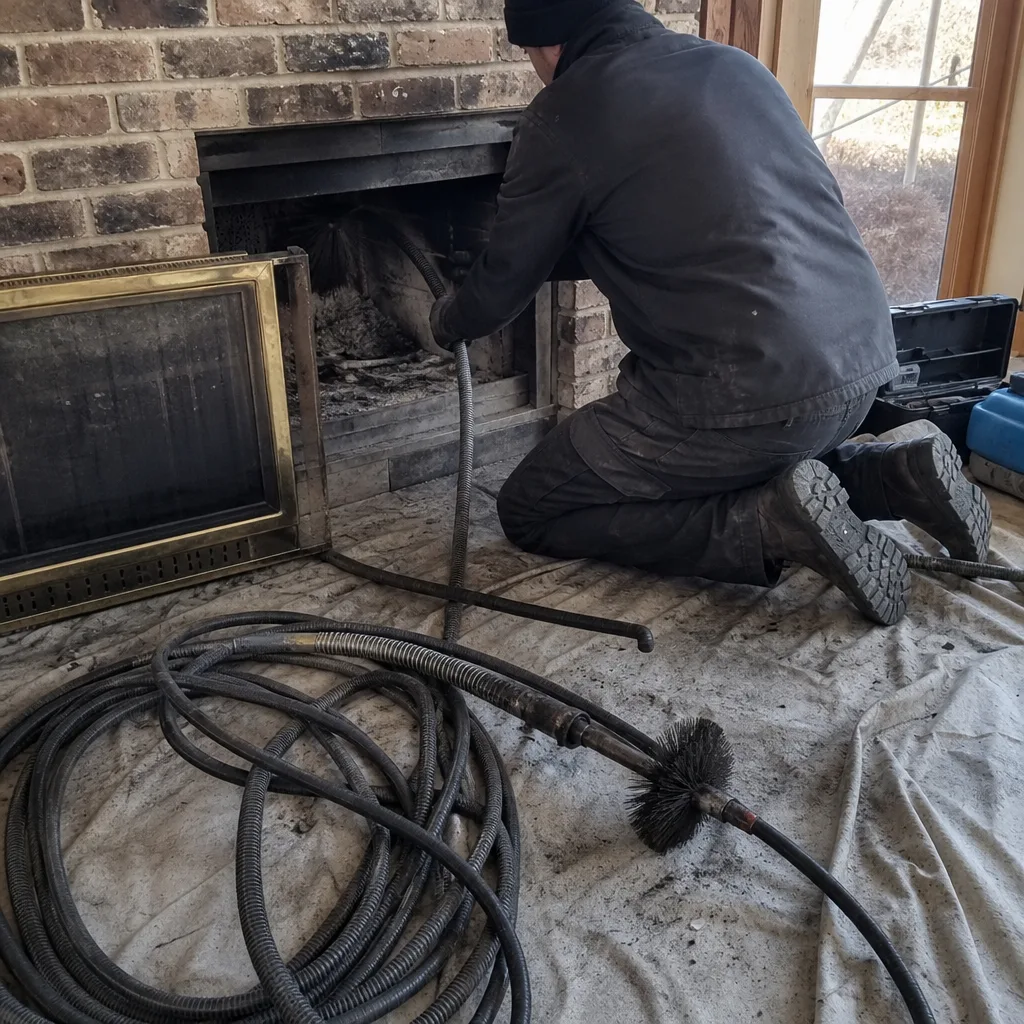 Before
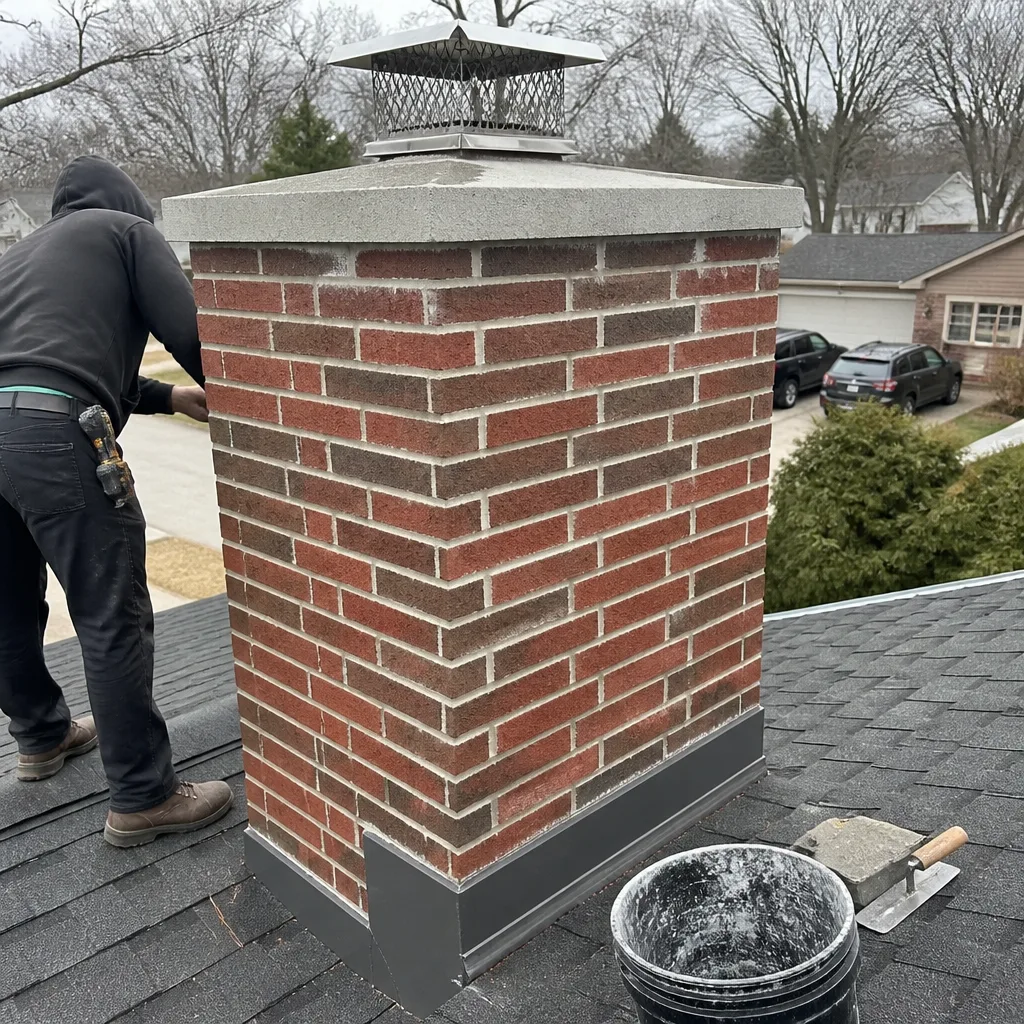 After
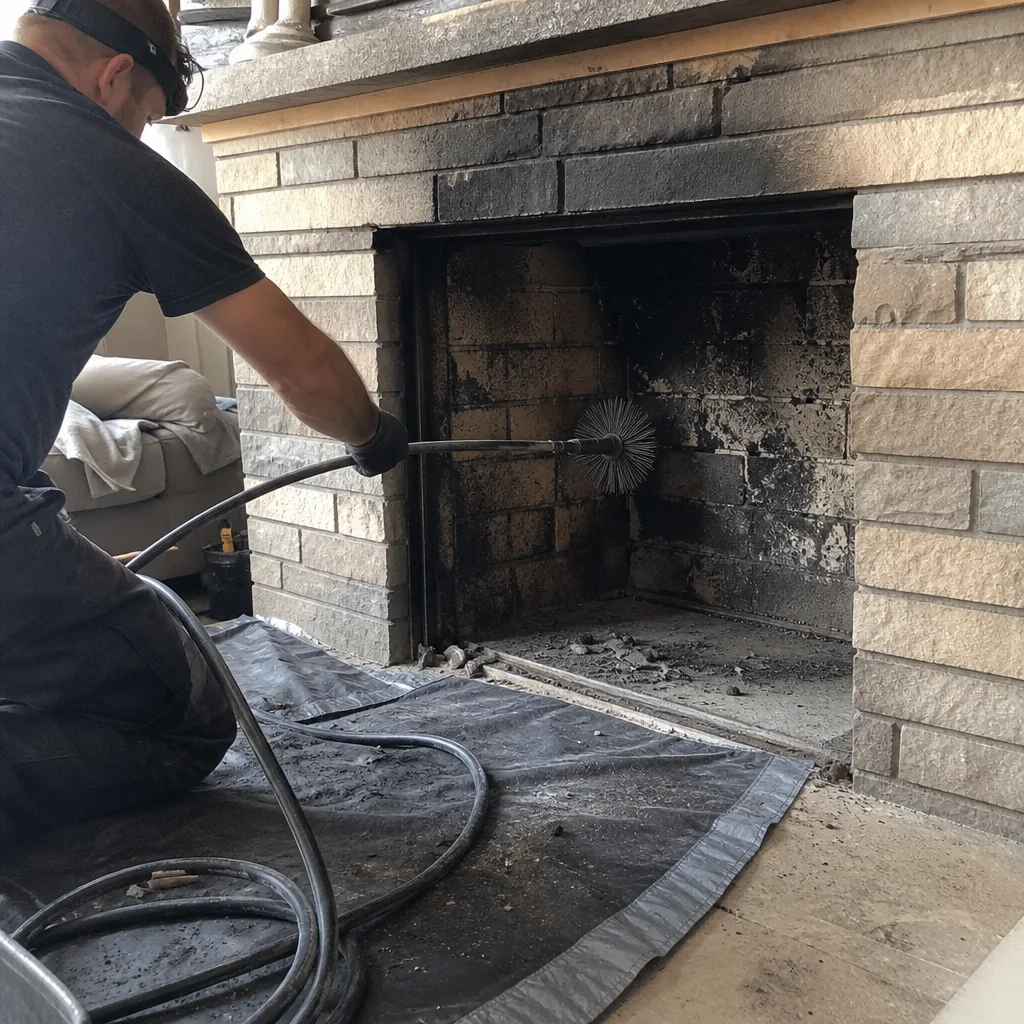 Before
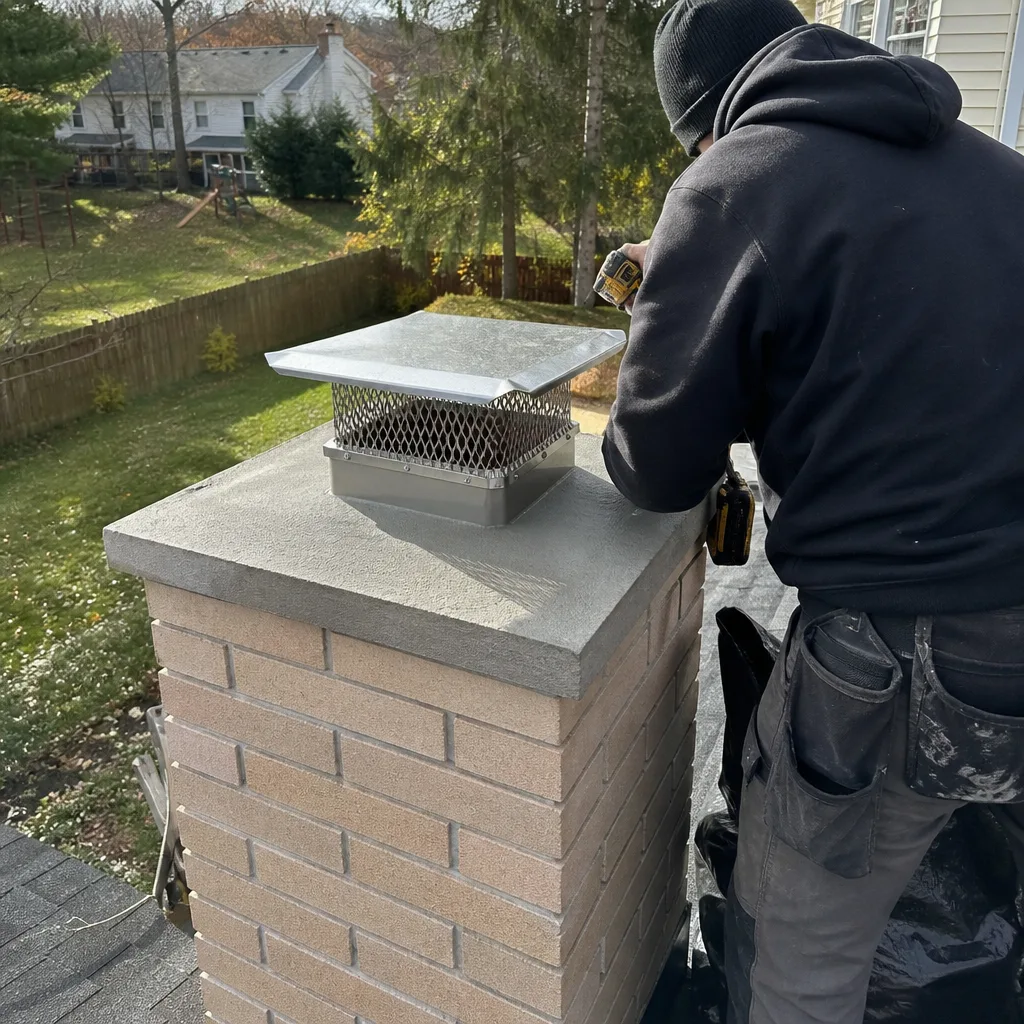 After
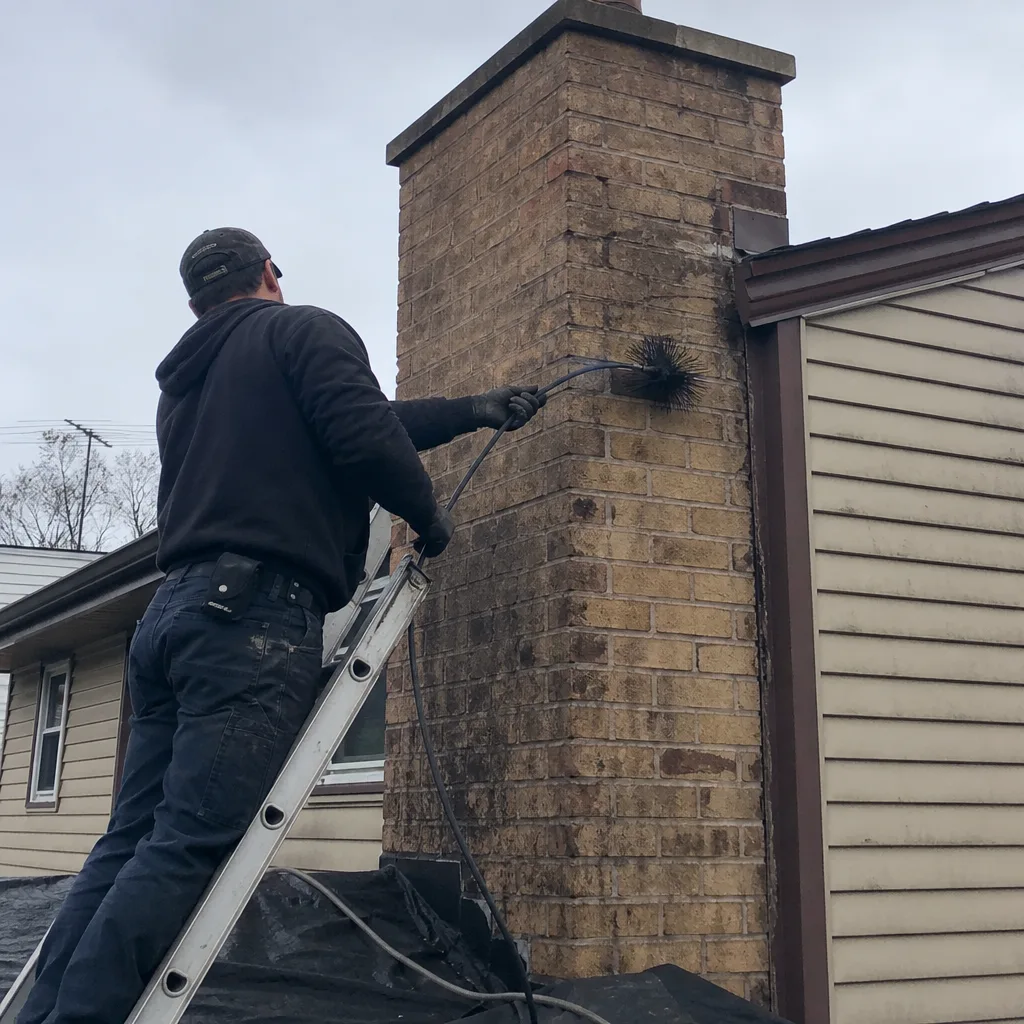 Before
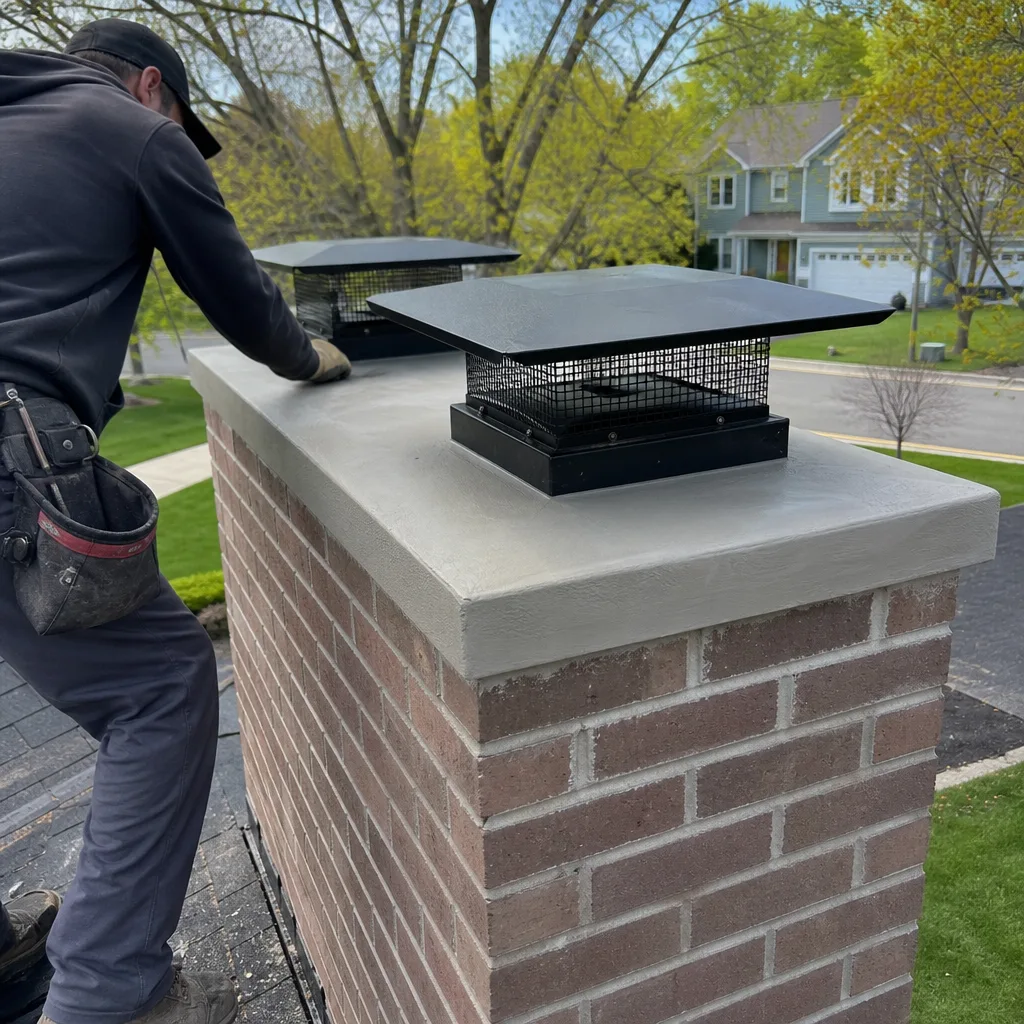 After
When to Call a Professional
Some chimney conditions demand professional attention immediately – not at the next annual sweep. Call a chimney specialist in Schaumburg if you notice any of these: visible smoke entering your living space during fires, a strong smoke smell when the fireplace isn’t in use, falling mortar or brick fragments in the firebox, water staining on walls or ceilings near the chimney, or animals entering through the flue. If you’ve experienced a chimney fire – loud roaring, flames shooting from the top, dense smoke – the system needs a Level 2 inspection before another fire is lit. And if your carbon monoxide detector alerts while the fireplace is in use, evacuate first, then call for an inspection before using the system again. Chimney Repair in Wheeling and the surrounding area requires the same sense of urgency, because compromised flues don’t heal themselves. Duke Chimney Sweep offers free estimates in Schaumburg – call (844) 660-6510 to schedule.
Frequently Asked Questions
A standard chimney sweep and Level 1 inspection in Schaumburg typically runs $180 to $340, depending on flue type, creosote condition, and whether you have a masonry or prefabricated chimney. Level 2 inspections with video scanning add $150 to $300. Repairs discovered during the sweep are quoted separately. Call (844) 660-6510 for an exact quote – estimates are free.
Wood-burning fireplaces in Schaumburg should be swept at least once per year, before or during the burning season. If you burn more than two cords of wood per season, check creosote levels mid-winter. Gas fireplaces should be inspected every two years. The annual rhythm matters because Schaumburg’s freeze-thaw cycles can accelerate masonry damage that a routine sweep catches early.
Not always. Many flues can be restored through resurfacing rather than full relining. HeatShield technology rebuilds the flue surface from the inside, restoring integrity and sealing cracks without demolition. If a contractor recommends a full liner replacement, ask whether resurfacing is an option – and get a second opinion if the answer is a flat no. Replacement is sometimes necessary. It is not always necessary.
Creosote accumulates, and creosote is fuel. The ignition temperature of third-degree glazed creosote is around 2,000°F, well within the range of typical chimney temperatures during a hot fire. You also lose visibility into your flue’s condition – cracks, gaps, and water damage go undetected until they cause structural problems. The sweep isn’t about tidiness. It’s about seeing the system before it fails.
Yes, though less frequently than wood. Gas fireplaces produce acidic condensation that corrodes flue interiors over time. The vents should be inspected every two years to verify clearances, check for corrosion, and confirm that venting is unobstructed. In Schaumburg, many homes with original gas fireplaces from the 1990s are reaching the age where vent inspection is overdue.
You can, technically – but you shouldn’t. A homeowner with a brush set can remove loose creosote, but you can’t see what a camera sees. You can’t test draft. You can’t classify deposits accurately. And you can’t access the flue surfaces that matter most without safety equipment and proper technique. The sweep is a diagnostic process. A brush is just a brush. For Schaumburg homeowners who care about the system’s actual condition, the professional standard is the only standard that delivers information. Call (844) 660-6510 to schedule your sweep.
The Bottom Line
A chimney sweep in Schaumburg is a diagnostic process, not a single event. It includes deposit removal, flue inspection, and draft testing – and each of those steps answers a different question about your system’s safety and condition. Creosote classification tells you whether your burning habits are sustainable. Level 2 inspection tells you whether your aging flue is still safe. Draft testing tells you whether your tightly-sealed Schaumburg home can actually support a fire without backdrafting. When repairs are needed, specification-grade materials from manufacturers like Gelco, Olympia Chimney, and Famco mean the fix lasts rather than failing in two seasons. The homeowner who treats a sweep like an oil change – quick, cheap, forgettable – is the one who discovers a failed liner inspection in November. For more guides & resources on keeping your system safe, explore our blog. The homeowner who treats it as a diagnostic builds a documented maintenance history that protects the home for decades. That’s the difference between a bill and an investment.
Written by the team at Duke Chimney Sweep, serving Schaumburg since 2016.