
Last updated October 31, 2026
 Sweep & inspection
 Caps & crowns
 Flue relining
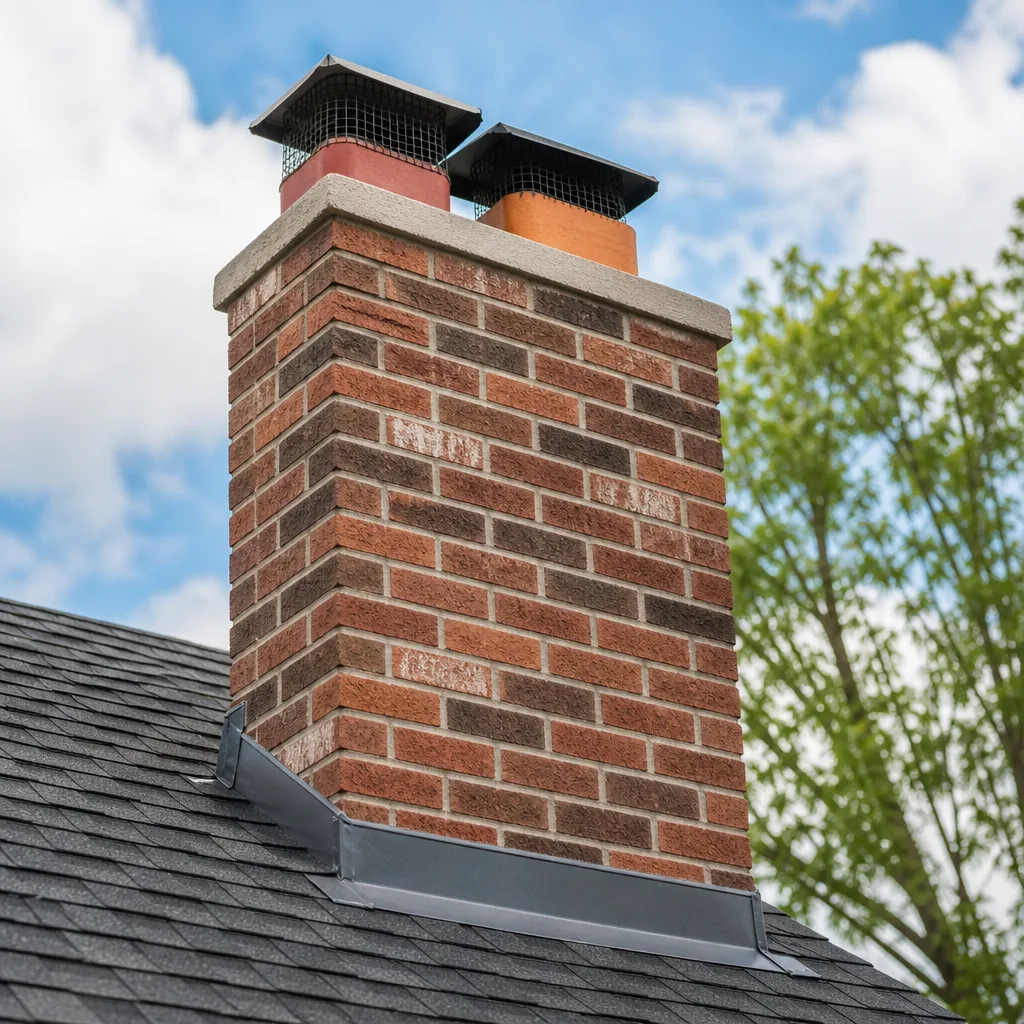 Masonry repair
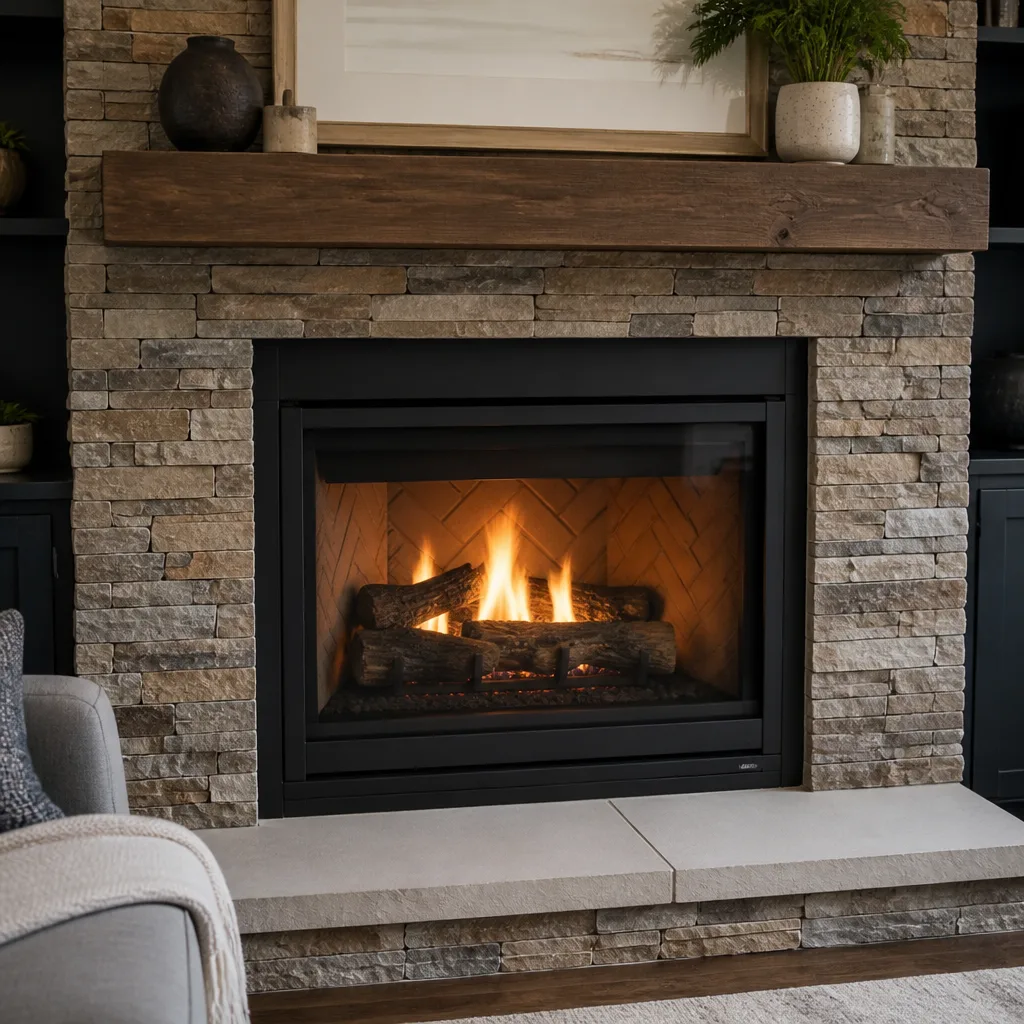 Gas fireplace service
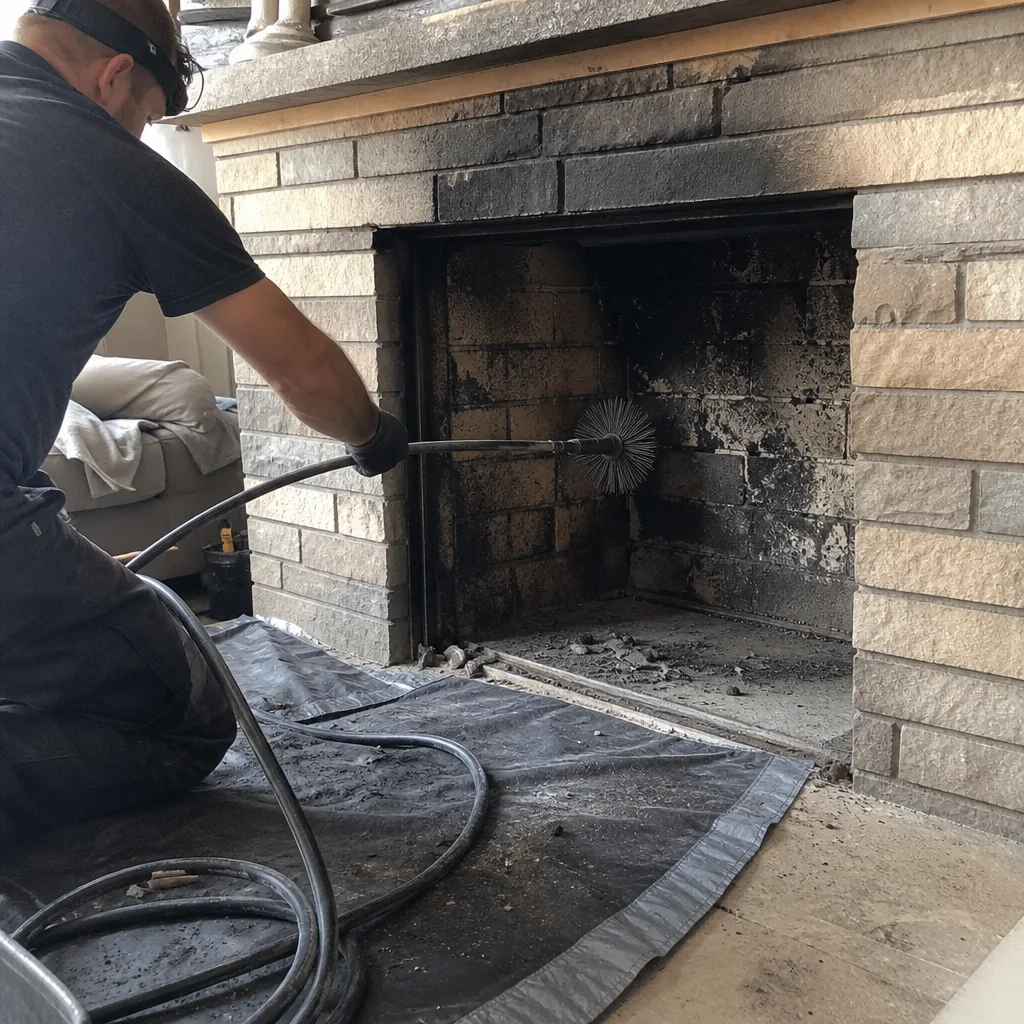
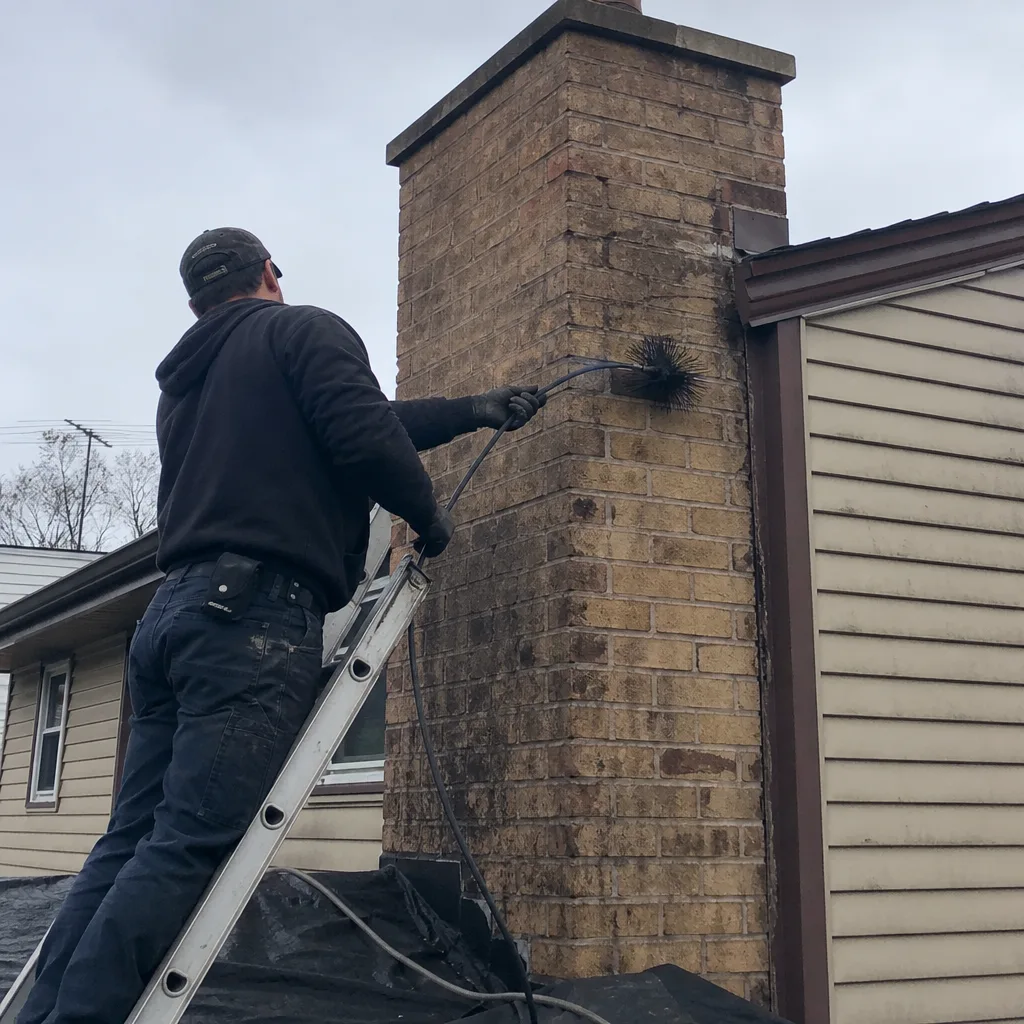
Level 1 sweep and inspection to the NFPA 211 annual standard - flue, crown, cap, and flashing checked and photographed
Chimney sweep logs do not sweep chimneys. They loosen some creosote - which then falls where a brush and vacuum still have to collect it.
Chimney Cleaning Warning Signs: A Schaumburg Homeowner’s Reference Guide
A smoky smell in your living room in July almost never means your firebox needs cleaning. It almost always means your damper isn’t sealing and outside air is pulling down through a flue coated with last season’s creosote. Same symptom, completely different fix. This guide walks you through how to read what your chimney is telling you, organized by the actual component that’s failing rather than a flat list of symptoms. For Chimney Sweep Troubleshooting: Common Problems and How to Fix Them, see our dedicated resource. If you live in Schaumburg, where freeze-thaw cycles punish masonry and long winters stretch burning seasons, you’ll find this particularly useful.
Quick Answer
The most common chimney warning signs in Schaumburg homes are persistent smoky odors when the fireplace isn’t in use, visible creosote buildup on the firebox walls, white staining or spalling on exterior brick, and sounds like dripping or animal activity inside the flue. Each of these points to a specific component failure: the damper, the flue liner, the crown or cap, or the masonry itself. A chimney sweep with a camera inspection can identify which one is actually failing before you spend money on the wrong repair. If you’re in the area, our Chimney Sweep Maintenance Checklist for Schaumburg Homeowners can help you prepare.
Styles & brands we work with
Table of Contents
- Odor Diagnostics: Three Smells That Mean Three Different Things
- Visual Signs You Can Check Safely From Inside the Firebox
- Liner Warning Signs: What a Failing Flue Liner Looks Like
- Crown and Cap Warning Signs: The Roof-Level Problems Most Homeowners Miss
- Damper Warning Signs: The Small Part That Causes Big Smell Problems
- Audible Warning Signs: Popping, Cracking, and Critters
- Stop Using vs. Continue Using: How to Triage What You’re Seeing
- Common Mistakes to Avoid
- When to Call a Professional
- Frequently Asked Questions
Odor Diagnostics: Three Smells That Mean Three Different Things
Your nose is the most reliable diagnostic tool you own, and in Schaumburg, where humidity spikes in summer and cold air sinks in winter, odor behavior follows predictable patterns. The key is identifying which smell you’re dealing with, because each one points to a different layer of the system.
Campfire Smell (Creosote + Downdraft)
A smell like last night’s campfire, especially when the fireplace hasn’t been used in days, is almost always creosote residue inside the flue combined with air moving the wrong direction. Warm air rises, but in summer, the air inside your chimney is often cooler than the air outside, so it sinks. That sinking air picks up the odor of whatever is coating the flue walls and delivers it into your living room. The damper is supposed to block this, but dampers in older Schaumburg homes rarely seal completely. The fix is usually a combination of creosote removal and damper adjustment or replacement, not a simple cleaning of the firebox itself.
Acrid or Chemical Smell (Flue Gas Leakage)
An acrid, sharp smell that resembles burnt plastic or chemicals is a different animal entirely. This indicates flue gas is escaping through a crack or gap in the liner rather than exiting through the top of the chimney. Flue gas contains carbon monoxide, which is why this smell should never be ignored. In Schaumburg homes built before the 1980s, clay tile liners are common, and clay tiles crack over time from thermal stress. When they do, the gases they were containing seep into the space between the liner and the chimney structure, and from there into your home. This is a liner-level problem, not a cleaning issue.
Musty or Damp Smell (Water Intrusion)
A musty, basement-like odor coming from the fireplace usually means water is getting in somewhere above. The culprit is typically a cracked crown, a missing or damaged cap, or flashing that’s pulling away from the roof. In Schaumburg, freeze-thaw cycles are brutal on masonry. Water soaks into small cracks during warmer days, freezes and expands at night, and widens those cracks over successive winters. What starts as a faint musty smell in spring becomes visible spalling by year three or four. The fix here is at the top of the chimney, not inside the firebox.
Visual Signs You Can Check Safely From Inside the Firebox
Before you call anyone, there are several things you can check yourself with a flashlight and a bit of patience. These don’t require climbing on the roof or removing anything. You’re just looking at what’s visible from where you’d stack the wood.
Here’s what to look for, in the order that matters:
- Shiny, tar-like buildup on the firebox walls above the damper. This is third-degree creosote, the most dangerous form. It’s difficult to remove and highly combustible. If you see it, stop using the fireplace until it’s professionally removed.
- Flaking or spalling brick faces inside the firebox. This means heat and moisture have compromised the firebrick. It’s not just cosmetic. Spalled firebrick exposes the structure behind it to direct flame.
- Gaps or missing mortar between firebricks. Run your finger along the joints (when cool, obviously). If mortar crumbles at a light touch, heat can reach materials that were never meant to handle it.
- White staining or crystallized deposits on the interior walls. This is efflorescence, a sign that moisture is moving through the masonry. It tells you water is in the chimney structure somewhere.
- Rust on the damper or metal components. Rust means consistent moisture exposure. In Schaumburg’s climate, this often traces back to a crown or cap issue.
- Debris at the base of the firebox that you didn’t put there. This could be pieces of flue tile, bits of mortar, or nesting material. Each one tells a different story, and none of them are good.
None of these checks require tools beyond a flashlight. What they do require is the willingness to actually look, which surprisingly few homeowners ever do. If you see any of these conditions, the next step is a camera inspection, not a guess. A camera sees what you can’t from the firebox floor: the full length of the flue, the condition of the liner, and any gaps that are invisible from below.
Liner Warning Signs: What a Failing Flue Liner Looks Like
The flue liner is the single most important functional component in your chimney, and it’s also the one you can’t see without specialized equipment. In Schaumburg, where many homes date from the 1960s through the 1980s, clay tile liners are the norm. Clay tile works well when it’s intact. When it’s not, the failure follows predictable patterns.
Signs of a failing liner, from most to least urgent:
- Pieces of clay tile in the firebox. If you find terra cotta-colored fragments in the ash, your liner is actively shedding material. This is immediate stop-use territory.
- Visible cracks or gaps when you shine a light up the flue. You may only see the first few feet from the firebox, but that’s often enough to spot obvious damage.
- Smoke entering rooms other than the one with the fireplace. This means flue gas is finding alternate paths through the structure.
- A chimney fire that occurred in the past. Any history of chimney fire, even one that seemed minor, compromises clay tile liners permanently. The thermal shock cracks them.
- White powdery deposits on exterior brick. Moisture is moving through the chimney structure, which often traces back to liner gaps allowing condensation to escape.
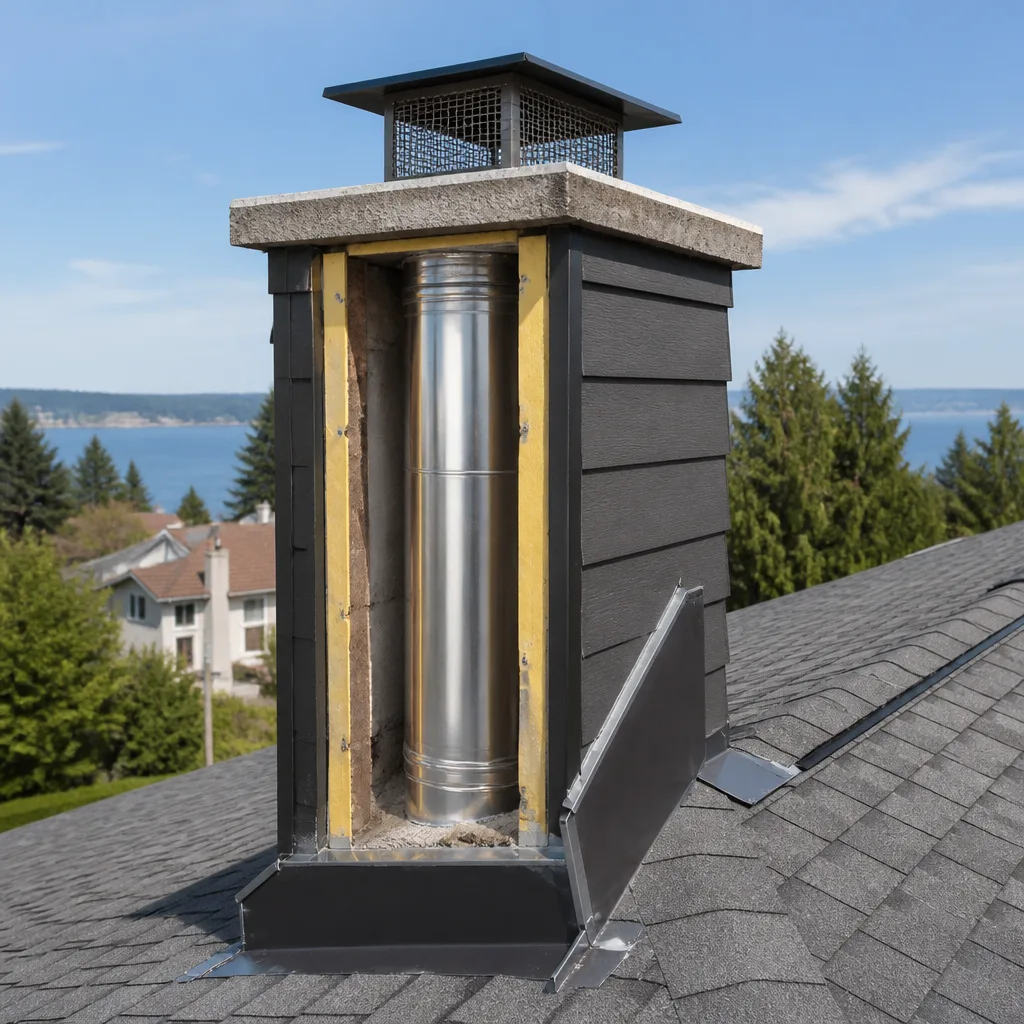
When a liner fails, you don’t necessarily need a full rebuild. In many cases, a properly installed flexible liner solves the problem. At Duke Chimney Sweep, we work with DuraFlex liner systems for exactly this scenario: retrofit work on chimneys with irregular flues or aging masonry that make traditional relining impractical. The repair-first approach almost always costs less than teardown, and the result is a sealed system that performs like new. If you’re seeing any of the signs above, call us at (844) 660-6510 for a camera inspection before you spend money on anything else.
Crown and Cap Warning Signs: The Roof-Level Problems Most Homeowners Miss
The crown and cap live at the top of your chimney, where most homeowners never look. That’s a problem, because in Schaumburg, this is where the most expensive damage starts. Water gets in through the top and works its way down through freeze-thaw cycles. By the time you see interior symptoms, the structural damage is already underway.
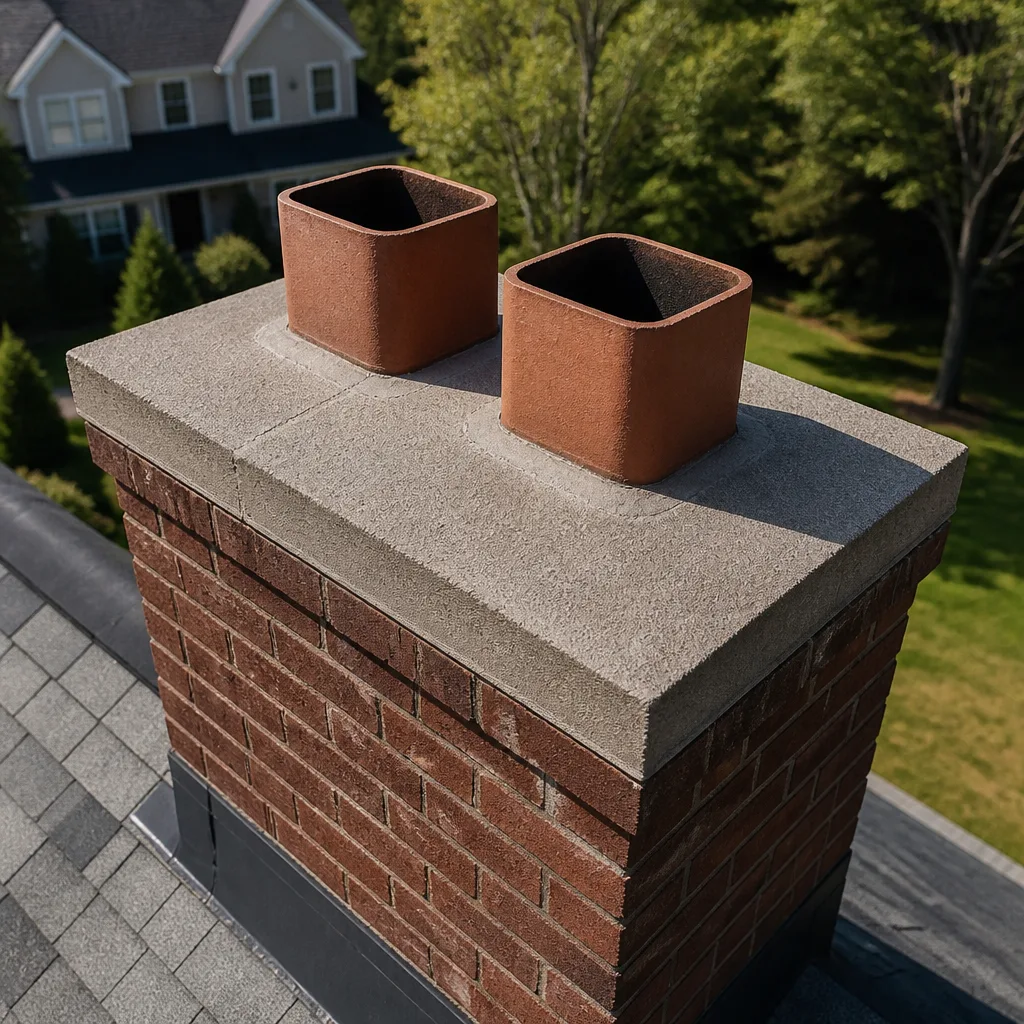
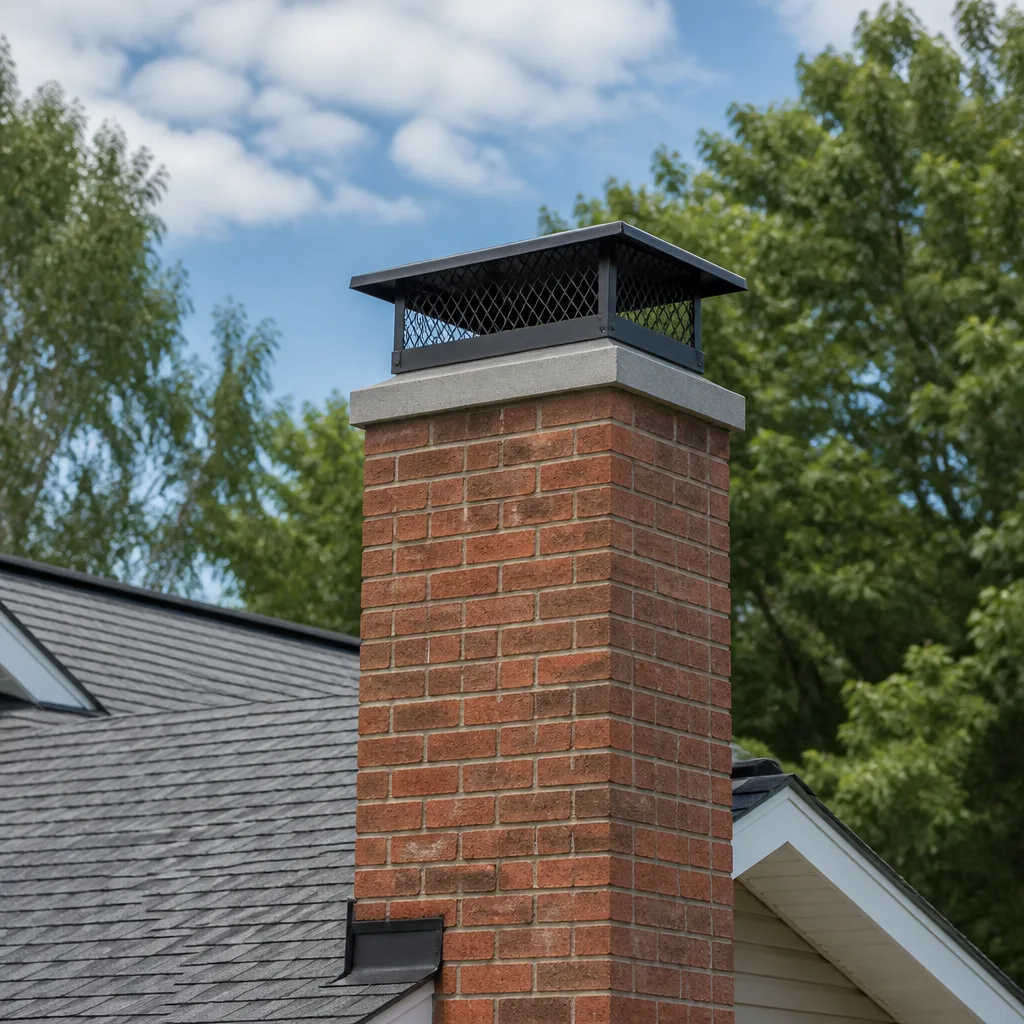
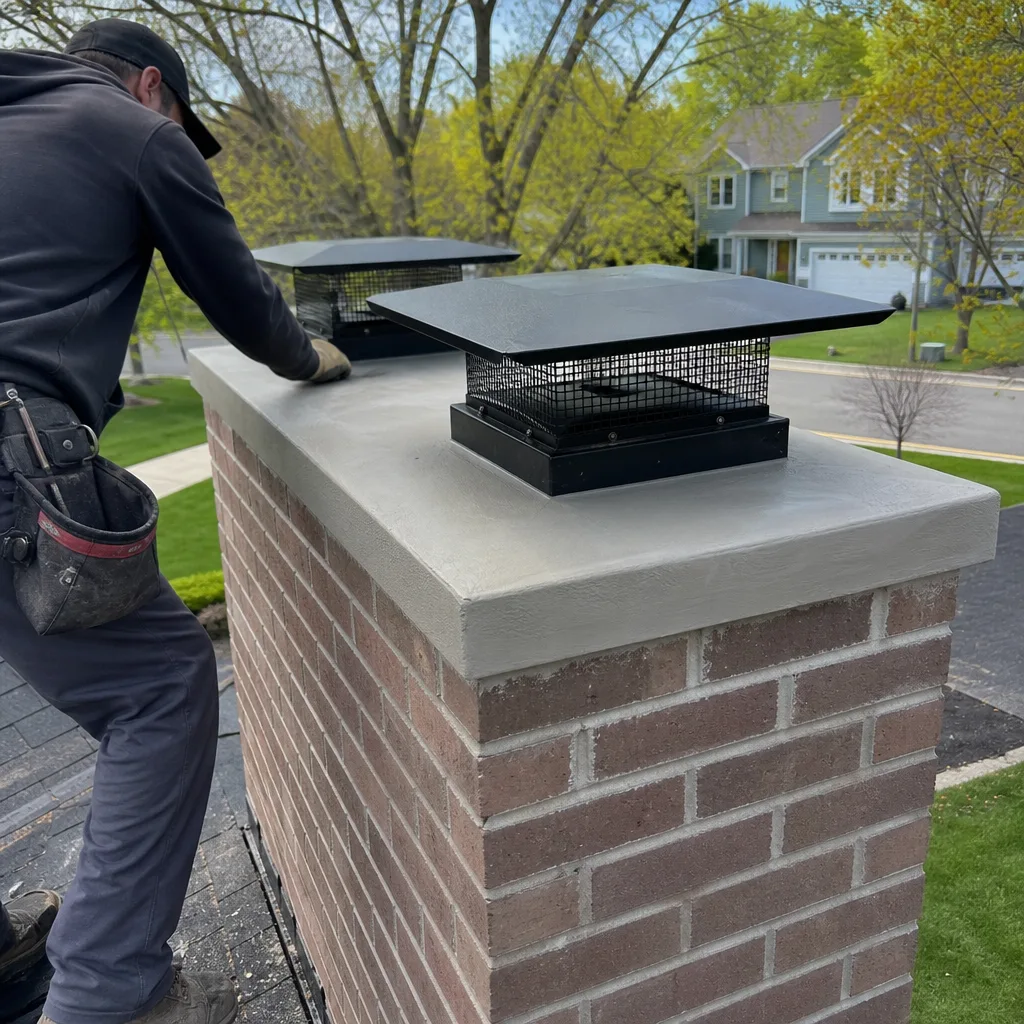
The crown is the concrete or mortar slab at the very top of the chimney structure. The cap is the metal assembly that covers the flue opening. Both have specific jobs, and both fail in specific ways.
Crown Warning Signs
- Cracks in the crown surface visible from the roof or from a ladder at the eave line. Even hairline cracks admit water, and in Schaumburg winters, water is the enemy.
- Missing chunks of crown material at the edges. This happens when water gets into a crack, freezes, and pops a section loose.
- Spalling brick directly below the crown. The crown’s job is to direct water away from the chimney chase. When it fails, the top few courses of brick absorb that water and begin deteriorating.
Cap Warning Signs
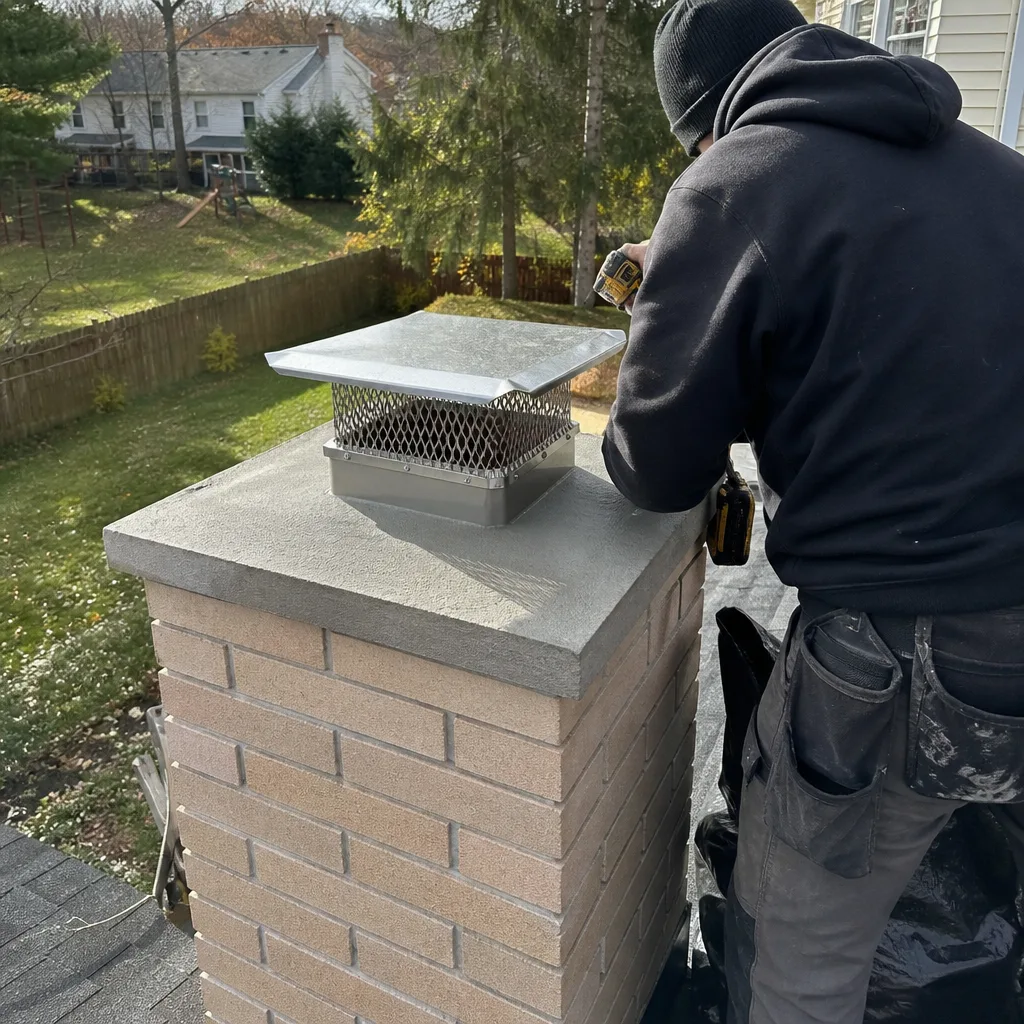
- A missing cap entirely. This is surprisingly common in older Schaumburg homes. The cap either rusted through and fell apart, or was never installed in the first place. Without a cap, rain falls directly into the flue, accelerating liner deterioration.
- A rusted cap with holes. Rust holes allow rain in just as effectively as no cap at all, and they also allow animals to enter.
- An undersized or incorrectly fitted cap. A cap that doesn’t properly cover the flue opening defeats its own purpose. Water still gets in around the edges.
These are inspection items, not DIY repair items. Roof work is genuinely dangerous, and what you can see from the ground is only part of the story. A professional inspection includes roof-level evaluation of the crown, cap, and flashing as part of a standard service, not an upsell. If you’re not sure what’s on top of your chimney right now, that’s the single best argument for scheduling an inspection before winter. Our Choosing the Right Chimney Cleaning Brand: A Buyer’s Guide for Schaumburg can help you evaluate providers.
If you’re in the Schaumburg area, ourChimney Sweep in Wheeling page covers similar territory for nearby homeowners who deal with the same climate and construction patterns we see throughout the northwest suburbs.
Damper Warning Signs: The Small Part That Causes Big Smell Problems
The damper is the least glamorous component in your chimney, and the one most likely to be the actual culprit when you’re dealing with odors or drafts. It’s a metal plate that seals the flue when the fireplace isn’t in use. When it works, you don’t think about it. When it doesn’t, every symptom it causes gets blamed on the chimney itself.
Here’s what a failing damper looks like in day-to-day use:
- A fireplace that’s drafty even when closed. If you can hold your hand near the closed damper and feel moving air, the seal is compromised. Cold air is coming down, and your heated air is going up.
- Smoke smell that’s worse in summer than winter. The downdraft effect is strongest when outdoor temperatures are moderate and indoor temperatures are cool from air conditioning. The damper that seemed fine in January suddenly isn’t.
- Rust or visible warping on the damper plate. This is what moisture exposure does over time. A rusted damper can’t seal even when it’s fully closed.
- A damper handle that’s stiff or loose. The mechanism should move smoothly. Resistance or slippage means the cable or hinge arrangement is corroding.
- Visible gaps around the damper edges when closed. Shine a light up from below. If you can see light leaks around the closed plate, you’re seeing the path that air and odors travel.
- Third-degree creosote (shiny, tar-like coating). This is fuel, and it’s waiting for a spark.
- Pieces of flue tile in the firebox. The liner is actively failing. Flue gas is no longer contained.
- Smoke entering rooms other than the firebox area. This means gas is finding paths through the structure.
- An acrid chemical smell. Flue gas leakage, which includes carbon monoxide, is the only thing that smells like that.
- Animal nesting material visible above the damper. Nest material is tinder above your fire.
- Visible gaps in the firebox walls that expose the chase behind them. Heat can now reach combustible framing.
- Light, dusty creosote buildup (first-degree). Normal for the burning season. Schedule a sweep when convenient.
- Musty smell with no visible damage. Water is getting in somewhere, but the system is still functional. Get it inspected this season.
- Drafty damper. Annoying, but not dangerous. The primary risk is heat loss and odor, not fire.
- Minor spalling on exterior brick. The damage is progressing slowly. Address it before winter worsens it.
- Rusted damper plate. Functional but deteriorating. Replace at your next service.
- Assuming a smoky smell means the chimney just needs sweeping. Odor is usually a damper problem or a downdraft issue, not a creosote problem. Sweeping won’t fix it. This is the single most common misdiagnosis we see in Schaumburg, and it leads to homeowners paying for a service that doesn’t solve their problem.
- Ignoring a chimney fire because the fire went out on its own. A chimney fire that self-extinguished still damaged the liner. The thermal shock cracks clay tiles and compromises mortar joints. If you’ve had one, get the chimney inspected before using it again.
- Climbing onto the roof to inspect the crown or cap personally. Roof work is genuinely dangerous, and a rooftop inspection without proper equipment and knowledge doesn’t tell you what you need to know anyway. What looks fine from above often has damage visible only to a trained eye with a camera.
- Using chimney cleaning logs as a substitute for proper sweeping. Chemical cleaning logs break down some creosote, but they don’t remove it. You’re left with loosened creosote inside the flue, which is actually worse in some ways. Mechanical removal is the only thing that actually clears the flue.
- Waiting until fall to address a problem noticed in spring. Every Schaumburg sweep’s fall schedule fills up. If you see a problem in April, addressing it in April means you avoid the fall rush and you avoid a full season of water and freeze-thaw cycles worsening the condition.
- Assuming a new house means a sound chimney. We’ve inspected chimneys in Schaumburg homes less than a decade old that already showed crown cracking and flashing failures. Builders don’t always pay the attention to the chimney that the rest of the house gets. Age is not a substitute for inspection.
- Treating the chimney and dryer vent as unrelated systems. They’re both venting systems, and both carry combustion byproducts or lint out of your home. A blockage in either one is a fire risk. If you’re having your chimney inspected, have the dryer vent checked at the same time. It’s the same discipline applied to a different pipe.
The damper is also one of the easiest fixes when it’s identified properly. In many cases, replacing a worn damper resolves odor complaints completely without any other work. That’s a vastly cheaper outcome than relining a chimney that didn’t need it. But the only way to distinguish a damper problem from a liner problem is inspection. The symptoms overlap heavily. A camera inspection removes the guesswork, and that’s why we insist on it before recommending any repair. We’d rather show you the evidence on screen than tell you to trust our assessment.
Speaking of repairs, if you’re dealing with any of these damper issues and wonder whether the fix is worthwhile, this is exactly the kind of work we document on ourChimney Repair in Wheeling page. The assessment process is identical for Schaumburg homes.
Audible Warning Signs: Popping, Cracking, and Critters
Noise is the warning sign most homeowners discount, mostly because they don’t know what they’re hearing. But your chimney makes noise for specific reasons, and each one maps to a specific problem.
Popping and Cracking During Use
Popping sounds while a fire is burning usually indicate moisture in the masonry flashing to steam. As water trapped inside bricks heats up, it expands and forces its way out, creating audible pops. This is different from the normal crackling of wood fire. It’s coming from the structure, not the fuel. The root cause is water intrusion: through the crown, through a damaged cap, or through failed flashing. Over enough seasons, the same trapped moisture that’s popping will freeze in winter and begin spalling the brick faces.
Cracking Sounds When the Fireplace Is Cold
Cracking or ticking sounds when there’s no fire, often in the evening or early morning, are thermal expansion and contraction of the masonry as outdoor temperatures change. This is normal in Schaumburg’s temperature swings. What’s not normal is cracking sounds accompanied by visible new gaps in mortar joints. If you hear the sound and then find fresh cracks, the structure is shifting beyond what normal thermal cycles explain.
Scratching, Scuffling, or Cheeping
Animal sounds inside the chimney are unambiguous. You have a nest. In Schaumburg, chimney swifts are the classic culprit, along with raccoons and squirrels. A cap with an intact spark arrestor screen prevents exactly this. If you’re hearing animals, your cap is either missing, damaged, or missing its screen. Beyond the noise, nesting material is combustible and blocks proper draft. This needs to be addressed before you light the next fire.
A Rushing or Whistling Sound in Windy Weather
Wind noise through the chimney usually means the flue is open when it shouldn’t be, or the cap is creating turbulence rather than managing it. A properly fitted cap redirects wind and actually improves draft. A missing or damaged cap turns windy days into noise machines, and it also lets in rain and debris.
The point of listening is this: none of these sounds are random. They’re diagnostic. Popping means water. Scratching means animals. Whistling means air movement. Each one tells you which component to inspect.
Stop Using vs. Continue Using: How to Triage What You’re Seeing
Not every warning sign is an emergency. Some conditions mean stop using the fireplace immediately. Others mean schedule service this season, but continued use is acceptable in the meantime. Here’s the triage, based on what we actually see in Schaumburg homes.
Stop Using the Fireplace Immediately If You See:
Can Continue Using Until Your Appointment If You See:
The line between these two lists is whether combustion gases are contained. If the liner and firebox are intact and clear of heavy creosote, the system is fundamentally safe to use even if other components need attention. If the liner is compromised or heavy creosote is present, every fire is a roll of the dice. Err on the side of caution. A chimney fire is not a dramatic inconvenience. It’s a structural fire inside your home that may not be contained to the chimney.
For a deeper look at how full-system assessment works, our mainDuke Chimney Sweep home page explains the three-service approach we take with every inspection: sweep, repair, and dryer vent evaluation as one connected system.
Common Mistakes to Avoid
When to Call a Professional
Call a professional when you notice any of the stop-use signs listed above, when you’ve had a chimney fire regardless of how minor it seemed, when you can’t identify where a smell is coming from, or when you simply haven’t had an inspection in over a year. Inspection is also warranted anytime you buy a home with a fireplace, or if you’ve recently closed on a house in Schaumburg and don’t know the chimney’s service history. Duke Chimney Sweep offers free estimates in Schaumburg. Call (844) 660-6510 and we’ll schedule a camera inspection that shows you exactly what’s happening inside your flue before you commit to any work.
If your home has a dryer vent that hasn’t been cleaned recently, ask about ourDryer Vent Cleaning in Wheeling service as well. Lint buildup is the leading cause of dryer-related house fires, and it follows the same inspection logic as the chimney: camera first, evidence-based recommendations, no guesswork.
Frequently Asked Questions
A standard chimney sweep in Schaumburg typically runs between $180 and $350 depending on the level of creosote, the height of the flue, and whether any special equipment is needed. Camera inspection is often the deciding factor in the final price, since what the camera reveals determines whether additional work is required. Call (844) 660-6510 for an exact quote, and we’ll provide one free.
The National Fire Protection Association recommends annual inspection and sweeping as needed, which for most Schaumburg homes means once per burning season. For more guides & resources on keeping your system safe, explore our blog. If you burn more than a cord of wood per year, or if you burn soft woods like pine that produce more creosote, you may need mid-season sweeping.
You only need a new liner if the existing one is cracked, spalled, or otherwise failing. A camera inspection shows this clearly. If the liner is intact, you don’t need replacement, regardless of its age. At Duke Chimney Sweep, we don’t recommend liner work without showing you the camera footage that documents the failure, and we often use HeatShield resurfacing or DuraFlex retrofit liners as repair-first alternatives to full replacement.
Creosote accumulates in layers, and each fire bakes those layers harder. Within two to three seasons of regular use without sweeping, the buildup can reach the point where a hot fire ignites it. The result is a chimney fire, which damages the liner and can spread to combustible framing if the liner was already compromised. The financial cost of a chimney fire far exceeds the cost of annual sweeping.
Usually just unpleasant, but it depends on the cause. Creosote odor and downdraft are nuisances, not hazards. An acrid or chemical smell is different and can indicate flue gas leakage, which carries carbon monoxide. If the smell is sharp and chemical rather than like an old campfire, treat it as a potential CO issue and call for inspection.
You can, technically, but the practical realities make it a poor idea for most homeowners. Proper chimney sweeping requires brushes sized to your flue, a method for containing the soot, and the ability to inspect what’s been cleaned to confirm the job is complete. Most DIY attempts leave creosote behind and don’t include the camera verification that tells you whether the flue is actually safe. The equipment alone costs more than a professional sweep.
The Bottom Line
Your chimney talks to you constantly. The smoke smell in July, the popping sounds during a fire, the musty odor in March: each one is a report from a specific component. Learning to read those reports saves you from paying for the wrong repair and from using a fireplace that isn’t safe. In Schaumburg, where winters punish masonry and the burning season is long, annual inspection is the cheapest insurance you can buy against a chimney fire. If you’re seeing or smelling anything this guide described, call (844) 660-6510 for a free estimate and a camera inspection that shows you exactly what’s happening inside your flue.
Written by the team at Duke Chimney Sweep, serving Schaumburg since 2016.
See the difference
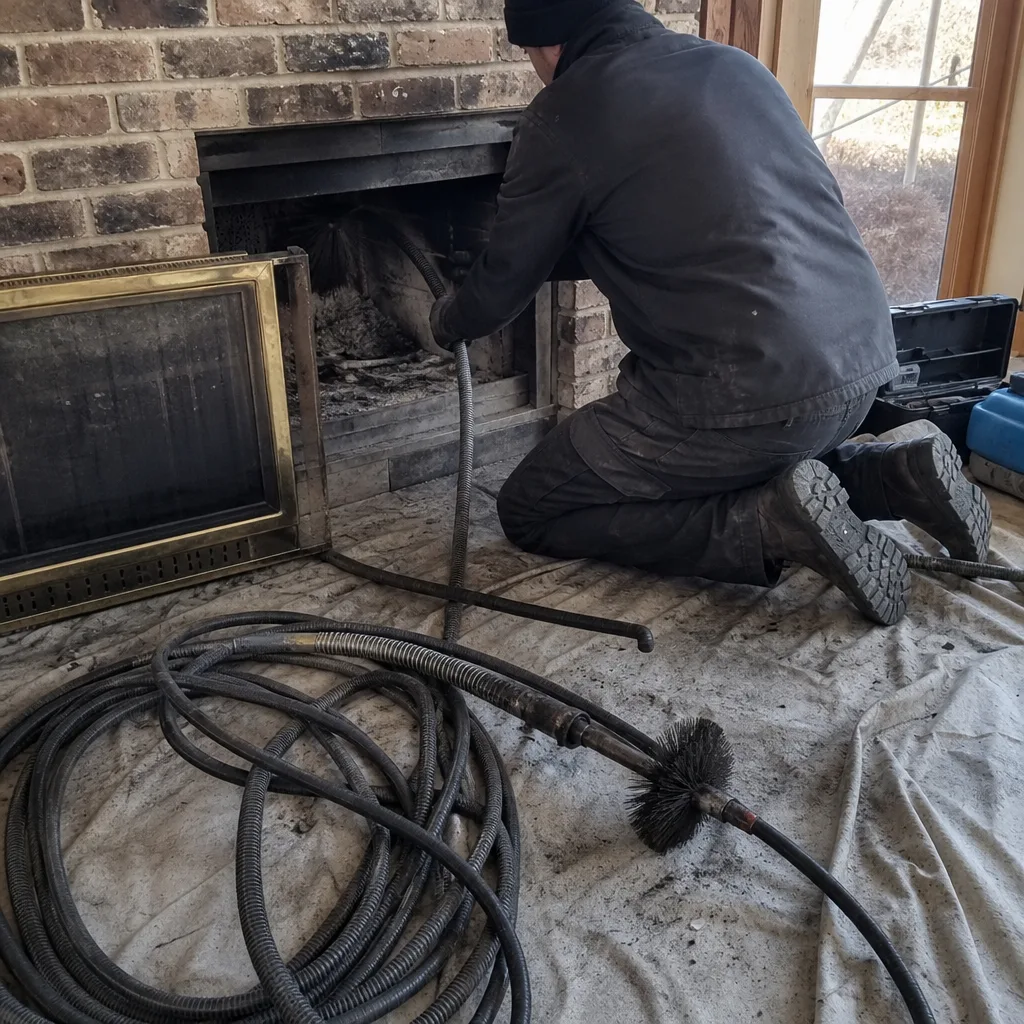 Before
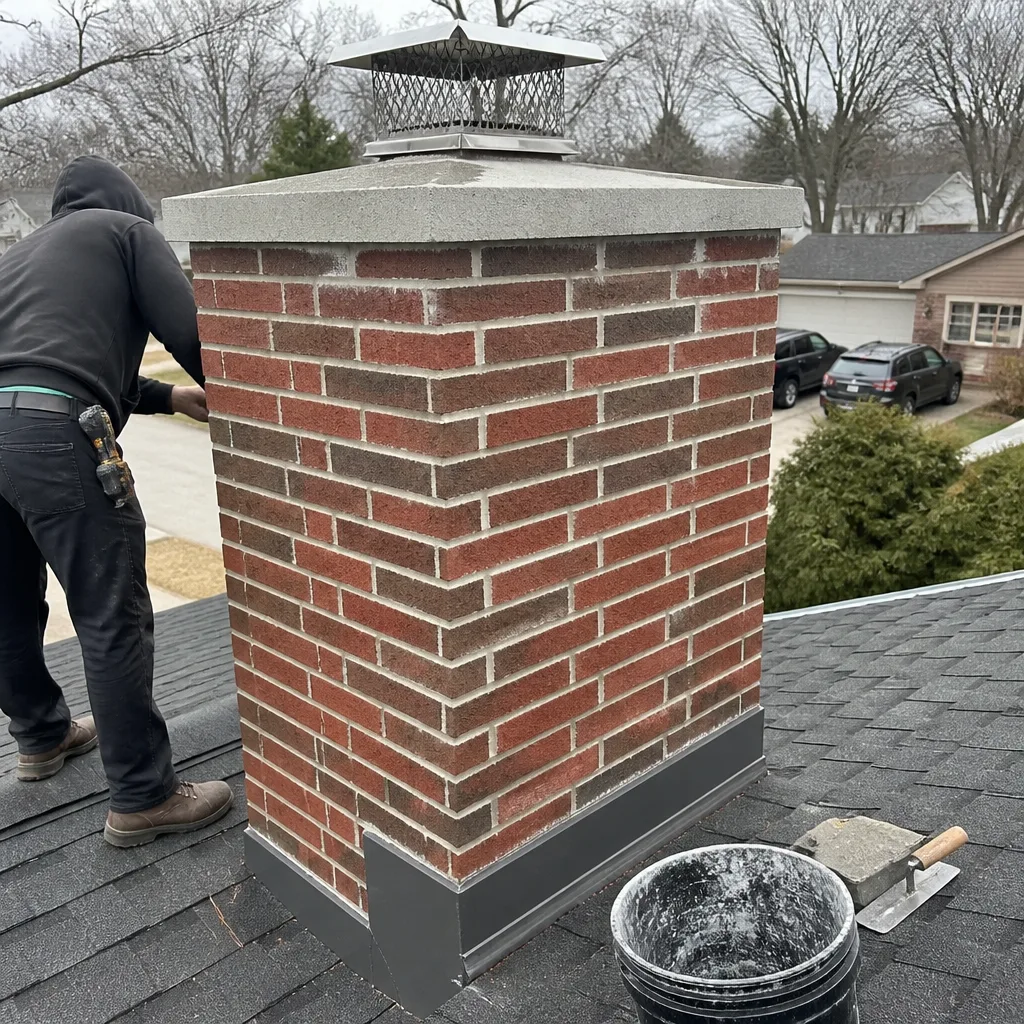 After
 Before
 After
 Before
 After