

Last updated October 31, 2026
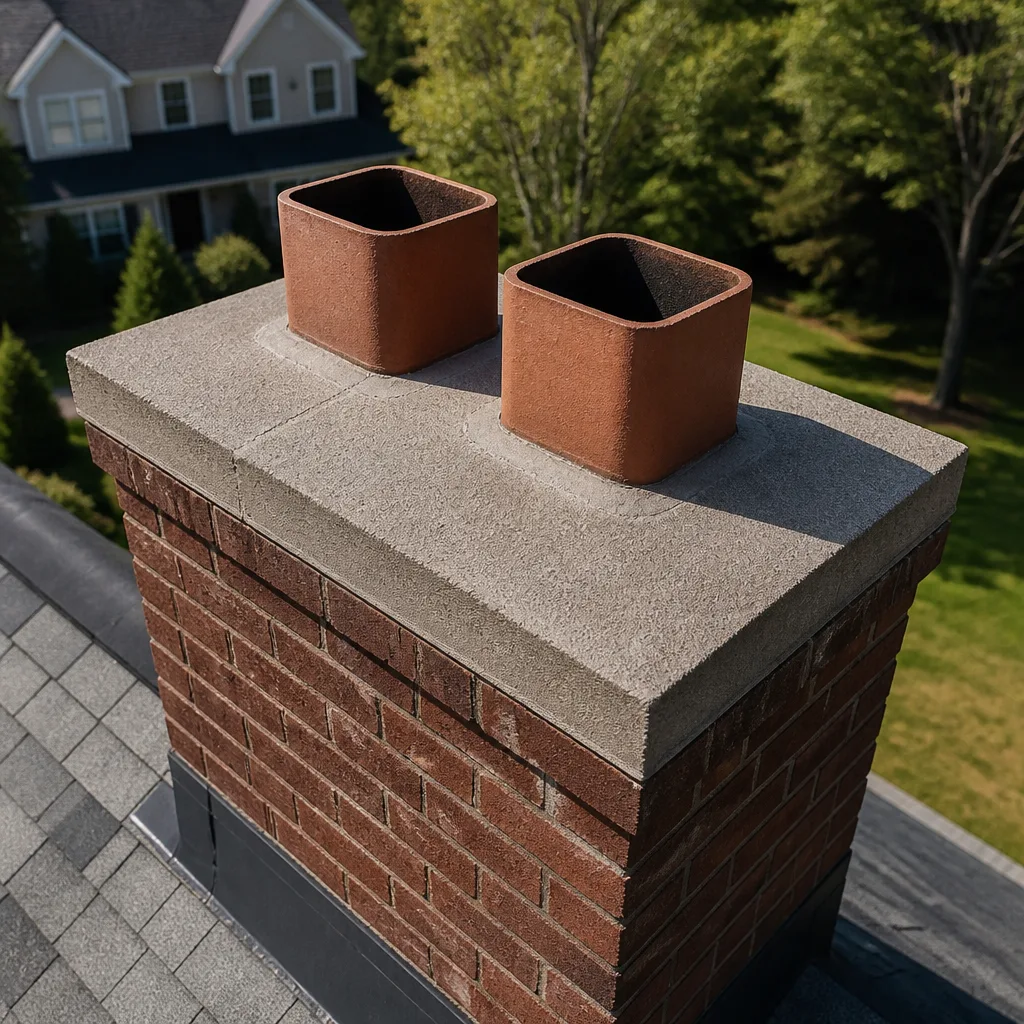 Sweep & inspection
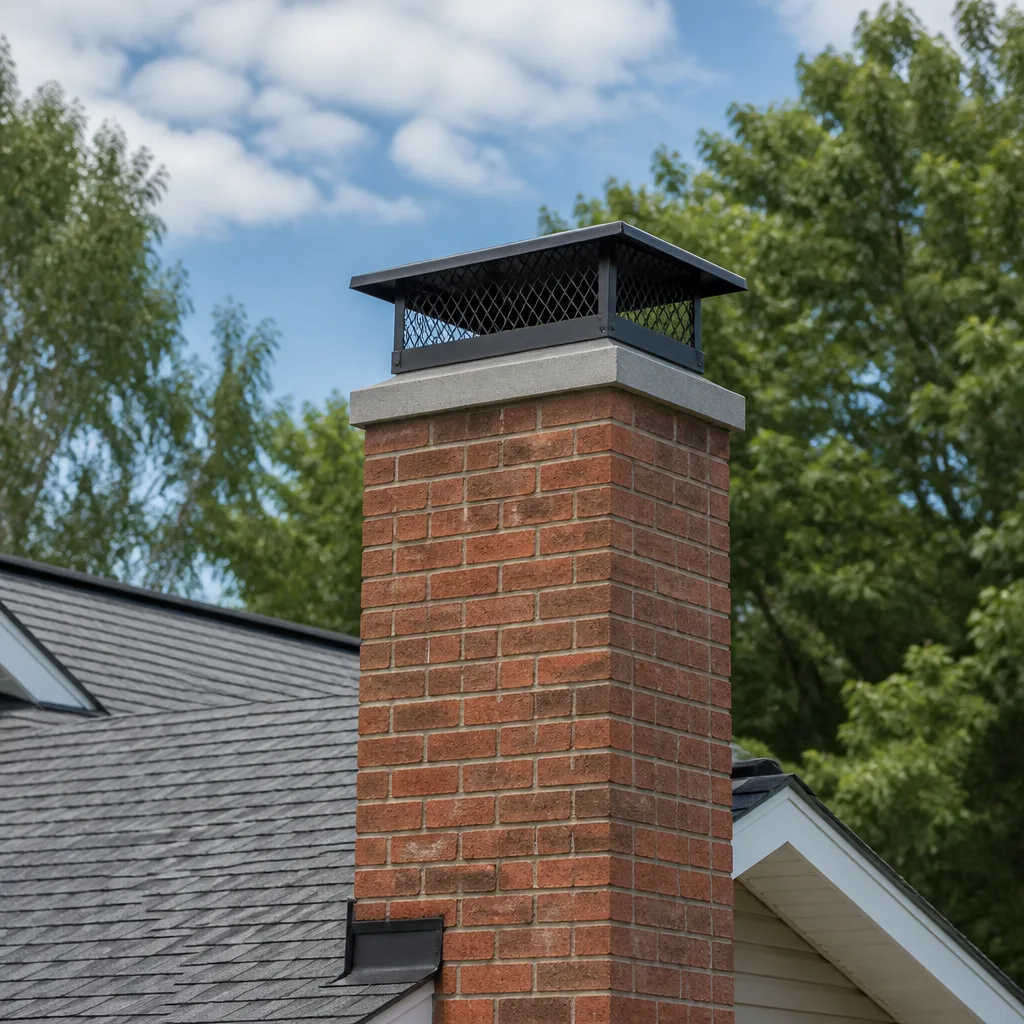 Caps & crowns
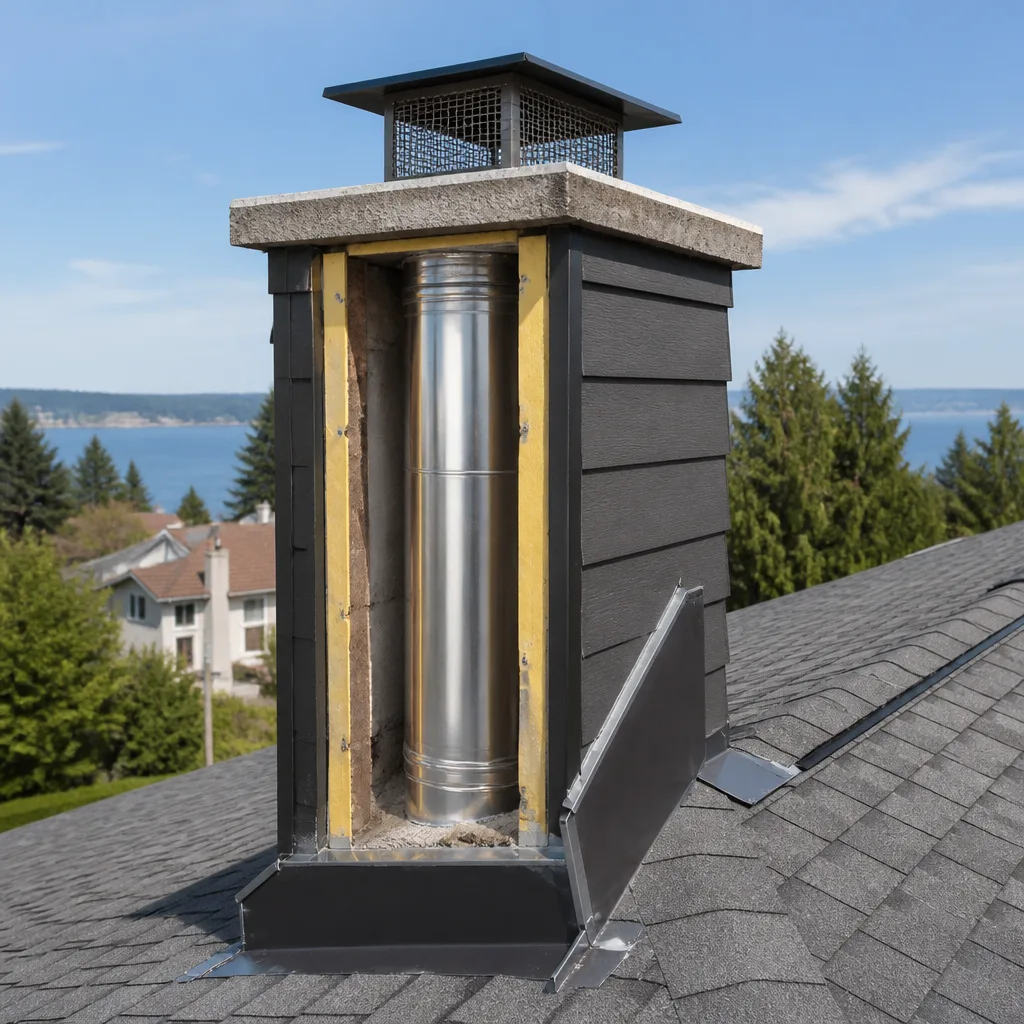 Flue relining
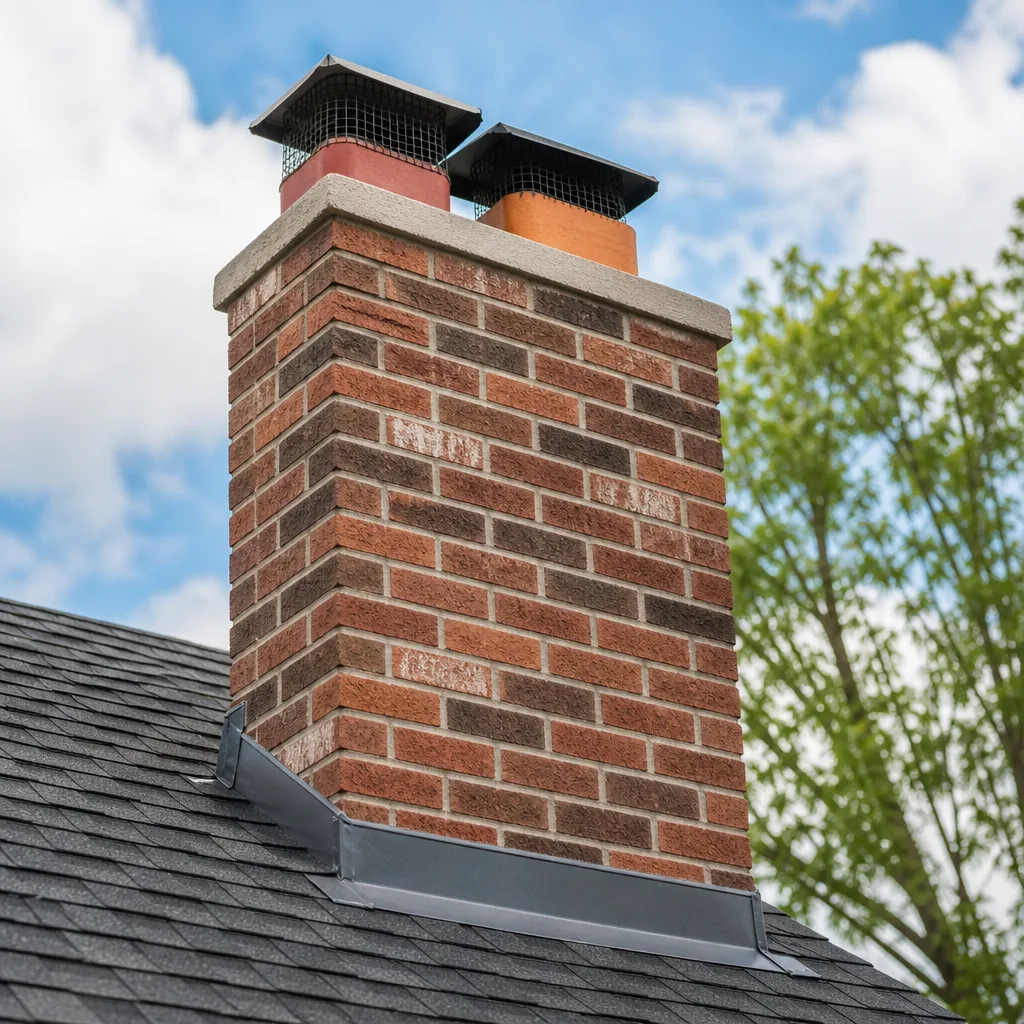 Masonry repair
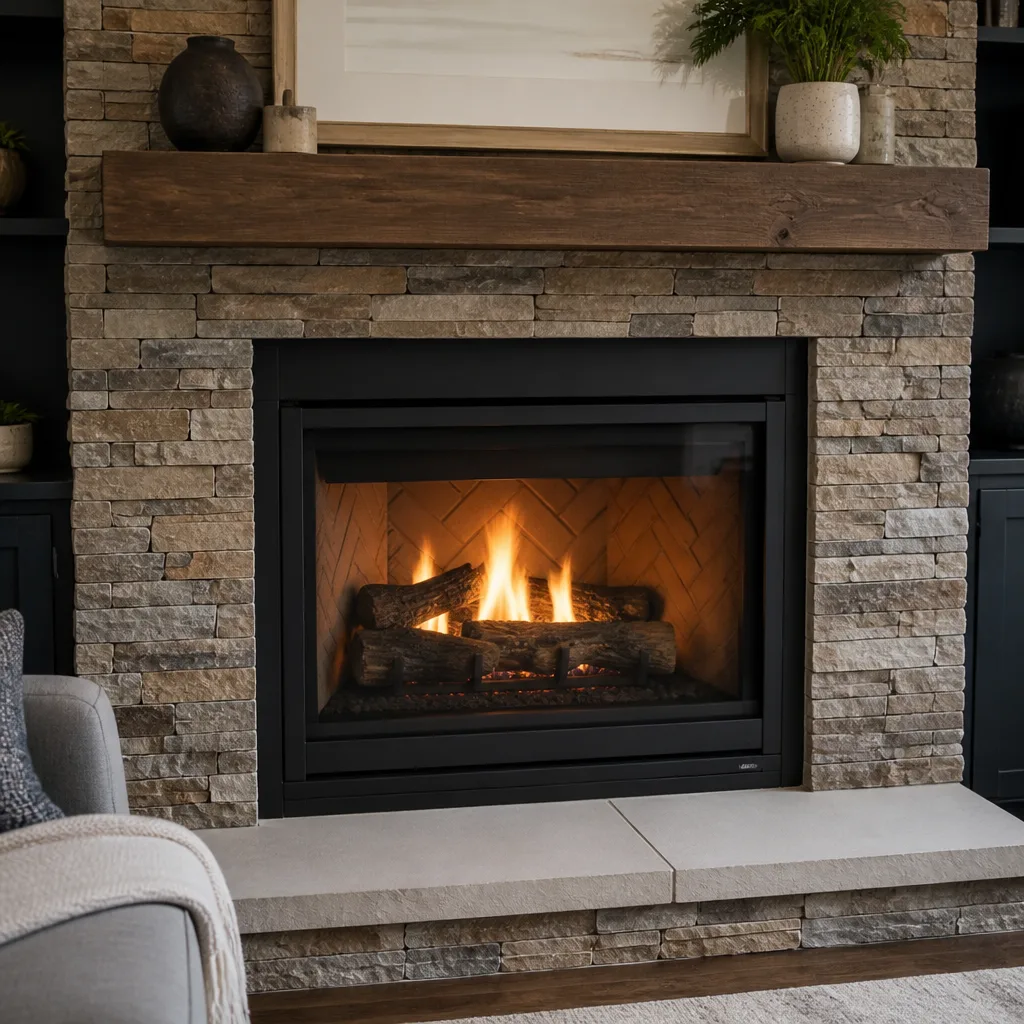 Gas fireplace service
Level 1 sweep and inspection to the NFPA 211 annual standard - flue, crown, cap, and flashing checked and photographed
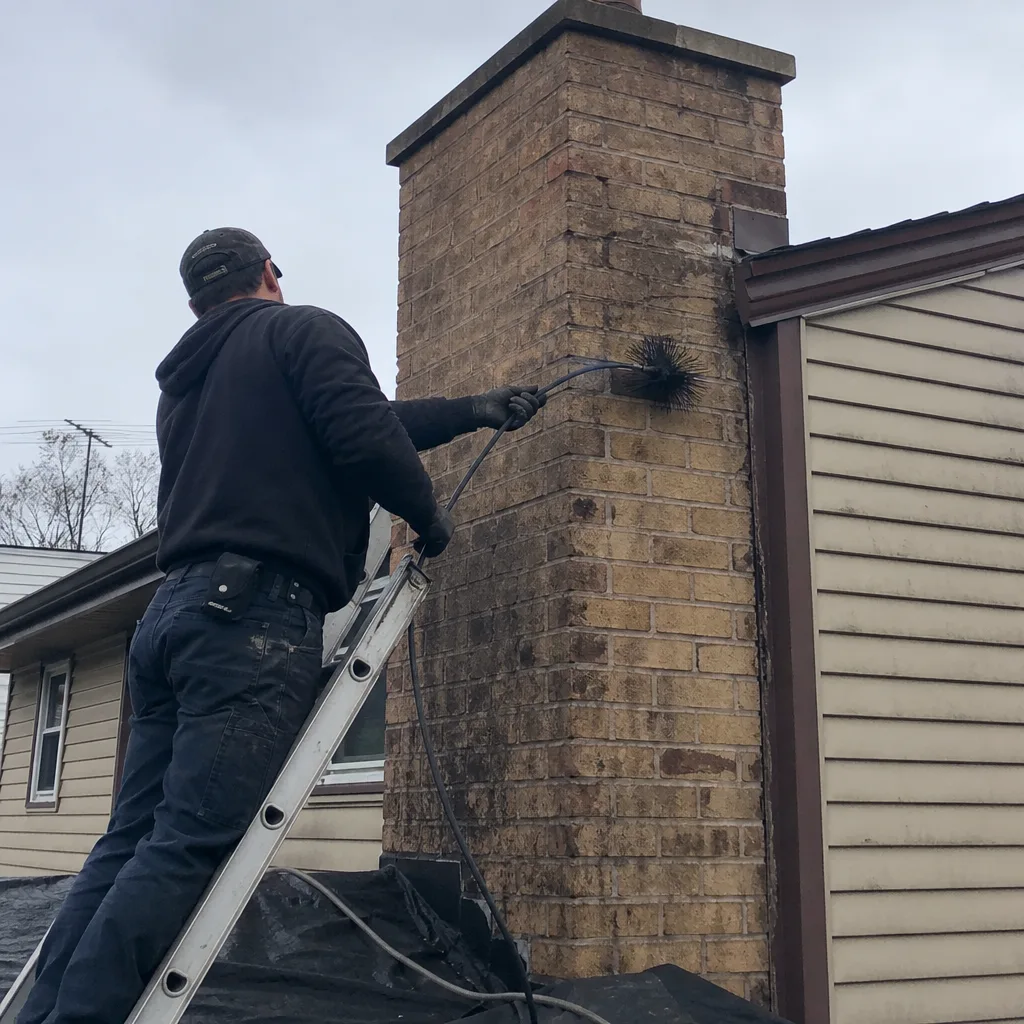
Chimney sweep logs do not sweep chimneys. They loosen some creosote - which then falls where a brush and vacuum still have to collect it.
Chimney Sweep Maintenance Checklist for Schaumburg Homeowners
The standard “get your chimney swept every fall” advice sounds simple until you actually live in Schaumburg, where one winter might bring three cords of oak burned steadily from November through March, and the next might bring a handful of decorative fires between Bears games. A homeowner who burns six face cords of hardwood a season and one who lights the gas logs four times a year are not on the same maintenance schedule, but virtually every generic chimney checklist treats them like they are. This guide replaces the one-size-fits-all calendar model with a component-by-component and usage-based Chimney Sweep checklist, built for how Schaumburg chimneys actually get used, abused, and ignored. You’ll learn what to check from the ground, what genuinely requires a professional’s camera and access, and how to build a maintenance cadence that matches your fireplace habits rather than someone else’s.
Quick Answer
A proper chimney maintenance checklist for Schaumburg homeowners is built around your actual burn rate, not a calendar date, as explained in our Chimney Sweep Troubleshooting: Common Problems and How to Fix Them guide. Light users can often go two years between sweeps, moderate users need an annual inspection with sweeping as indicated, and heavy wood burners may need a mid-season sweep plus a summer inspection of the cap, crown, flashing, and liner. The full checklist covers six components: cap and spark arrestor, crown, flashing, flue liner, firebox and mortar joints, and the damper assembly, with gas-burning systems checked for corrosion and venting rather than creosote.
Styles & brands we work with
Table of Contents
- The Usage-Tier Model: Why Your Schedule Depends on What You Burn
- The Six-Component Checklist, From Cap to Firebox
- What You Can See From the Ground vs. What Requires a Camera
- Gas vs. Wood: Two Different Maintenance Conversations
- Post-Storm and Post-Freeze Checks for Schaumburg Weather
- Seasonal Cadence: What to Do in Spring, Summer, Fall, Winter
- Signs Your Chimney Is Telling You Something
- Common Mistakes to Avoid
- When to Call a Professional
- Frequently Asked Questions
- The Bottom Line
The Usage-Tier Model: Why Your Schedule Depends on What You Burn
A chimney in a Schaumburg split-level that hosts a wood fire three nights a week from Thanksgiving through St. Patrick’s Day is accumulating creosote at a fundamentally different rate than a chimney in a neighboring subdivision where the fireplace is mostly a Christmas Eve and New Year’s Day tradition. Usage is not a secondary variable. It’s the variable. Here’s the tiered model we use with homeowners across Schaumburg:
- Light use: Under 20 fires per season, mostly softwood or manufactured logs, short burn sessions of two hours or less. Expect minimal creosote accumulation. Sweeping can often be deferred to every other year, with a visual inspection each fall. But there’s a caveat: light use that involves green or unseasoned wood can produce more creosote than a moderate hardwood burner. A Schaumburg homeowner who grabs a bundle of questionable grocery-store firewood every weekend might actually need more frequent cleaning than someone burning properly seasoned oak.
- Moderate use: 20 to 40 fires per season, predominantly hardwood, burn sessions of three to five hours. This is the classic Schaumburg pattern: Friday night fire, weekend afternoon fire, occasional holiday gatherings. Annual sweeping is genuinely warranted here, and ours is a full technical service, not a quick brush-up. The Duke Chimney Sweep home page outlines what a complete sweep includes.
- Heavy use: More than 40 fires per season, or more than two cords of hardwood burned. Some Schaumburg households treat the fireplace as a primary heat source for a family room or finished basement. These chimneys often need a mid-season sweep in late January or early February, not just a fall visit. Creosote builds in layers, and the difference between a chimney with an eighth-inch of accumulation and one with a half-inch is a functional safety margin, not a cosmetic issue. Heavy users should also budget for an off-season inspection focused on the liner, since constant thermal cycling stresses masonry and metal components differently than occasional fires.
The same logic applies to how many face cords you actually go through. A face cord in Schaumburg runs roughly 16 inches deep by 8 feet long by 4 feet high, and a heavy season can consume two to three of them. If you’re restacking the wood rack by early February, you’re a heavy user no matter what the calendar says. If you’re still working through the same half-rack from two seasons ago, you’re light. Your maintenance schedule should follow the wood pile.
One more consideration specific to the Schaumburg area: our winters run long and damp, with freeze-thaw cycles that hammer exterior masonry even when the fireplace sits unused. A light-use chimney still takes weather damage. The usage tier determines sweeping frequency, but it does not change the need for annual visual inspection of the cap, crown, and flashing. Those components fail on their own schedule, and that schedule is set by Illinois winters, not by how many fires you light.
The Six-Component Checklist, From Cap to Firebox
Every chimney has six distinct components that deserve individual attention, and each has its own pass/fail language. Here’s the plain-English checklist we walk through with Schaumburg homeowners, written so you’ll know what you’re looking at and what a problem looks like.
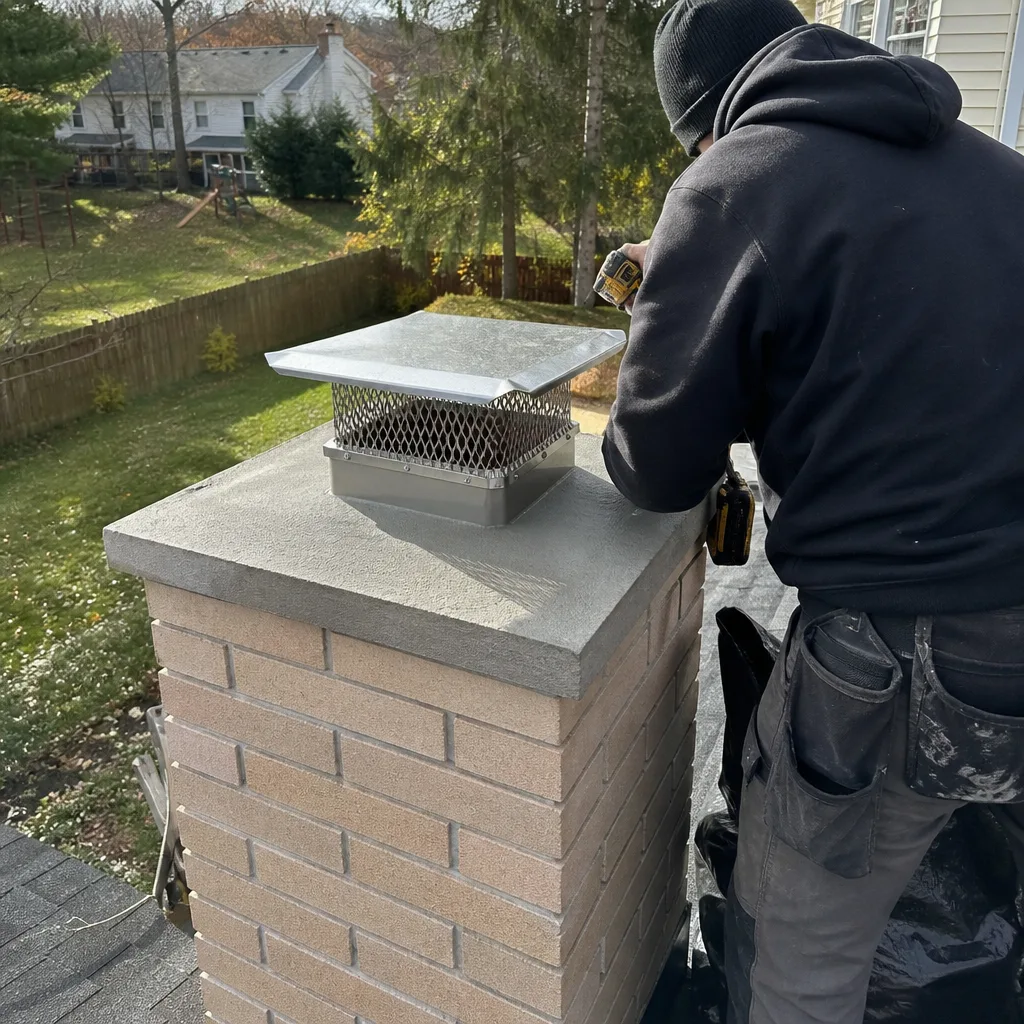
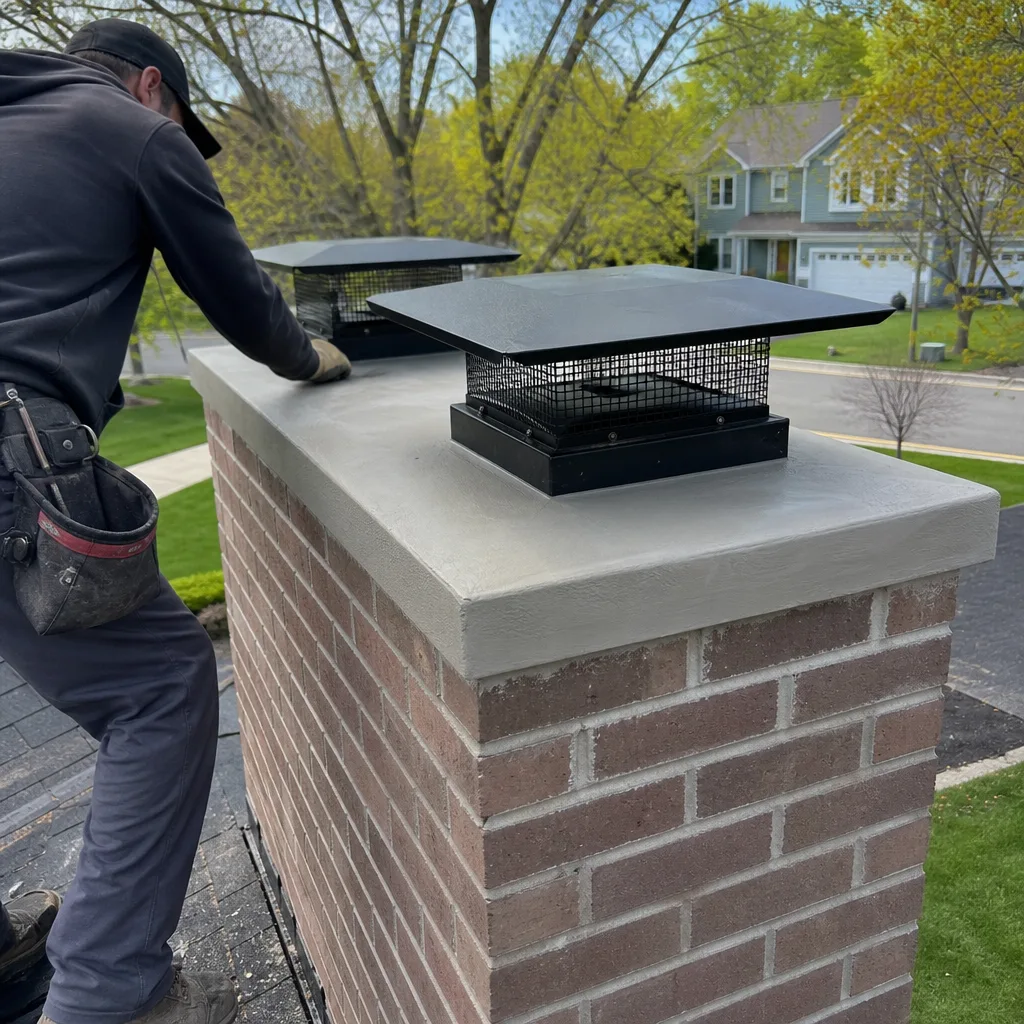
- Cap and spark arrestor: The cap is the metal umbrella assembly at the very top. It keeps rain, snow, leaves, and animals out while allowing smoke to escape. Pass condition: cap is seated squarely, no visible rust-through, mesh intact with no gaps larger than a half-inch. Fail condition: cap is tilted or missing entirely, mesh torn, or the spark arrestor is clogged with creosote glaze. A missing cap in Schaumburg means water getting into the flue during every spring rain and autumn storm. That water doesn’t evaporate harmlessly. It mixes with creosote to form an acidic slurry that eats mortar joints and can eventually ruin the flue liner.
- Crown: The crown is the concrete or masonry slab that covers the top of the chimney structure around the flue opening. It’s the chimney’s roof. Pass condition: smooth surface, no cracks wider than a hairline, proper slope shedding water away from the flue. Fail condition: visible cracks, spalling (flaking concrete), standing water, or a crown that slopes toward the flue. Crown cracks in Schaumburg are almost inevitable over time because of freeze-thaw cycling. A crown that’s compromised lets water into the chimney structure itself, and the repair cost compounds every year it’s ignored.
- Flashing: Flashing is the metal strip system where the chimney meets the roof line. It’s the most common failure point in any Schaumburg chimney system because it lives in the weather full-time and is subject to roof expansion and contraction. Pass condition: flashing lies flat against both chimney and roof surface, no gaps, no lifted edges, sealant intact and pliable. Fail condition: lifting, rust-through, missing sections, or old sealant that’s cracked and shrinking away from the masonry. Failed flashing shows up first as ceiling stains in the room below, usually not as an obvious chimney problem.
- Flue liner: The liner is the vertical passage that carries smoke and combustion gases up and out. It can be clay tile, metal, or a poured-in-place material, and in older Schaumburg homes, it’s often the original clay tile from the 1960s or 1970s. Pass condition: smooth, continuous surface, no visible gaps between tile sections, no flaking or delamination, no accumulation of creosote beyond a light dusting. Fail condition: cracks, gaps between tiles, missing sections, or a sticky, shiny creosote glaze more than about an eighth-inch thick. When we’re restoring a flue rather than replacing it, we work with materials like HeatShield resurfacer and DuraFlex flexible liner systems, which let us preserve a structurally sound chimney while returning the flue to full function. That’s the restore-before-you-replace approach: a lot of Schaumburg chimneys don’t need a teardown, they need the right material applied to the right problem.
- Firebox and mortar joints: The firebox is the chamber where the fire actually burns. Mortar joints are the seams between brick or stone throughout the firebox and smoke chamber. Pass condition: mortar joints are flush and intact, no gaps you can fit a key into, firebrick not cracked or crumbling. Fail condition: eroded mortar, loose or missing firebrick, gaps in the back wall or side walls, a rusted-through steel firebox (common in 1980s and 1990s Schaumburg construction). This is a component you can partially self-assess with a flashlight from inside the house, though the upper reaches of the smoke chamber are a job for a camera. Gaps in firebox mortar let heat reach the wood framing behind the chimney, and that’s not a repair to postpone.
- Damper assembly: The damper is the metal plate just above the firebox that opens for burning and closes when the fireplace is idle. Pass condition: opens and closes smoothly without binding, seals sufficiently well that you don’t feel a cold draft when shut, no rust-through on the plate or frame. Fail condition: stuck open or stuck closed, warped plate, rusted hinge pins, or a damper that won’t seat flush. A damper that leaks when closed turns every winter into an open vent in your living room, and in a Schaumburg January, that’s a real heating cost.
Each of these six items has a different failure cycle. The cap and flashing are mostly weather-driven. The liner and firebox are usage-driven. The crown is weather-driven with a long lag. The damper is mechanical and fails with simple age. That’s why the annual visual inspection matters even when sweeping isn’t needed. You’re not looking for one thing. You’re looking for six things, and they don’t fail on the same schedule.
What You Can See From the Ground vs. What Requires a Camera
There’s a persistent myth that homeowners can inspect their own chimneys with a pair of binoculars and a flashlight, and for the exterior, that’s partially true. But the most dangerous failures happen inside the flue, where no amount of squinting from the driveway will ever see them. Here’s the honest split.
You can reliably self-assess from ground level:
- Cap presence and obvious damage: you can see if a cap is missing, tilted, or rusted badly enough to sag.
- Crown condition: major cracks and spalling are visible from a ladder or from an upstairs window with a decent viewing angle.
- Flashing: lifted edges and gaps near the roofline are often visible from the ground on the side of the chimney facing your yard.
- Exterior brick condition: spalling, efflorescence (white mineral staining), and bulging or displaced brick sections are visible from the ground on most Schaumburg homes.
- Damper function: open and close it from inside the house. If it’s stiff, rusty-sounding, or won’t seat, you’ve found a problem.
You cannot reliably self-assess, and these require professional equipment:
- Flue liner condition: cracks, gaps, and hidden damage require a chimney camera. There’s no workaround. A liner can look fine from above and be failing at the midpoint where tile sections have shifted.
- Creosote accumulation inside the flue: you cannot see this from the firebox. By the time creosote is visible from the ground or the firebox opening, it’s already a significant buildup.
- Smoke chamber condition: the area above the damper and below the flue is irregular in shape and almost never visible from any ground-level vantage. Smoke chamber mortar failure is a leading cause of chimney fires in older Schaumburg homes.
- Heat damage behind the firebox: when mortar joints fail in the firebox, heat migrates into the surrounding framing. This is invisible until it becomes a structural or fire problem. We’ve seen this in Schaumburg homes built in the 1970s and 1980s, where firebox construction was sometimes less robust than in older or newer builds.
If your chimney passes the ground-level checklist but hasn’t had a camera inspection in over five years, assume the interior is an unknown. The ground-level check tells you if you need to call someone this week. The camera inspection tells you if you need to call someone this year. They’re two different tools with two different jobs.
For homeowners in nearby communities, the Chimney Sweep in Wheeling page covers the same inspection standards we apply across the northwest suburbs, including camera documentation as part of every sweep where access allows.
Gas vs. Wood: Two Different Maintenance Conversations
If a real estate listing bragged about a “maintenance-free gas fireplace,” that’s only true in the sense that a gas fireplace produces no creosote. It’s not true in the sense that a gas appliance needs nothing. Gas venting has its own failure modes, and in some ways they’re more insidious than creosote because they’re invisible and odorless.
For wood-burning fireplaces in Schaumburg: the concern is combustion byproducts. Creosote is the headline, but the full list includes soot, fly ash, and acidic condensation that attacks mortar joints from the inside. Wood-burning flues need sweeping based on the tiered usage model above, and the sweep should always include an inspection of the firebox and damper for heat-related wear. Heavy users should also check for glaze creosote, which is the dense, shiny, tar-like form that brushes can struggle with and that burns at extremely high temperatures in a chimney fire.
For gas fireplaces and gas log sets: the concerns shift. Gas combustion produces water vapor and, depending on the unit, acidic condensate. Over time, this attacks the flue liner from a different direction than creosote does, causing pitting, flaking, and in older unlined chimneys, direct damage to interior masonry. Gas units also accumulate dust and debris on the burner and pilot assemblies, which causes incomplete combustion, which produces carbon monoxide. A gas fireplace that hasn’t been serviced in five years isn’t “clean,” it’s unverified. The visible surfaces might look spotless while the venting system has issues that no amount of wiping will address.
In our service area, we treat gas fireplace inspections and venting checks as part of the full venting system. The chemistry is different, the components are different, and the failure modes are different, but the principle is the same: nothing gets a pass just because it doesn’t make smoke. Gas homes should have the unit, the venting, and the carbon monoxide detection arrangement checked together.
Post-Storm and Post-Freeze Checks for Schaumburg Weather
Schaumburg sits in a climate band that delivers a specific seasonal gauntlet: spring hail, summer thunderstorms with straight-line winds, autumn leaf and debris accumulation, and winter freeze-thaw cycles that can go from 15 degrees at night to 40 degrees in the afternoon and back within 48 hours. Each of these has a signature chimney effect, and most generic checklists never mention any of them.
After hail or high wind: Get eyes on the cap. Hail dents metal caps, and larger hail can crack or loosen the cap’s mounting. High wind can shift a cap even when there’s no visible tile damage to the roof. Also check flashing edges: wind-driven rain gets under flashing that looked fine the season before. A lifted flashing edge after a storm is the most common source of new ceiling stains we trace in Schaumburg homes.
After a hard freeze: Check the crown and exterior brick for new cracks. Freeze-thaw cycles expand water that’s already in micro-fissures, and every Illinois winter widens those fissures a bit more. A crown crack that was a cosmetic issue in October can be a water entry point by March. Also check for spalling brick on the exterior chimney face: chunks of brick face popping off are a freeze-thaw symptom, not old age alone.
After a torrential downpour: This is the moment to check inside the firebox for water. If there’s dampness in the firebox after a rain, there’s a failure somewhere in the cap, crown, or flashing. Also check the attic space around the chimney chase if accessible. Water coming in around the chimney sometimes shows up as dark staining on the roof sheathing before it ever reaches a ceiling below.
After a dry, windy autumn: Check the cap and spark arrestor for leaf and debris buildup. Schaumburg’s mature tree canopy drops an enormous amount of material every fall, and a spark arrestor clogged with maple leaves and cottonwood fuzz restricts draft. A restricted draft means smoke spilling back into the house when you light the first fire of the season.
These post-event checks are quick, ground-level, and don’t require any special tools beyond a pair of binoculars and the willingness to walk around the house. They don’t replace the seasonal or usage-based inspection. They catch the things that happen between those inspections.
See the difference
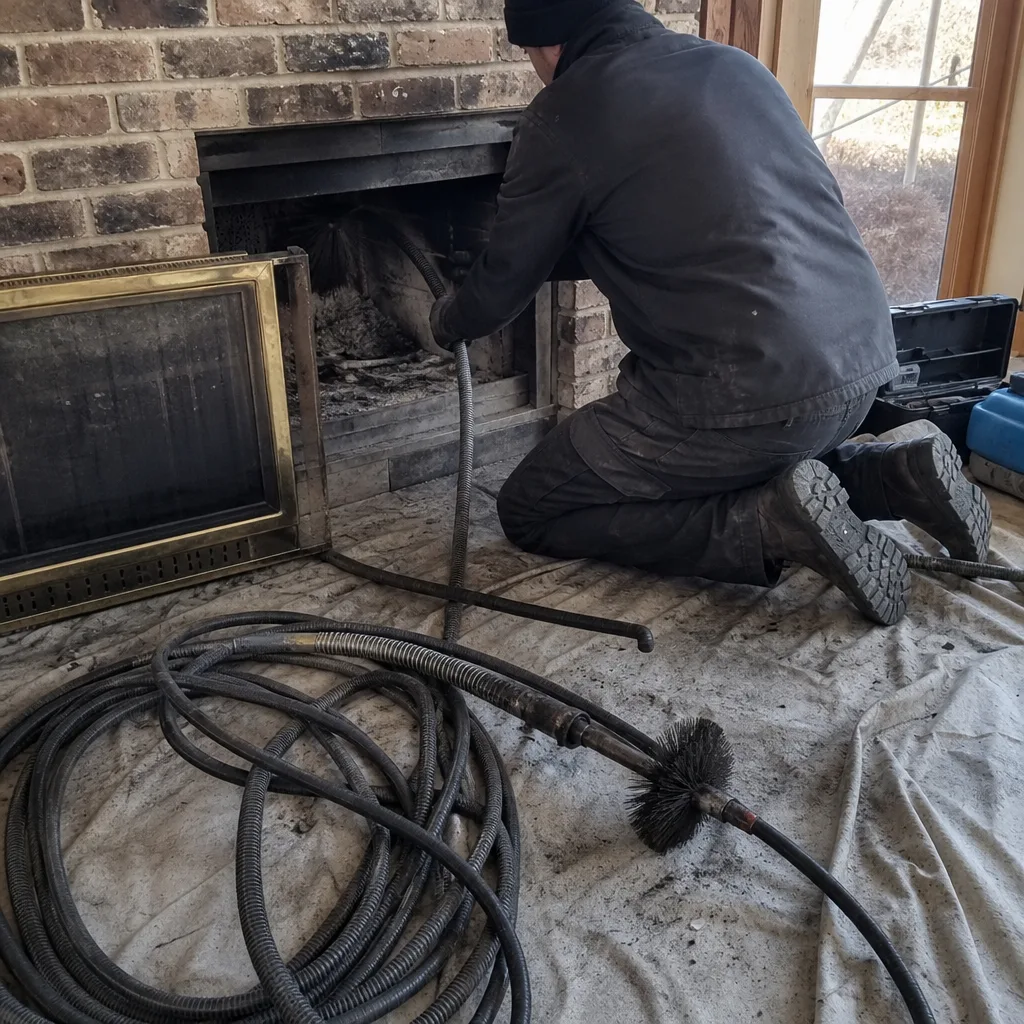 Before
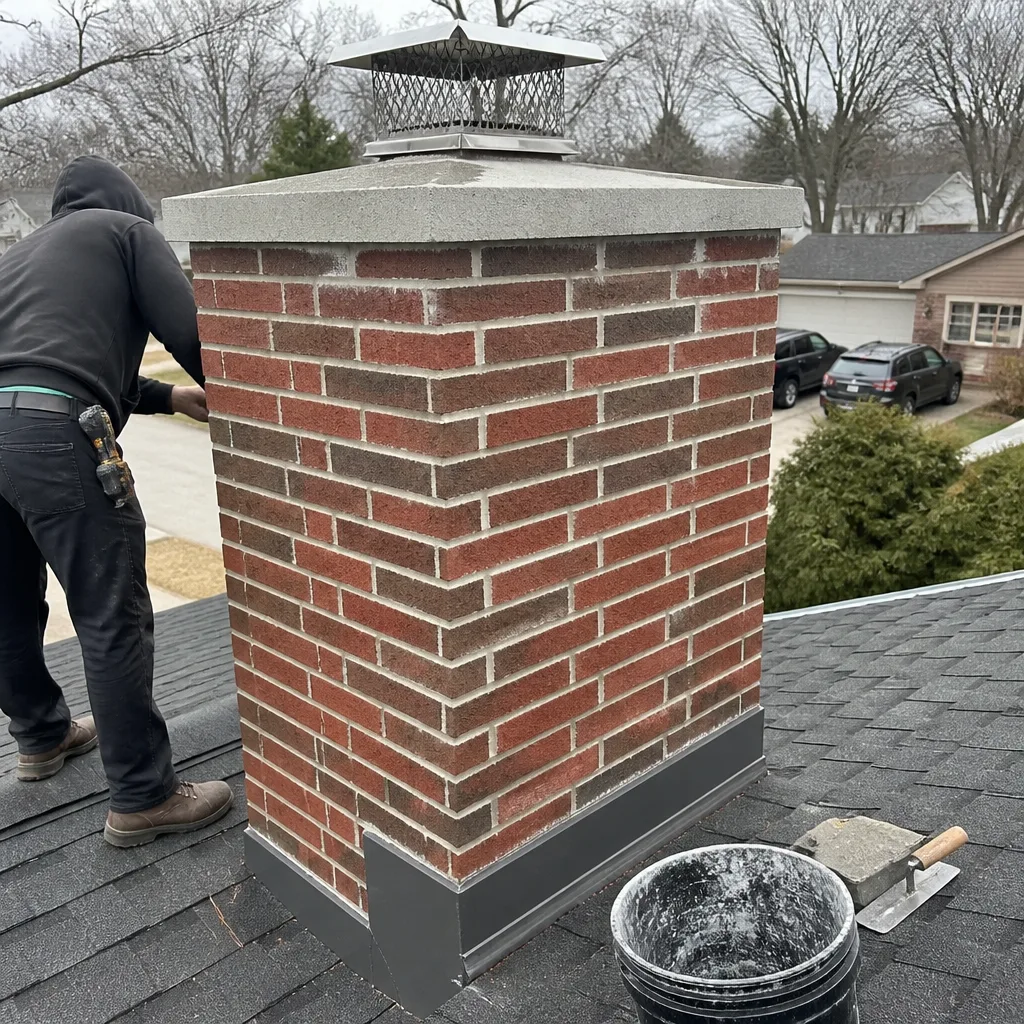 After
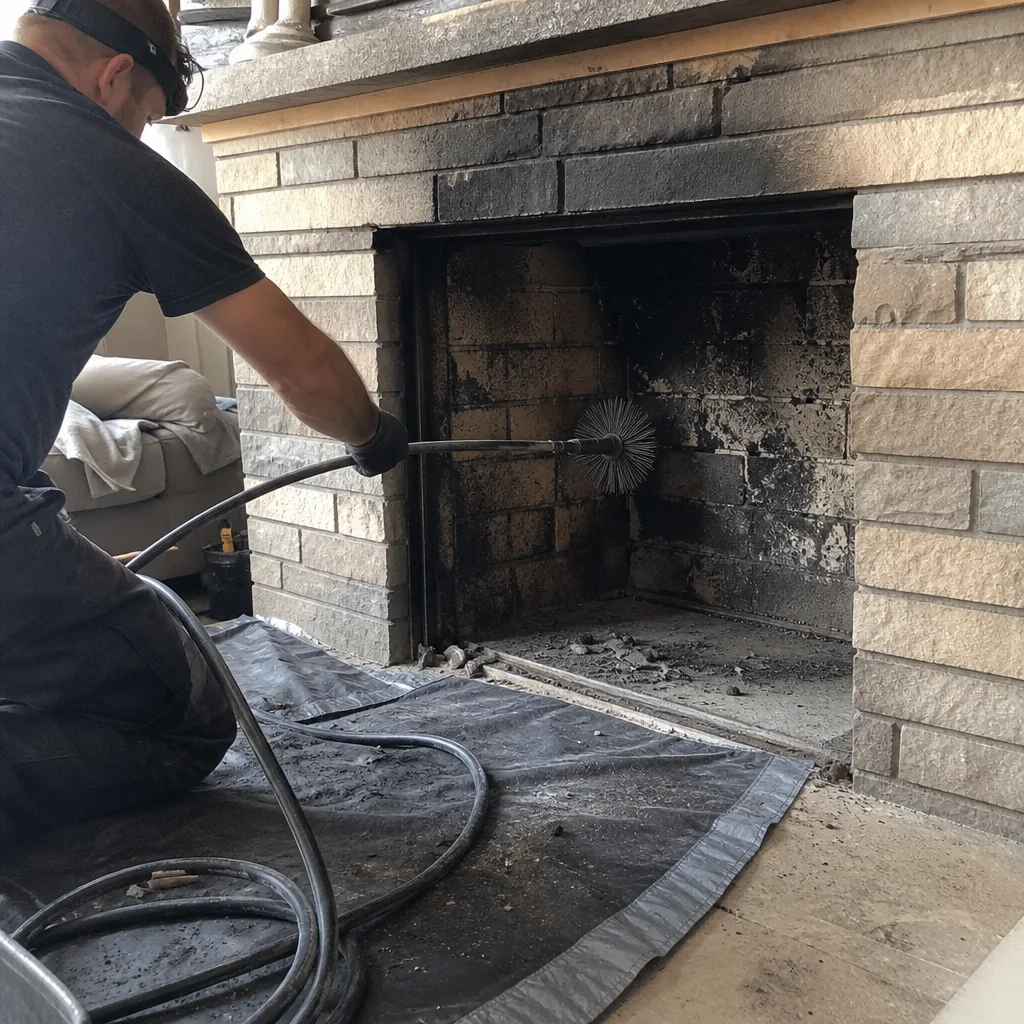 Before
 After
 Before
 After
Seasonal Cadence: What to Do in Spring, Summer, Fall, Winter
Here’s the seasonal rhythm, built for Schaumburg’s actual weather patterns and the way people actually use their fireplaces here.
Spring (after the last fire, usually April)
- Have the system swept if you were a moderate or heavy user this season. Don’t wait until fall. A chimney full of creosote sitting through a humid Illinois summer absorbs moisture, and wet creosote has a stronger odor and a more acidic chemistry than dry creosote. A spring sweep means the chimney is clean before the humidity settles in.
- Close the damper tightly and verify the seal. If a cold draft still leaks through, add damper sealing to your fall to-do list.
- Schedule any cap, crown, or flashing repairs. Spring is the ideal season for exterior chimney work in Schaumburg because the weather is workable and the materials cure better in moderate temperatures than in November’s freeze-threat conditions.
Summer (June through August)
- Do the ground-level visual inspection: cap, crown, flashing, exterior brick. Summer is also when you’ll notice efflorescence on exterior masonry, which signals water movement through the brick.
- If you have a gas fireplace, now is a good time to have the unit and venting serviced. Gas appliance specialists are less backed up in summer, and any needed parts are easier to source.
- Check for animal intrusion. Racooons, squirrels, and chimney swifts (a protected species in Illinois) all nest in chimneys during the summer months. A missing or damaged cap is an open invitation. Chimney swifts in particular can’t be disturbed while nesting, so the fix is preventing entry before they arrive.
Fall (September through early November)
- Schedule your sweep and inspection if you didn’t do it in spring. This is the busiest season for every chimney company in the Schaumburg area, so book early.
- Stock and properly season firewood if you burn wood. Schaumburg yards have plenty of deciduous trees, and a lot of homeowners burn wood from their own property. That wood needs a full year of seasoning after being split. If you’re splitting in September for burning in December, you’re in for a smoky, creosote-heavy season.
- Test the damper one more time before the first fire. Confirm it opens fully and closes snugly.
Winter (December through March)
- Heavy users should schedule a mid-season sweep if the chimney starts showing signs of reduced draft or creosote odor.
- After any major freeze or storm, run the post-weather checks described above. Five minutes outside after a hard freeze can catch a problem while it’s still minor.
- Pay attention to how the fire behaves. A fire that’s sluggish, smoky, or producing more than the usual amount of popping and spitting is often telling you about draft problems, moisture in the wood, or creosote accumulation.
This cadence works because it’s responsive. It respects that Schaumburg weather is unpredictable and that homeowners have different usage patterns. The point is never to hit a specific date. The point is to have a rhythm where each season has one or two actions that keep the system in known condition. If you’d like this entire inspection and sweep handled as one visit, the Dryer Vent Cleaning in Wheeling page shows how we approach full venting system work, and a chimney sweep integrates with that same service philosophy.
Signs Your Chimney Is Telling You Something
Most chimney failures announce themselves before they become expensive, but only if you know what to listen for. Here are the signals we hear about most often from Schaumburg homeowners, and what each one actually means.
- Creosote odor in the house during summer: This is the most common warm-weather complaint we hear. It means creosote is present in meaningful quantity and the chimney is drafting humid air down into the living space. It’s not a housekeeping issue; it’s a signal that a sweep is overdue.
- Smoke backing up into the room: This can mean a cold-air plug (common in very cold weather with a tall exterior chimney), a restricted flue, a closed or partially closed damper, or negative pressure from a tight house with competing exhaust appliances. If it happens more than once, have it looked at. Don’t just open a window and move on.
- White staining on exterior brick: Efflorescence indicates water moving through the masonry. It’s not harmful by itself, but it tells you that water is entering the chimney structure somewhere. The source is usually the crown, cap, or flashing.
- Flaking or spalling brick: Freeze-thaw damage. Each spalled brick face exposes more surface area, which accelerates further water intrusion. This is progressive and does not self-correct.
- Rust streaks on the exterior chimney face: Metal components inside or on the chimney are corroding. This could be the damper, the cap, the flashing, or even a firebox liner if it’s a prefabricated unit.
- A fire that suddenly burns differently: Slower to start, less lively flame, more smoke, unusual popping. These are draft and moisture signals. Good draft is quiet and steady. A lazy, smoky fire is not a personality quirk; it’s a symptom.
The pattern across all of these is that each one is early-stage information. None of them require emergency action, but all of them mean something specific has changed in the system. The cheapest version of any of these problems is the one you address the week you notice it.
Common Mistakes to Avoid
- Assuming “we barely use it” means “it needs nothing.” A rarely used chimney still takes weather damage to the cap, crown, and flashing. The firebox stays clean, but the exterior components are aging at the same rate as a heavy user’s. Annual visual checks are non-negotiable in Schaumburg’s climate regardless of usage.
- Burning unseasoned wood to save money on firewood. Green wood produces dramatically more creosote per cord than seasoned wood. The money saved on wet wood gets spent on additional sweeping, and in the worst case, on repairing the damage from a chimney fire. Seasoned wood has been split and stacked for at least one full year.
- Using the fireplace while the damper is partially closed to “hold heat in.” This sends combustion gases, including carbon monoxide, into the living space. The damper should be fully open during any fire. If you’re cold, the problem is the fire, the wood, or the house’s insulation, not the damper setting.
- Ignoring a missing or damaged cap because the fireplace “still works fine.” A missing cap is the single most common entry point for animals and water in Schaumburg chimneys. It’s a $200 to $400 fix that prevents a $2,000 to $4,000 repair. The math is not complicated.
- Waiting until fall to think about the chimney. Spring and summer are the right seasons for repairs and major cleaning. By October, every reputable chimney company in the northwest suburbs is booked solid. A Schaumburg homeowner who calls in November for a sweep needs either patience or luck.
- Doing a visual check from the ground and declaring the system healthy. The components that fail most dangerously, the liner and the smoke chamber, are invisible from the ground. A ground-level check is useful but incomplete. The inside of the flue doesn’t show itself until someone puts a camera up there.
- Treating a gas fireplace as zero-maintenance because it makes no smoke. Gas systems have venting that corrodes, burners that clog, and carbon monoxide risk that wood systems don’t share in the same way. A gas fireplace should be inspected and serviced as regularly as a wood burner is swept.
When to Call a Professional
Here’s the short version: call when the problem requires access, specialized equipment, or a level of certainty you can’t get from the ground. That means any suspicion of liner damage, any significant creosote buildup, any water ingress through the cap, crown, or flashing, any smoke backing into the house, and any post-storm damage beyond a loose cap. It also means any gas appliance venting question, because carbon monoxide does not give you a warning. If the firebox looks fine but it’s been more than two years since a camera inspected the liner, schedule the inspection. The peace of mind isn’t in the checkmark. It’s in the documentation. When we inspect, we show you what the camera sees. Nothing gets recommended without footage you can look at yourself.
Duke Chimney Sweep offers free estimates in Schaumburg. Call (844) 660-6510 and we’ll walk the property with you or schedule a full inspection if you already know something’s not right. We work with specification-grade materials from Gelco and Olympia Chimney, and we’re HeatShield-certified for flue restoration, which means we can often restore a liner or crown without the full teardown another company might quote. For homeowners in adjacent communities, the Chimney Repair in Wheeling page covers our repair scope, including HeatShield resurfacing and DuraFlex liner retrofits for non-standard or aging flues.
Frequently Asked Questions
Count your fires from last season. If you burned more than 20 fires or more than one full cord of wood, schedule a sweep. If you burned less, a visual inspection can usually determine whether the light soot layer is acceptable for another season. The surest method is a professional inspection with a camera, which removes the guesswork entirely. Call (844) 660-6510 and we’ll help you make the call based on your actual usage.
You can clean a chimney from the top down with the right equipment, but the honest answer is that most Schaumburg homeowners shouldn’t. The risks include roof falls, improper brushing that leaves creosote in place, and the false confidence that comes from a chimney that “looks cleaner” while a camera would show missed deposits in the smoke chamber. More importantly, a sweep without an inspection misses the point. The sweep cleans. The inspection tells you whether the system is safe, and that requires training and equipment most homeowners don’t have.
A standard chimney sweep in the Schaumburg area typically runs between $180 and $300 for a wood-burning fireplace with a standard accessible flue, with additional cost if the chimney hasn’t been serviced in years or if there are animal nests or heavy glaze creosote present. Every chimney is different, and the quoted price depends on flue height, access difficulty, and condition. Our estimates are free, and we confirm the price before work begins.
The chimney doesn’t fail on a schedule; it fails when creosote buildup reaches a combustible threshold or when water damage from an unrepaired crown or flashing works deep enough into the structure. A few missed years on a light-use chimney might be fine. A few missed years on a heavy-use chimney could mean a chimney fire or a liner that’s actively deteriorating. The problem is that you can’t tell which situation you’re in without someone actually looking.
No, gas fireplaces do not need sweeping in the wood-burning sense, but they need servicing. Gas systems should be inspected for venting corrosion, burner cleanliness, pilot assembly function, and carbon monoxide risk. The venting is a different kind of clean, and the inspection is a different kind of thorough, but the need for regular professional attention is the same.
In Schaumburg, both are realistic risks, but water damage is far more common. Our freeze-thaw cycles and the variety of precipitation we get mean that cap, crown, and flashing failures happen on almost every chimney eventually, while chimney fires are concentrated among heavy wood burners who skipped sweeping. The average Schaumburg chimney’s biggest threat is water, not fire. That said, a chimney fire in one of our older neighborhoods is often a total loss, so neither risk is hypothetical.
The Bottom Line
Your chimney does not need maintenance on a calendar schedule. It needs maintenance on a usage and weather schedule. Count your fires, know your components, do the ground-level checks every season, and get a camera inside the flue at reasonable intervals. The cap, crown, and flashing fight the weather. The liner and firebox fight the heat. The damper fights simple age. Each has its own failure clock, and each is easy to manage when caught early and expensive when ignored. For Schaumburg homeowners who want a specialist rather than a generalist, the full venting system approach, with specification-grade materials and camera-documented inspections, is what keeps a chimney in known condition season after season. The Duke Chimney Sweep home page has the full scope of our services, and we’re always glad to answer questions about your specific setup. Call (844) 660-6510 for a free estimate.
Written by the team at Duke Chimney Sweep, serving Schaumburg since 2016. Explore more guides & resources on chimney care and maintenance.