

Last updated October 31, 2026
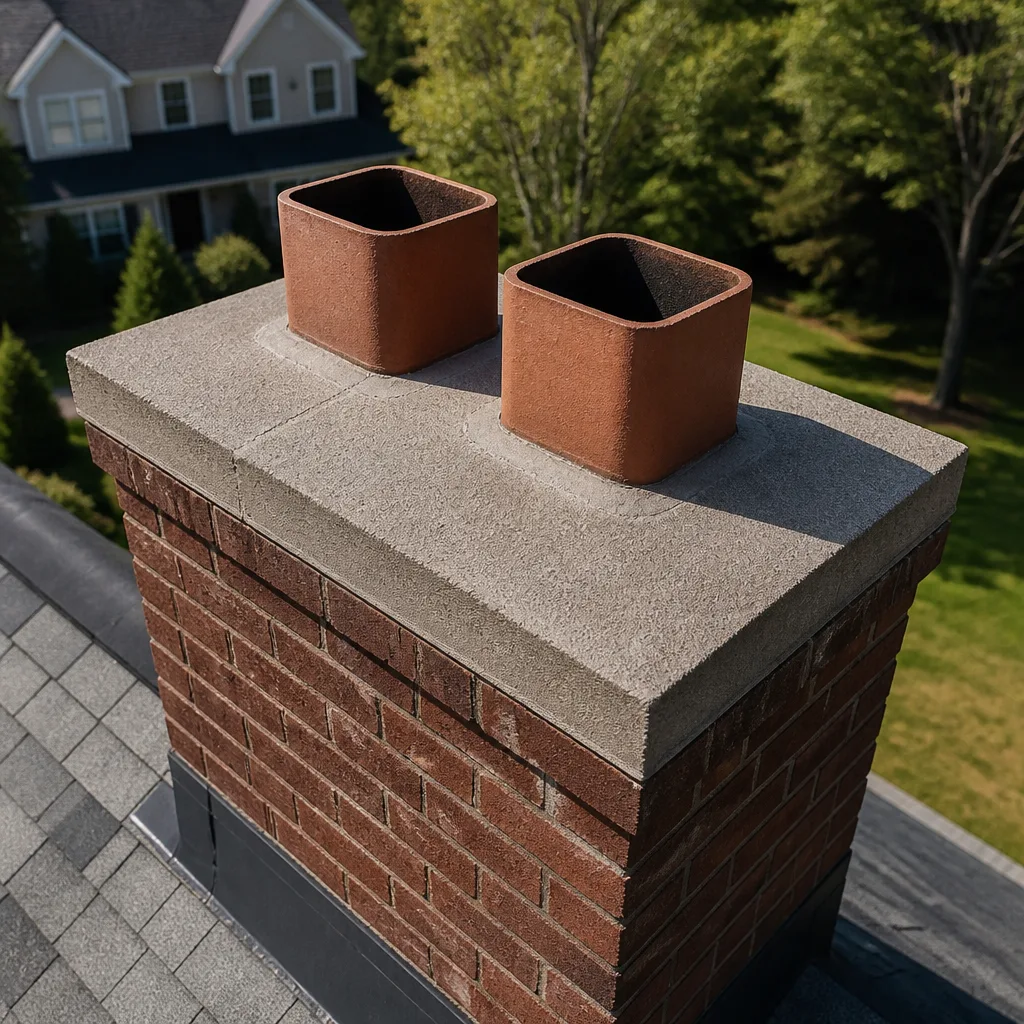 Sweep & inspection
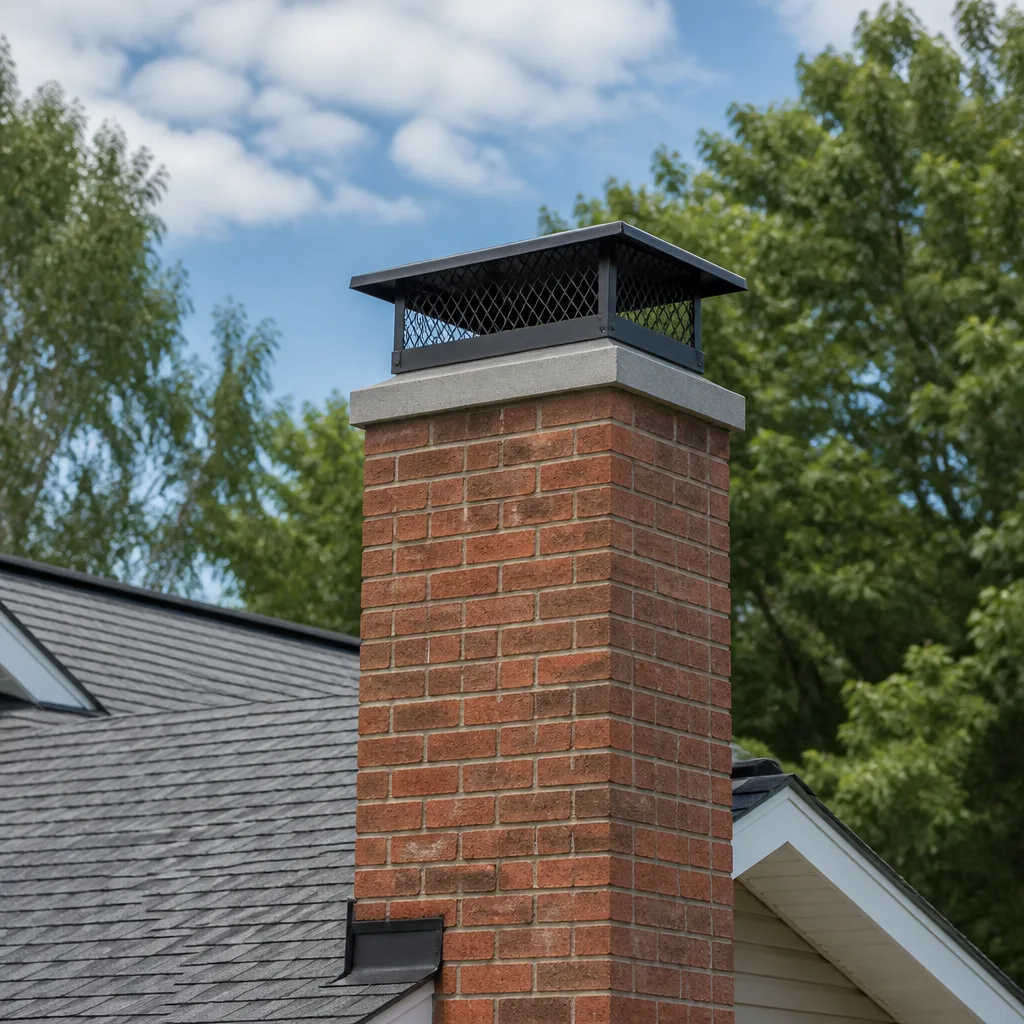 Caps & crowns
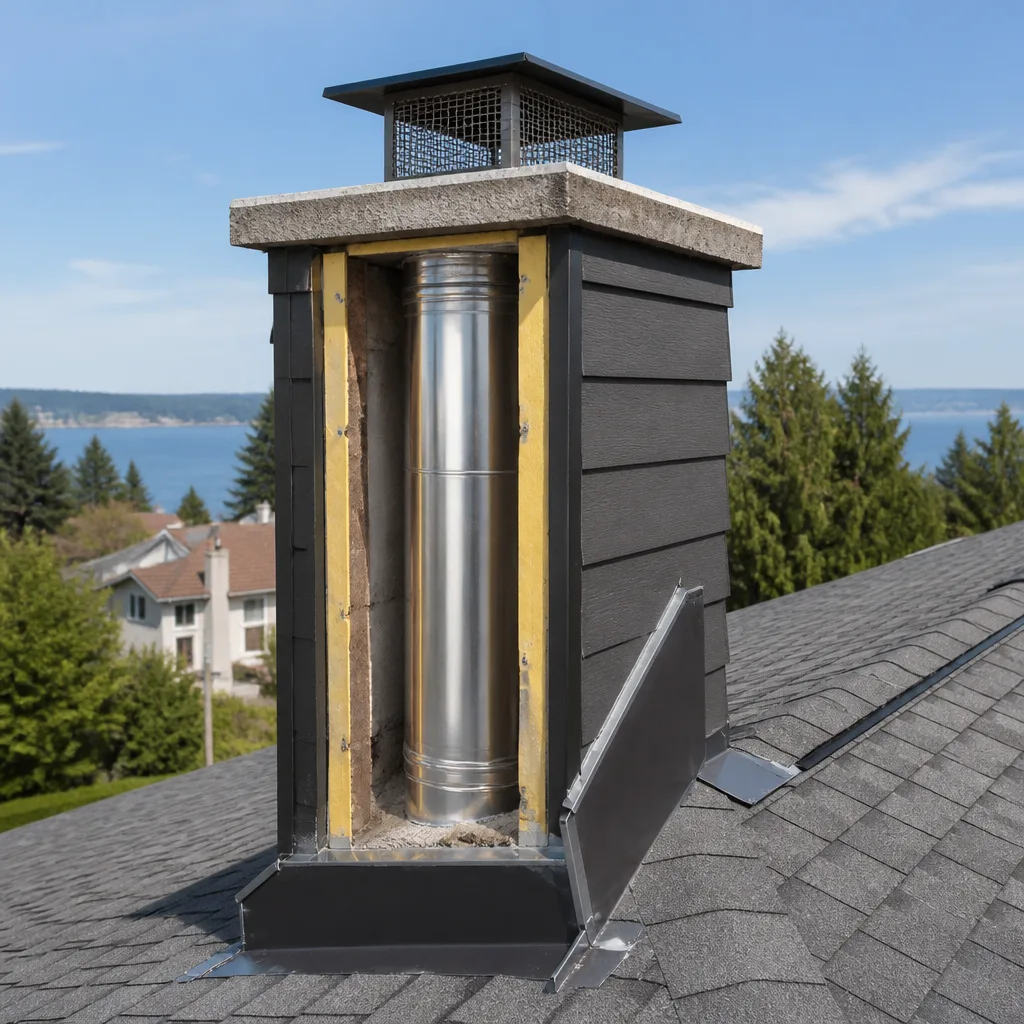 Flue relining
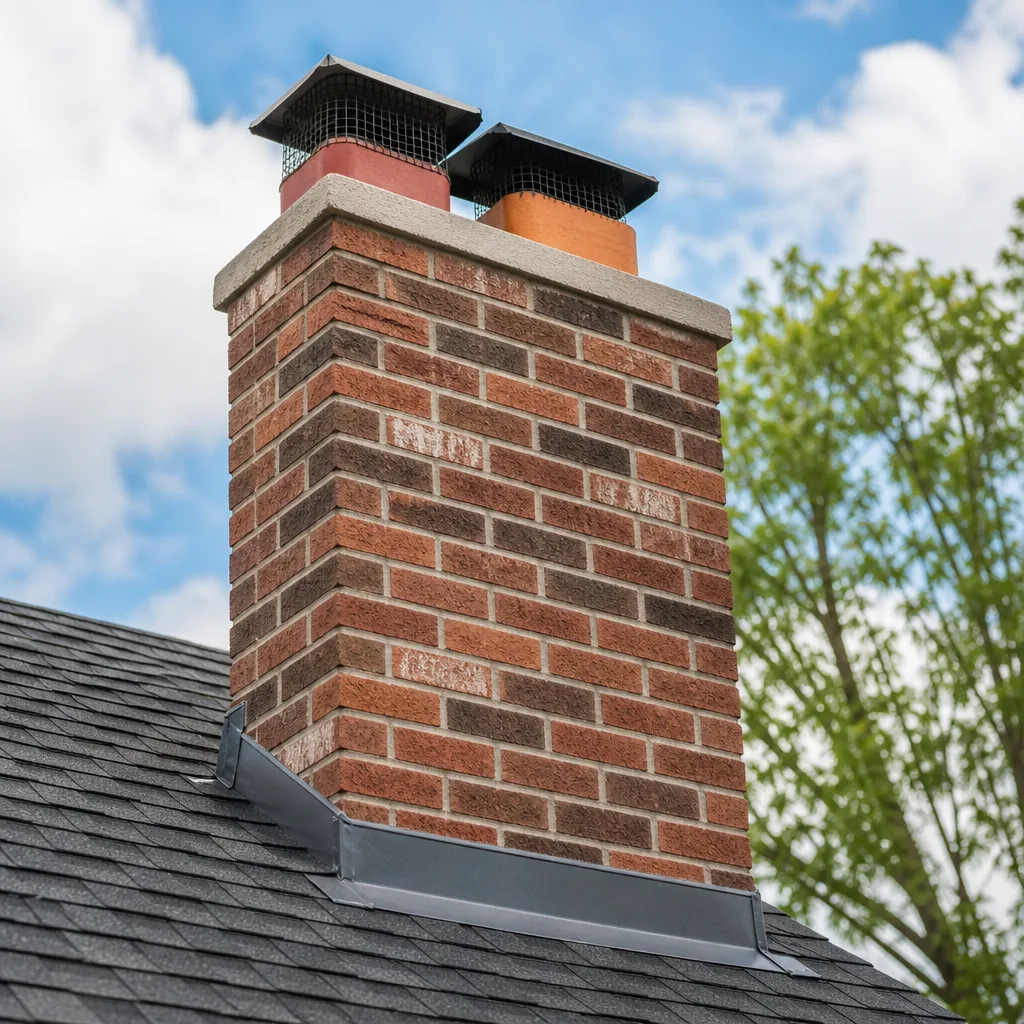 Masonry repair
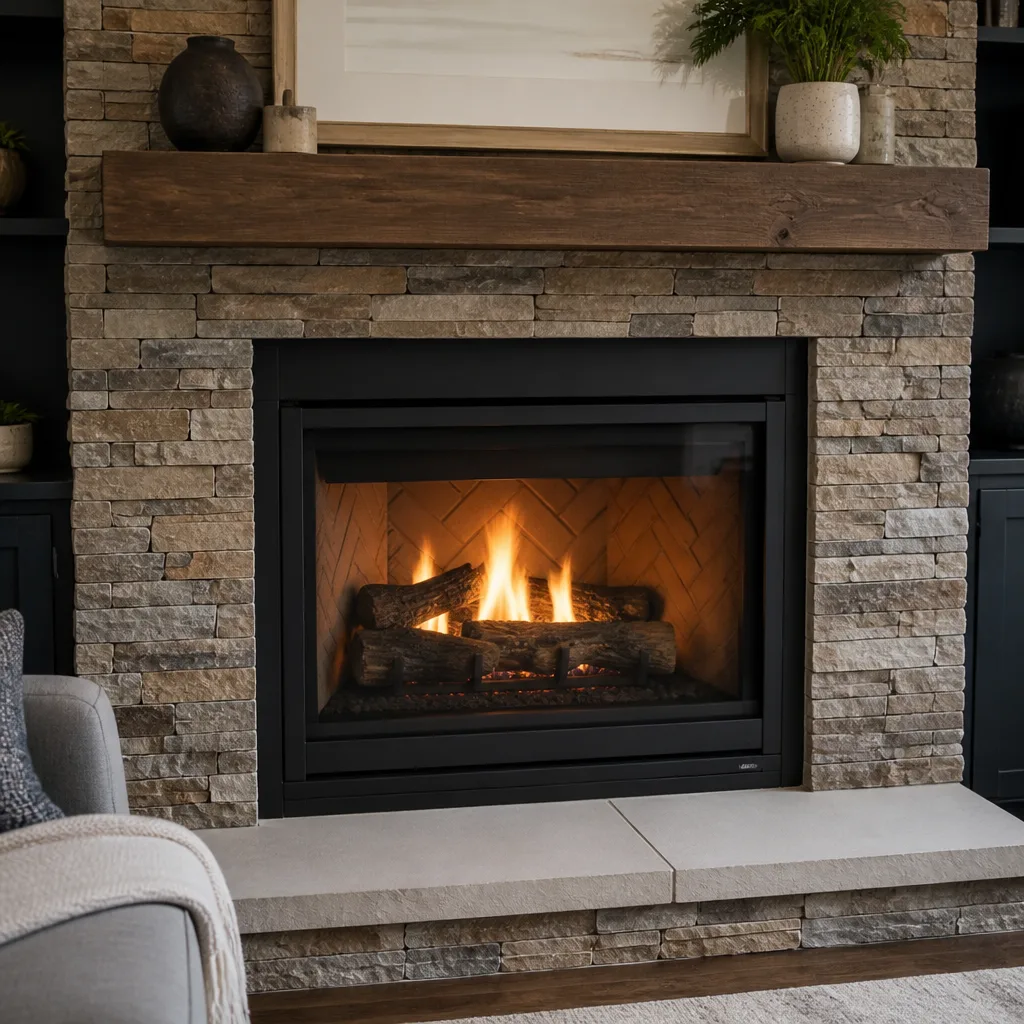 Gas fireplace service
Level 1 sweep and inspection to the NFPA 211 annual standard - flue, crown, cap, and flashing checked and photographed
Chimney sweep logs do not sweep chimneys. They loosen some creosote - which then falls where a brush and vacuum still have to collect it.
Chimney Sweep Troubleshooting: Common Problems and How to Fix Them
Smoke in your living room isn’t a chimney problem. It’s a symptom. The actual problem could be a blocked cap, a negative pressure zone in the house, or a flue sized wrong for the appliance. Each one has a different fix, and only one of them requires emergency service. Most homeowners in Schaumburg call us after the first cold snap, when the fireplace finally gets used again and something doesn’t behave the way it did last March. What we usually find is that the problem didn’t start that week. It had been developing for months, sometimes years, and the signs were there the entire time. This guide teaches you to read those signs the way a tradesperson does, so you can describe the problem accurately on the phone, avoid being sold a repair you don’t need, and know when a chimney sweep is actually necessary.
Quick Answer
Chimney troubleshooting starts with identifying the specific symptom: smoke rollout, weak draft, summer odors, or damper noise each trace to different root causes. Most issues come down to one of five things: obstruction, creosote buildup, liner damage, house pressure imbalance, or a damper that isn’t seating properly. Before calling for service, check the obvious: is the damper fully open, is the cap clogged with debris, and are exhaust fans running in the house?
Styles & brands we work with
Table of Contents
- The Symptom-to-Cause Matrix: Four Problems, Four Root Causes
- Draft Problem or House Pressure Problem? How to Tell the Difference
- The Three Creosote Odor Scenarios and What Each One Means
- Damper Noise: What’s Normal and What’s a Warning Sign
- What You Can Safely Assess Yourself vs. What Needs a Camera
- Why “It Worked Fine Last Year” Is Not a Safety Baseline
- Dryer Vent Troubleshooting: The Other Venting System in Your Home
- Common Mistakes to Avoid
- When to Call a Professional
- Frequently Asked Questions
The Symptom-to-Cause Matrix: Four Problems, Four Root Causes
After years of troubleshooting chimneys in Schaumburg, we’ve found that most issues fall into four categories. Each symptom has a diagnostic trail. Follow the trail and you’ll find the actual cause, not just the visible complaint. Here’s the matrix we use when a homeowner calls with a problem:
- Smoke rollout into the room. Usually one of three things: the damper isn’t fully open, the flue is obstructed (nests, debris, creosote chunks), or the house is in negative pressure because exhaust fans are running. The fix depends on which one it is. A damper takes 10 seconds to check. A flue obstruction needs a chimney sweep with the right brushes and rods. House pressure needs a simple test we’ll cover below.
- Slow draw or weak flame. The fire burns, but lazily. Smoke curls up instead of pulling cleanly. This often traces to a flue that’s undersized for the appliance, a flue that’s too cold (common in exterior masonry chimneys in Schaumburg winters), or creosote accumulation narrowing the passage. Each one changes the draft equation differently.
- Odor in summer. Chimneys smell in summer because warm, humid outdoor air moves down the flue and carries combustion deposits back into the house. The smell itself tells you what kind of deposit you’re dealing with. More on that below.
- Damper noise. A damper that rattles, whistles, or creaks is telling you something about fit, wear, or installation. A whistling damper is a draft leak. A rattling damper is loose hardware. A creaking damper is a mechanical wear issue. None of these are fire hazards by themselves, but they’re all worth addressing before the next heating season.
What this matrix doesn’t include is the chimney that looks fine from the outside but has hidden damage inside the flue. That’s the one that catches people. We’ve pulled camera footage from Schaumburg chimneys that showed cracks the homeowner had no way of seeing from below, and those cracks were actively leaking heat into the surrounding masonry. The matrix handles the visible symptoms. The camera handles what the eye can’t reach.
Draft Problem or House Pressure Problem? How to Tell the Difference
Modern Schaumburg homes are tighter than they were 30 years ago. Windows seal better, doors fit better, insulation is denser. That’s good for your heating bill, but it changes how your chimney behaves. A chimney needs air to move air. When a house is too tight, or when exhaust fans are running, the house creates negative pressure that competes with the chimney’s natural draft.
Here’s how to test it. Open a window near the fireplace before you light the fire. If the draft improves immediately, the problem is house pressure, not the chimney. The window is giving the house the air it needs to feed the fire. If the draft doesn’t improve, the problem is in the flue itself: obstruction, creosote, liner damage, or a flue that’s too cold.
The fans that cause this: kitchen range hoods, bathroom exhaust fans, whole-house attic fans, and even clothes dryers. Any of those running while the fireplace is going can pull smoke back into the room. Schaumburg homes with newer windows and a finished basement tend to show this problem more often because they’re just tighter. The fix isn’t always a chimney repair. Sometimes it’s a make-up air vent or simply cracking a window during fires. A Chimney Sweep in Wheeling once told us they see the same pattern in newer construction there. Tight houses have different chimney needs than old drafty ones.
If you’ve ruled out house pressure and the draft is still weak, move to the flue. The most common obstruction in Schaumburg isn’t a bird’s nest. It’s creosote that has flaked off the flue walls and fallen into the smoke shelf or firebox. A good sweep with proper brushes and a vacuum system clears that. If the creosote is still bonded to the flue walls, you’re looking at a heavier cleaning job. That’s where the difference between a basic sweep and a restorative clean shows up.
The Three Creosote Odor Scenarios and What Each One Means
Creosote smells. That’s not a defect. It’s a property of the material. The specific smell tells you what kind of creosote you’re dealing with, and that tells you what needs to happen. Most homeowners in Schaumburg describe it as a general “fireplace smell” in summer, but there are actually three distinct odor profiles:
- Wet wood smell (damp, campfire-like). This comes from creosote mixed with moisture. It usually means two things are happening: there’s creosote accumulation in the flue, and moisture is getting in somewhere. The moisture source could be a cracked crown, a missing cap, or condensation inside the flue. The smell is strongest on humid days. This is the most common summer odor scenario we see in Schaumburg, and it usually points to affordable maintenance, not major repair. A sweep and a moisture-source fix usually resolves it.
- Acrid chemical smell (sharp, tar-like). This is stage-three creosote, the glazed, tar-like kind that forms when combustion temperatures are high and airflow is restricted. It’s the hardest creosote to remove by standard brushing because it bonds to the flue walls. This is the scenario where you might need more aggressive removal methods. It’s also a fire hazard because glazed creosote is highly flammable. If this smell is strong, don’t wait. Get a professional assessment before burning season.
- Musty smell (mold-like, organic). This one usually isn’t creosote at all. It’s moisture in the masonry, often from a leaking chimney crown or a damaged flashing at the roofline. Water soaks the brick, and in summer heat, organic material in the masonry starts to grow. The fix is waterproofing and crown repair, not a sweep. But you need to identify the moisture source, and that requires either a visual inspection from the roof or a camera run up the flue.
If you’re smelling a fireplace in August, something in that flue is giving up odor. The only question is whether it’s a cleaning issue or a moisture issue. Both are fixable. The mistake is ignoring it until October, because by then the moisture source may have done real damage to the masonry through freeze-thaw cycles the next winter brings to Schaumburg.
Damper Noise: What’s Normal and What’s a Warning Sign
A damper is a moving part in a hot, sooty environment. It will make some noise over its life. The question is which noise.
A whistle or whine when the fire is burning is air moving through a gap. The damper isn’t seating flush against its frame. That’s a draft leak, which means the chimney is pulling air through the house even when the damper is “closed.” It wastes heat in winter and can pull cool air past the seal in summer. Sometimes the fix is as simple as cleaning the seating surface so the damper closes fully. Other times the damper has warped from heat exposure and needs to be replaced or fitted with a gasket.
A rattle when the wind blows is loose hardware or a damper plate that has play in its hinge points. Wind moving across the chimney top creates pressure fluctuations that travel down the flue and make loose components move. This isn’t dangerous by itself, but it indicates wear. If the damper is that loose, it’s probably not sealing well either, which circles back to the whistle problem.
A creak when you open or close the damper is a mechanical wear issue. The hinge pins or the operating handle are binding. Sometimes lubricating the pivot points helps, but many dampers in older Schaumburg homes are throat dampers that sit right at the firebox opening and take direct heat. Once they warp or corrode, they’re done. The fix is a replacement damper or, increasingly, a top-sealing damper that mounts at the top of the flue and seals better than any throat damper can.
None of these are panic-button issues. But they’re signals. A damper that doesn’t seal is a small energy leak that becomes a bigger smoke and odor problem later. We’d rather fix a damper in July than diagnose smoke rollout in January.
What You Can Safely Assess Yourself vs. What Needs a Camera
There’s a line between what a homeowner can check and what a trained sweep needs to see. Knowing that line saves you time and money.
Safe to assess yourself:
- Cap debris. From the ground, you can usually see if leaves, branches, or visible nesting material are blocking the cap. In Schaumburg, squirrel nests and bird nests are the most common cap obstructions. If you can see blockage from the ground, it’s worth a call. If you can’t see anything, that doesn’t mean the flue is clear. It just means you can’t see it.
- Visible damper failure. Open the damper fully. Does the plate move freely? Does it stay open? Does it close flush? If the handle is loose or the plate doesn’t seat, you’ve found a problem you can describe accurately on the phone, even if you can’t fix it yourself.
- Water stains around the chimney. Check the ceiling near the fireplace and the walls around the chimney chase. Water stains high on the wall near the roofline usually mean flashing failure. Stains near the firebox usually mean water is coming down through the masonry or the flue itself.
Needs a camera before anyone lights another fire:
- Any smoke rollout event. If smoke entered the living space even once, a flue obstruction or liner problem is on the table. A camera run shows exactly what’s in there. No guessing, no “let’s try a sweep and see.”
- Visible masonry cracks that run across multiple bricks. Cracks in the outside of the chimney can mean the flue inside is compromised. A camera will confirm or rule out flue liner damage. If the liner is cracked, the fix might be a HeatShield resurfacing job or a full reline with a DuraFlex system. Both are far less expensive than doing nothing until the chimney fails structurally.
- After any chimney fire. If you’ve had a chimney fire, even a small one that put itself out, the flue needs a camera inspection before the next burn. Chimney fires can crack liners, damage mortar joints, and warp metal components. A visual check from below doesn’t reveal that.
The camera is the difference between a guess and a diagnosis. At Duke Chimney Sweep home, we run a camera on every repair call because it changes the conversation. Homeowners see the footage. They know what they’re paying for. And when the camera shows a flue that’s actually fine, they know they’re not being sold a liner they don’t need.
Why “It Worked Fine Last Year” Is Not a Safety Baseline
This is the sentence we hear most often in Schaumburg, and it’s the one that worries us most. “It worked fine last year” sounds like a reason not to worry. In reality, it’s a snapshot from 12 months ago. Chimneys don’t hold still.
Here’s what changes in one heating season:
- Creosote accumulation is cumulative. Every fire adds a little. If you burned wet or unseasoned wood even for part of last season, the creosote layer is thicker this year. One season of high-moisture wood can move a chimney from a clean category to a heavy-glazed condition. The fire still “worked fine” because creosote accumulation is gradual. Until it isn’t.
- Moisture intrusion is progressive. A small crack in the crown lets in a little water. That water freezes and expands over a Schaumburg winter, widening the crack. Next spring, more water gets in. By fall, the crack is a channel. The chimney that was fine in March is not fine in November. The failure was quiet the whole time.
- Brick and mortar deteriorate at different rates. Mortar is softer than brick. It erodes first. You lose a little pointing, then a little more. Eventually a brick loosens. The fireplace still draws fine. The chimney is still structurally questionable. These are two different things.
“It worked fine last year” is a baseline only if nothing changed. But something always changed. The only question is whether you looked for it. A yearly sweep and inspection catches the change before the change catches you. That’s not upselling. That’s the actual purpose of the service. For more on what a proper sweep includes, see our Chimney Repair in Wheeling page, which covers what restoration work involves when age has already done its damage.
Dryer Vent Troubleshooting: The Other Venting System in Your Home
Your chimney isn’t the only venting system that needs troubleshooting. The dryer vent runs on the same principle: hot air and lint need a clear path to the outside. When that path narrows, the system works harder, dries slower, and builds heat. Most homeowners don’t think about their dryer vent until a load takes two cycles to dry. That’s the symptom. The cause is usually a lint obstruction somewhere in the run.
Signs your dryer vent needs attention:
- Clothes come out damp after a full cycle. The dryer is heating, but the hot, moist air can’t escape. It’s recirculating inside the drum. That’s the vent restriction at work.
- The dryer exterior is hot to the touch. A properly vented dryer stays relatively cool on the outside. If the cabinet feels hot, heat is backing up. That heat should be going out the vent.
- The lint screen gets heavy buildup even though you clean it every load. If the screen is clean but the vent is clogged further downstream, lint has nowhere to go and accumulates faster.
- You can’t remember the last time the vent was cleaned. Most Schaumburg homes we visit haven’t had a dryer vent cleaning in years. The duct is full of compacted lint, and the dryer has been working against that pressure the whole time.
This matters for two reasons. The first is fire risk. Lint is highly combustible, and a restricted vent lets heat build toward ignition. The second is energy waste. A clogged vent makes the dryer run longer, which costs you money every single load. We treat dryer vent cleaning as a fire-safety service, not an add-on. It’s part of the full venting system in your home. If you want the full picture of how this service works, Dryer Vent Cleaning in Wheeling covers what the process involves and why the vent run matters as much as the lint screen.
Common Mistakes to Avoid
- Burning “just one more fire” after a smoke rollout. If smoke came into the room, something changed in the flue. Burning again without an inspection is gambling with a system that already showed you a warning sign. Get the camera in first.
- Ignoring summer odors as “normal.” A chimney that smells in summer is telling you something. Either the flue has creosote that needs removing, or moisture is entering the system. Both are fixable now and more expensive later.
- Burning any wood because it’s “free.” Schaumburg homeowners sometimes burn scrap lumber, construction cutoffs, or fallen branches that haven’t seasoned. Softwoods and unseasoned wood produce wet, heavy creosote that builds up fast. Burn seasoned hardwood and you’ll have fewer emergency sweep calls.
- Closing the damper while embers are still glowing. The damper should stay open until the fire is completely out. Closing it early traps combustion gases and moisture in the flue, which accelerates creosote bonding and can send carbon monoxide into the house.
- Skipping the yearly inspection because “I don’t burn that much.” Even occasional fires produce creosote. Even unused chimneys develop moisture problems. The inspection catches both before they become failures.
- Using a chimney cleaning log instead of a sweep. Cleaning logs claim to reduce creosote, and some do help soften it. But they don’t remove it. A flue still has to be swept by a professional with brushes and a vacuum. The log is not a substitute. It’s a supplement at best.
- Patching cracks with silicone caulk. Silicone has no place in a chimney system that sees fire and freeze-thaw cycles. It fails quickly and flashes a false sense of repair. The right materials for chimney repair are specified products, not hardware-store shortcuts.
When to Call a Professional
You call a professional when the diagnostic trail leads somewhere you can’t safely or accurately see: flue obstruction below the cap, liner damage inside the flue, glazed creosote that won’t come off with standard brushing, or house pressure problems that persist after you’ve tried the window test. For help selecting a provider, read our guide on Choosing the Right Chimney Cleaning Brand: A Buyer’s Guide for Schaumburg. You also call when smoke has entered the living space, when summer odor is strong enough to notice, or when the chimney is over 10 years old and hasn’t been inspected in the last 2 years. Camera inspection is the standard for these situations, not the exception.
Duke Chimney Sweep offers free estimates in Schaumburg. Call (844) 660-6510 and we’ll talk through exactly what you’re seeing, whether it needs a sweep or a closer look, and what it’ll cost before anyone shows up. No pressure, no upsell theater. Just a straight answer from someone who’s seen it before.
Frequently Asked Questions
A chimney should be swept at least once per year if you burn wood regularly, and ideally before the heating season starts in October or November. Schaumburg winters put your chimney through freeze-thaw cycles that punish any existing damage, so a fall inspection catches issues before the worst weather hits.
Chimney sweep pricing in the Schaumburg area generally runs between $180 and $340 for a standard sweep, depending on flue condition, creosote level, and whether the chimney has been maintained recently. Heavy glazed creosote or animal removal adds to the cost. Call (844) 660-6510 for an exact quote. Estimates are free.
Not necessarily. A cracked liner is a real problem because it’s leaking heat and gases into the masonry, but the fix isn’t always a full replacement. Options include HeatShield resurfacing, which restores the existing flue without a full teardown, or a DuraFlex flexible liner system that relines the flue. The right choice depends on what the camera shows. A good sweep tells you when resurfacing is sufficient and when replacement is actually necessary.
Creosote builds up, and glazed creosote can ignite at around 2,000 degrees. A chimney fire can crack the liner, damage the masonry, and in the worst case spread to the house structure. Even without a fire, unserviced chimneys develop moisture problems that silently erode mortar and brick. The sweep is cheaper than the repair.
Warm, humid outdoor air moves down the flue in summer and carries combustion deposits back into the house. The smell tells you what’s in the flue: wet wood smell means creosote plus moisture, acrid chemical smell means glazed creosote, and musty smell means water in the masonry. All three are fixable, and all three get worse the longer you wait.
Yes. Lint is highly combustible, and a restricted vent lets heat build inside the dryer and the duct. The U.S. Fire Administration identifies dryer vents as a leading cause of residential fires, and the most common cause is lint accumulation from skipped cleanings. A professional dryer vent cleaning removes the accumulated lint from the entire vent run, not just what you can reach. Call (844) 660-6510 to schedule.
The Bottom Line
Chimney troubleshooting isn’t about memorizing every possible failure mode. It’s about reading the four main signals: smoke behavior, draft quality, odor profile, and damper condition. Each signal points to a specific cause, and most causes have a specific fix. The homeowner’s job is to notice the change and describe it accurately. For more detail, see our Complete Chimney Sweep Guide for Schaumburg Homeowners. The sweep’s job is to run the camera, make the diagnosis, and do the work that actually needs doing. In Schaumburg, where heating season is long and freeze-thaw cycles are relentless, the chimney that gets yearly attention is the one that protects the house for decades. The one that gets ignored is the one that fails suddenly. One of those costs a sweep every year. The other costs whatever the emergency ends up being. We know which one we’d pick.
Written by the team at Duke Chimney Sweep, serving Schaumburg since 2016.
See the difference
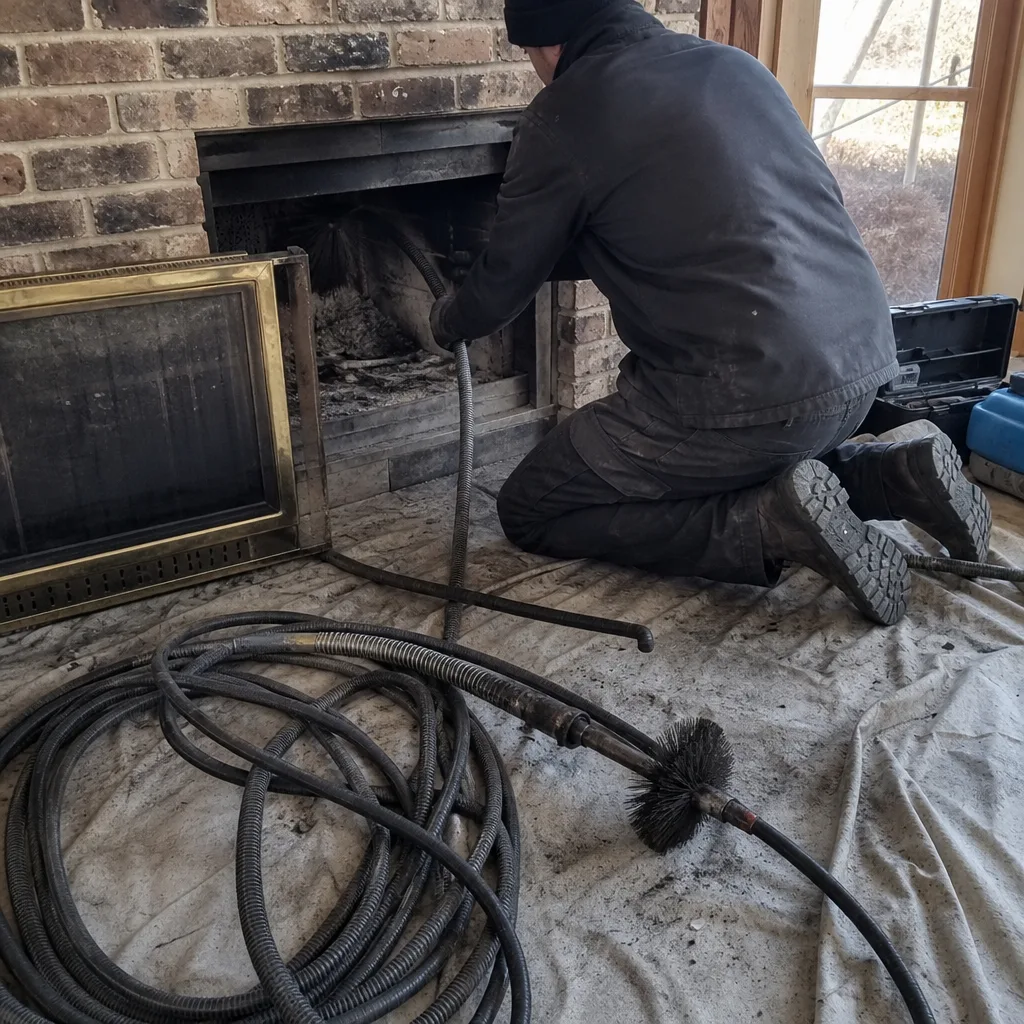 Before
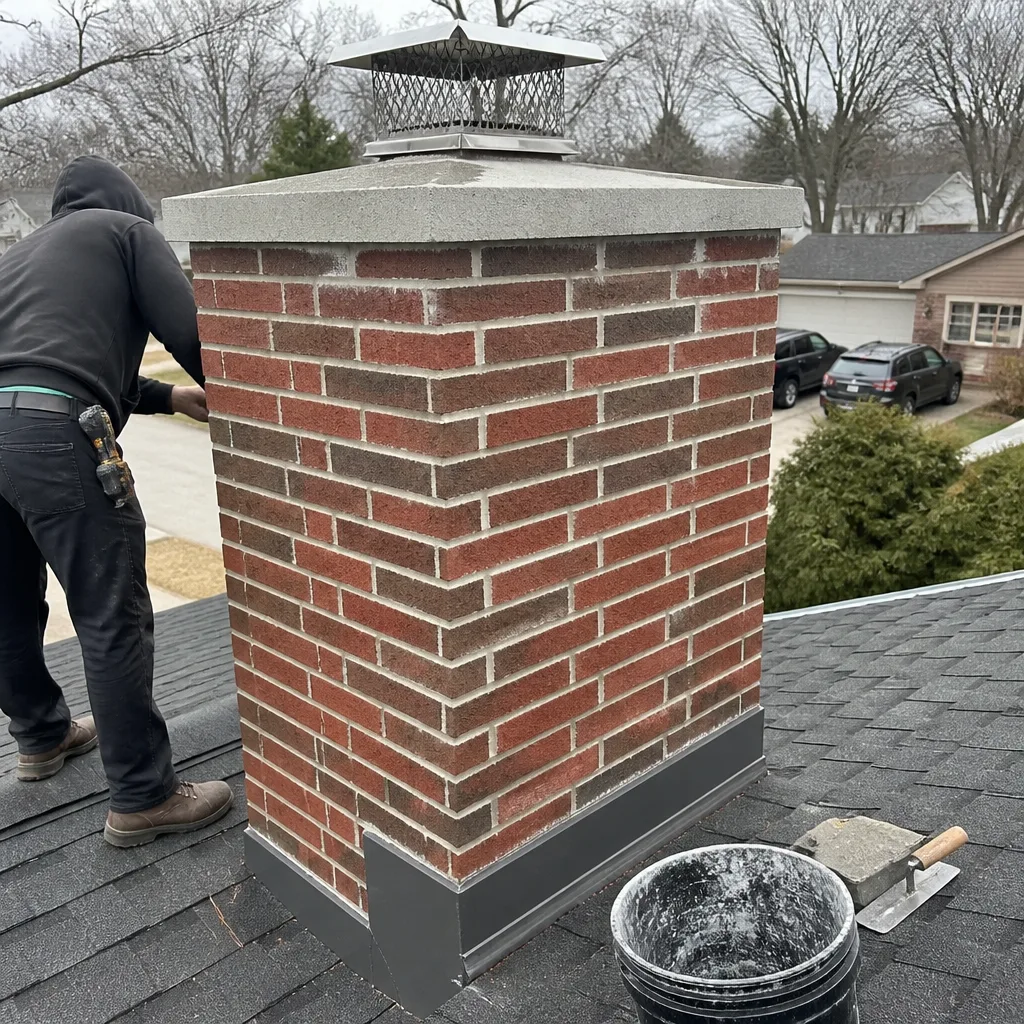 After
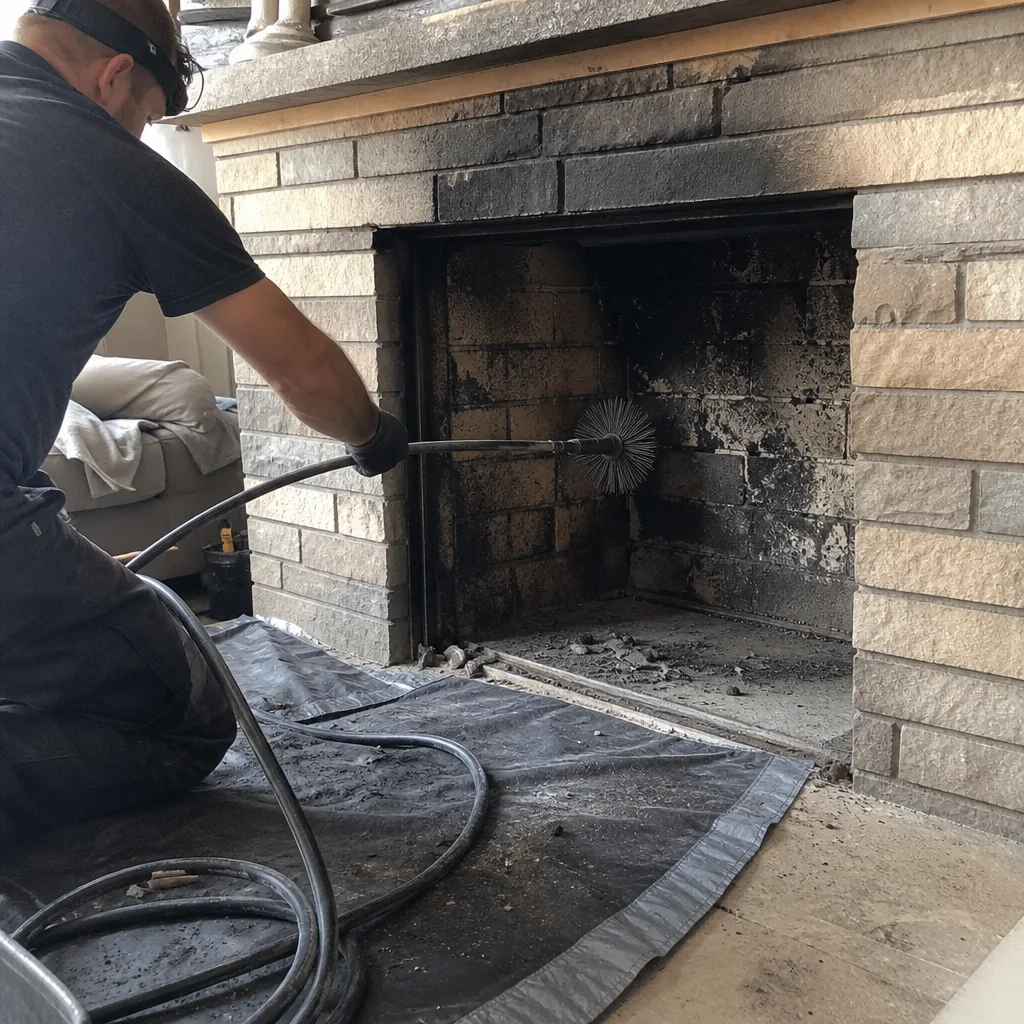 Before
 After
 Before
 After