


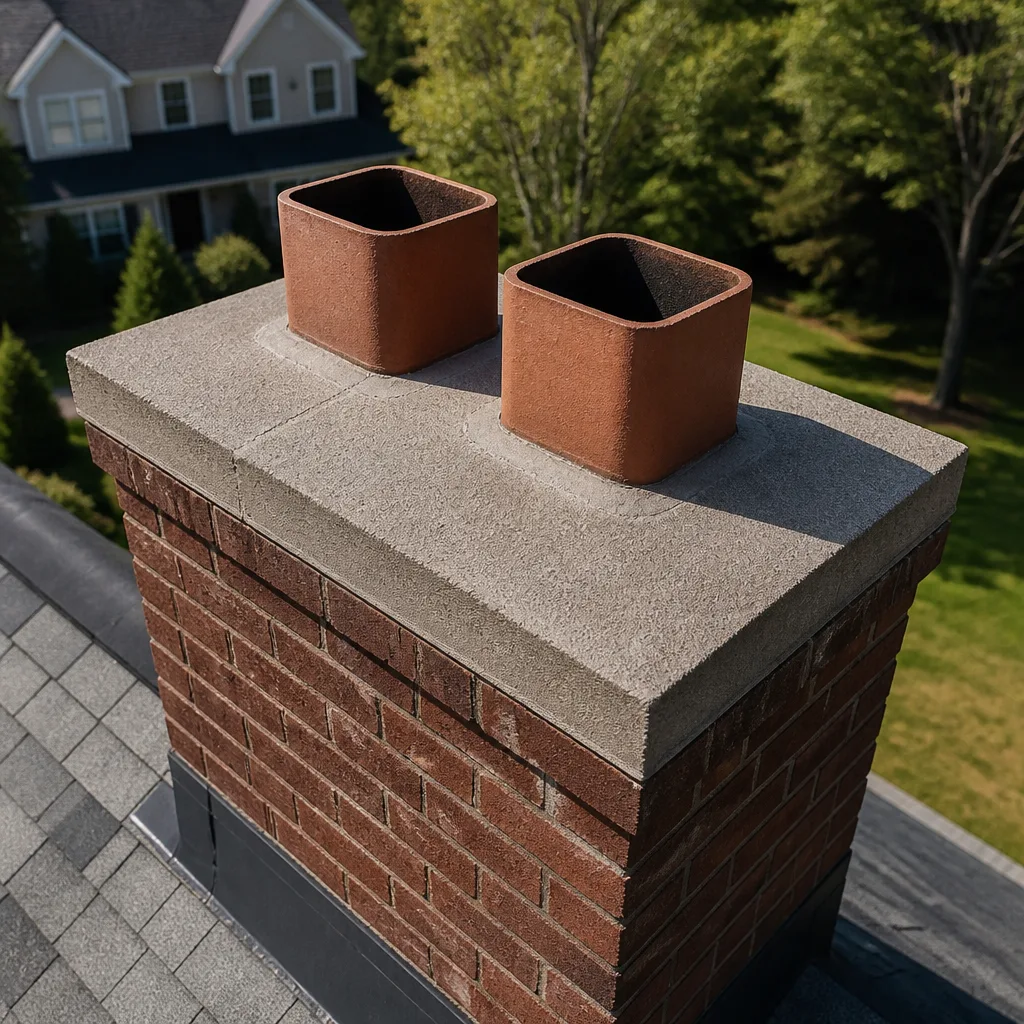
 Sweep & inspection
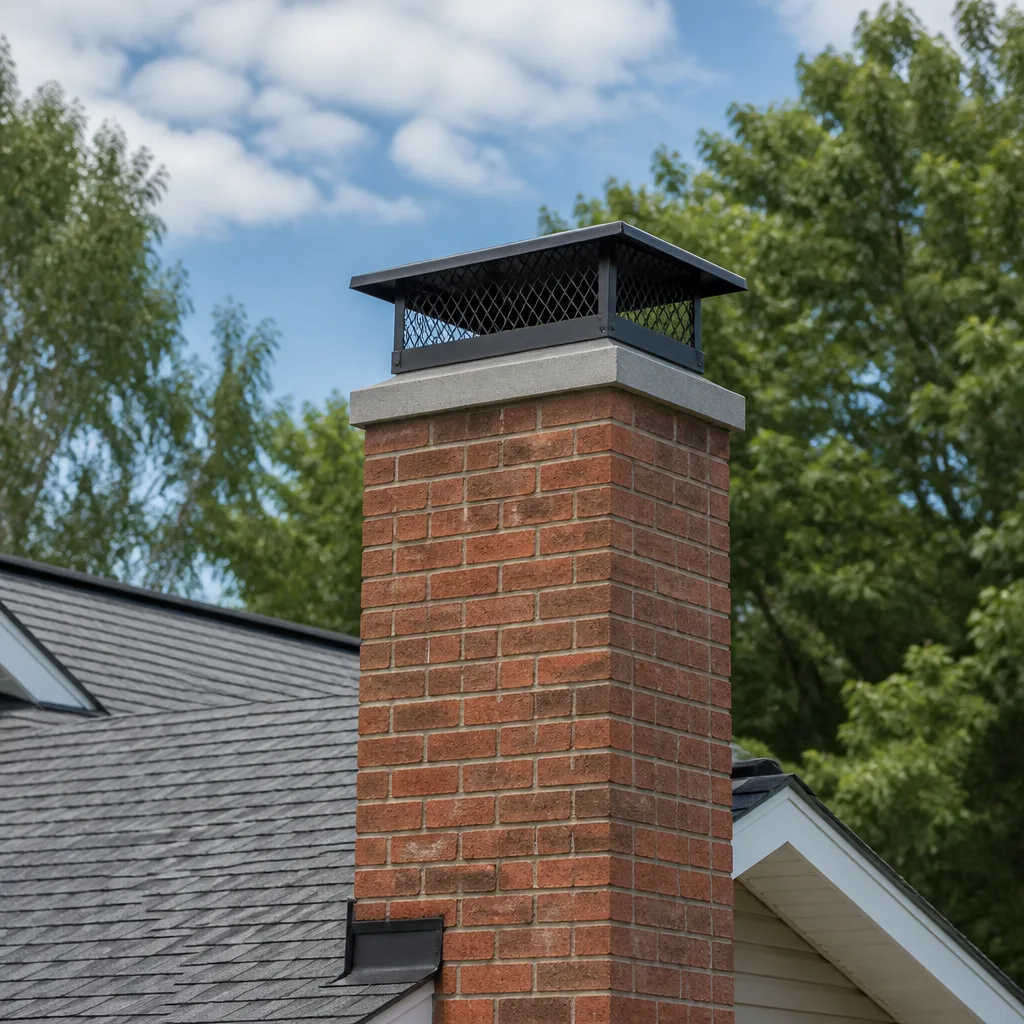 Caps & crowns
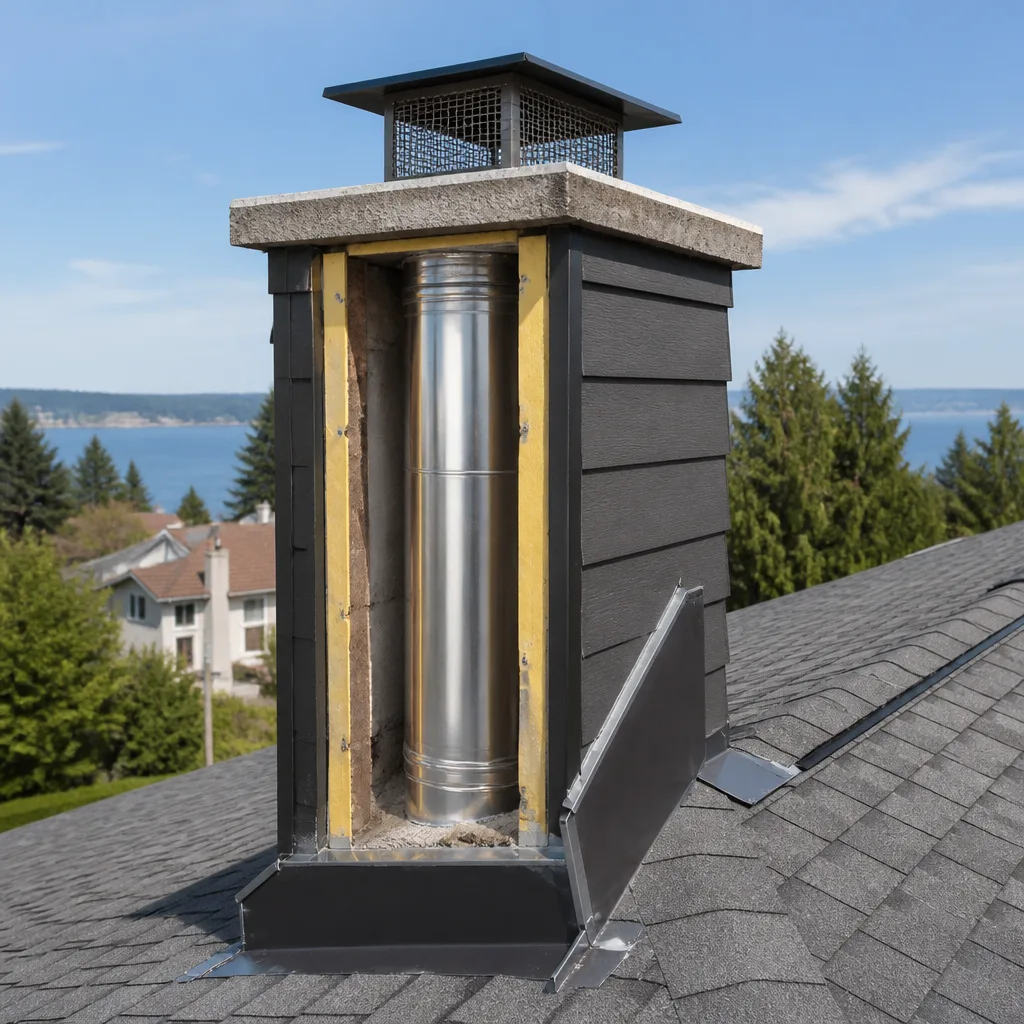 Flue relining
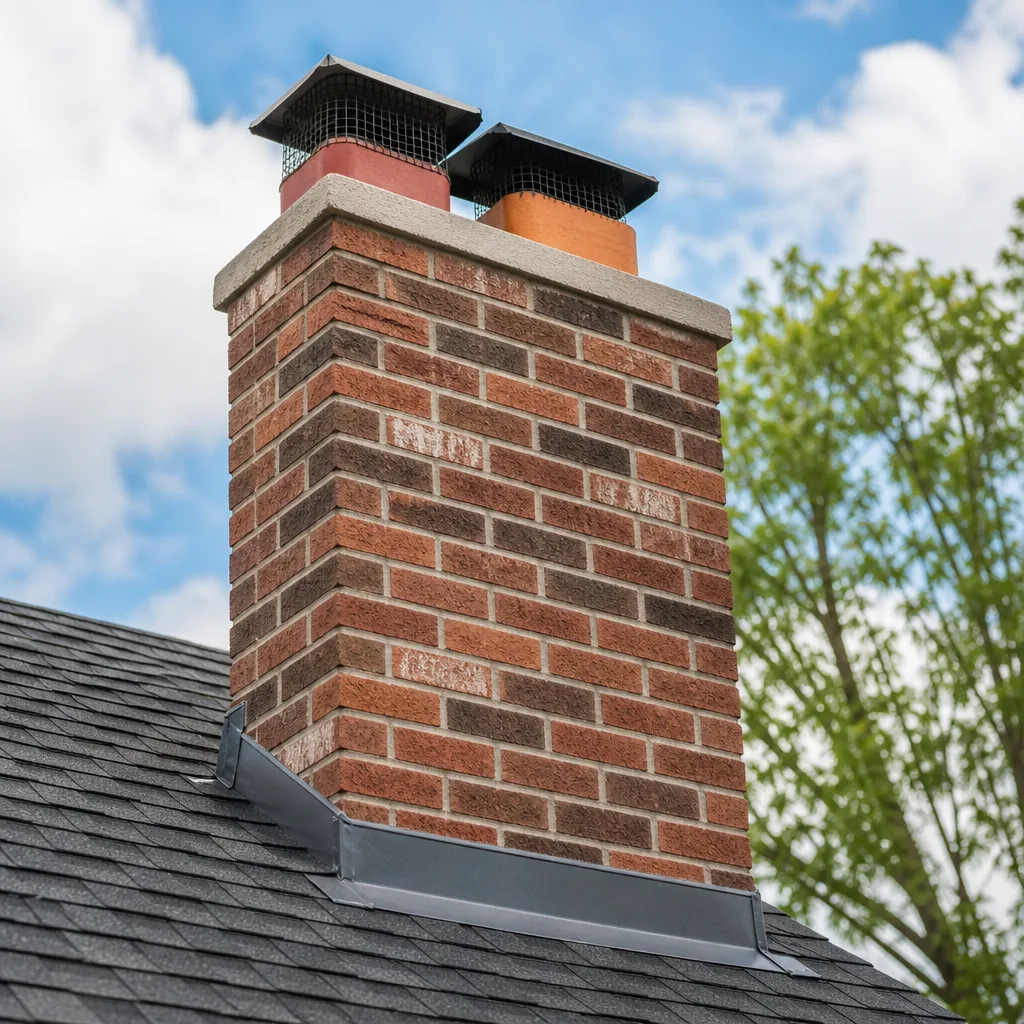 Masonry repair
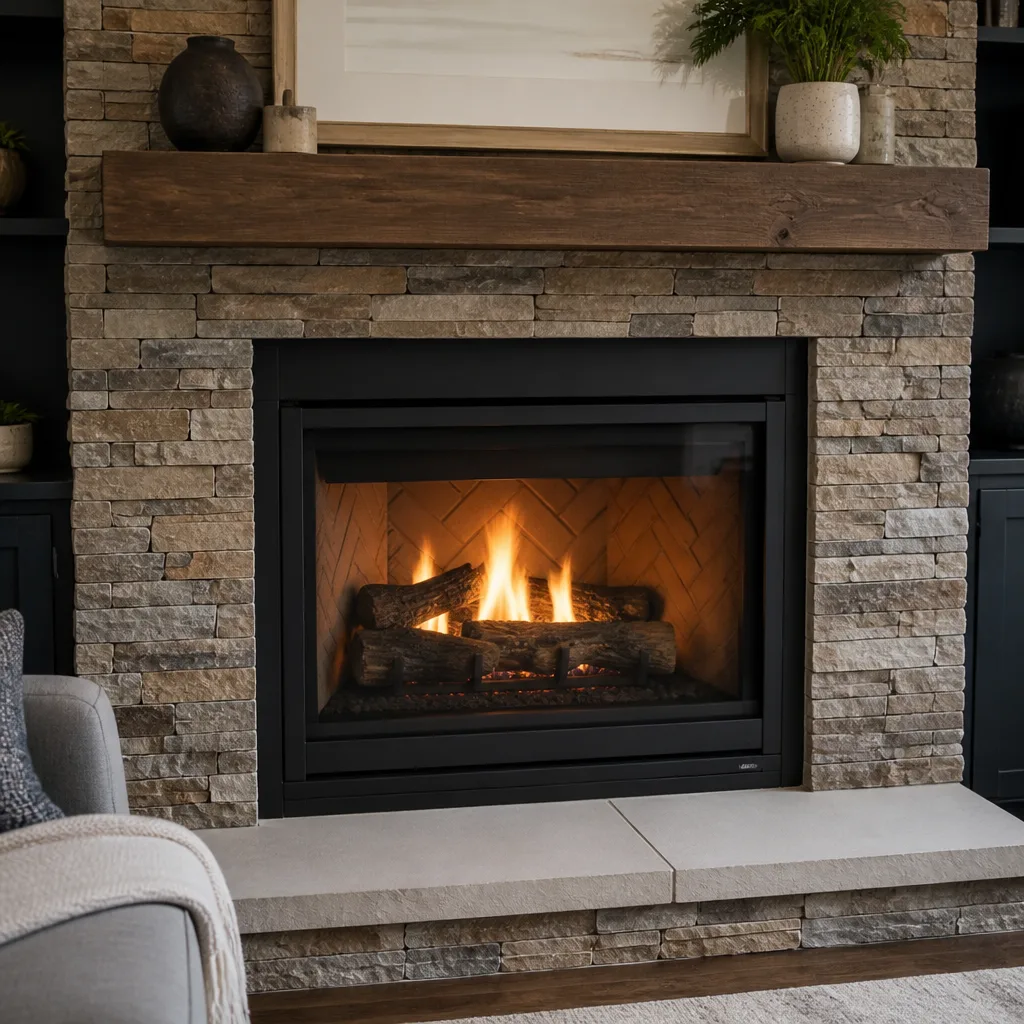 Gas fireplace service
Level 1 sweep and inspection to the NFPA 211 annual standard - flue, crown, cap, and flashing checked and photographed
Chimney sweep logs do not sweep chimneys. They loosen some creosote - which then falls where a brush and vacuum still have to collect it.
Fast, Reliable Chimney Sweep Across West Chicago
A chimney sweep in West Chicago typically costs between $189 and $349 for a standard cleaning with a Level 1 inspection, and most homes in the 60185 and 60186 zip codes are serviced within a few days of calling. If you live near the old downtown depot where 1890s Victorians still stand, or out in the Prairie Meadows and Willow Creek subdivisions where prefab fireplaces dominate, the condition of your chimney follows a different set of rules than it does one town over. We know those rules because we work them every week.
Duke Chimney Sweep serves the full venting system in West Chicago: chimney sweeping, chimney repair, and dryer vent cleaning. Rob Szymanowski leads a crew that carries clay-tile rotary gear and prefab-chase tools on the same truck for a reason. The housing stock here demands it. Call (844) 660-6510 for a sweep estimate, and tell us what you’re seeing.
Why Duke Chimney Sweep Is West Chicago’s Preferred Chimney Sweep Company
West Chicago homeowners call us after storms more than any other single trigger. That’s not marketing copy: the wind off the open prairie west of town lifts caps, yanks flashing, and drives rain into chimney tops in a way that the more sheltered burbs to the east simply do not experience. We’ve rebuilt enough crowns near the old Chicago & North Western depot to know what a West Chicago winter does to single-course clay tile and single-wythe brick. Our Chimney Sweep team quotes repair work with that reality in mind, not with a generic sweep-and-go checklist.
Customers in West Chicago routinely mention two things when they review us: we show up when we say we will, and we don’t invent problems that aren’t there. For a homeowner standing in a parlor with a fresh ceiling stain after a nor’easter, the last thing they need is a scare quote for a full reline when the real issue is a $400 crown repair. We open the conversation with camera evidence and a straight answer.
Being based nearby in Schaumburg means we can route a tech to West Chicago without burning half a day in traffic. The neighborhoods off Route 59, the streets around Reed-Keppler Park, and the older blocks near the West Branch DuPage River all fall inside our normal routing area. If a storm just ripped your cap off, we want to see it before water does more damage.
Styles & brands we work with
Chimney Cleaning in West Chicago
Chimney Cleaning in West Chicago is the single most effective thing you can do before the first fire of the season, especially if your home sits in the pre-1930 brick core where flues often run bare or cracked. A cleaning removes the creosote and soot that builds up from wood fires, opens the draft path, and lets us see what the freeze-thaw cycle has done to your clay tile since last winter. In West Chicago, a standard cleaning with a Level 1 inspection runs $189 to $289, and it typically takes 45 to 75 minutes.
What We Remove
Creosote is the primary target. In West Chicago’s older masonry chimneys, third-degree glazed creosote forms faster when draft is already strangled by spalled tile or missing mortar joints. We use rotary whip systems to break the glaze off clay tile without gouging the tile itself. That machine work matters: hand brushing alone won’t pull baked-on creosote out of a 120-year-old flue.
Soot removal handles a different problem: light carbon film that builds up in gas and oil fireplaces. It’s not the dramatic fire hazard that creosote is, but it degrades the burner’s efficiency and makes the whole firebox look neglected. Our sweep includes vacuuming the smoke chamber and firebox so nothing falls back into the house.
When West Chicago Homes Need It
Wood-burning fireplaces used regularly through a winter should be swept annually. Gas fireplaces can go longer, but not indefinitely: we recommend every 2 years for gas logs that get consistent use. Older homes west of downtown, where fireplaces were once the only heat source, often carry decades of layered creosote deposits that no single sweep can fully remove in one pass. We’ll tell you plainly if that’s the case and set a plan that doesn’t require a teardown.
Fireplace Cleaning in West Chicago
Fireplace Cleaning in West Chicago covers more than the flue: it’s the full firebox, damper, smoke shelf, and hearth, and in many of the downtown Victorians and brick two-flats, that means working around original 1880s brickwork that has already survived a century of thermal cycling. The job gets done as part of a full sweep, not as a separate upsell. A complete fireplace cleaning in West Chicago, including firebox vacuuming, damper brushing, and soot removal, runs $229 to $349 depending on condition.

Firebox and Damper Details
The firebox in an older West Chicago fireplace often has failed mortar joints: hairline gaps that look cosmetic but actually admit cool air that kills your draft. We point and repair these as part of the cleaning when they’re minor, and document anything structural that needs a repair estimate. The damper gets brushed and adjusted so it seals when closed, because a leaky damper is how prairie wind finds its way back into the house on a cold night.
Prefab Fireplaces in Newer Subdivisions
Out in Prairie Meadows and Willow Creek, the fireplace is a factory-built metal unit inside a wood-framed chase, and the cleaning protocol is different: we inspect the chase cover, the termination cap, and the flue connection for the specific failure modes those units have. These fireplaces don’t develop creosote the way open masonry chimneys do, but the chase covers fail from wind and rain exposure just as readily. A cracked chase cover on a prefab unit will leak water into the wall framing, and by the time you see the drywall stain, the repair has already gotten more expensive.
Trusted Brands We Service in West Chicago
We stock and install the same specification-grade materials that chimney engineers specify, and that changes what’s possible on a West Chicago repair call. When a reline is actually needed, DuraFlex flexible liner systems handle the irregular, offset flues common in 19th-century brick stacks, where a rigid liner won’t follow the original masonry path. HeatShield resurfacing lets us restore a cracked clay flue without demolition, which matters enormously in a downtown Victorian where the chimney is woven through original plaster and trim. We also carry Copperfield and Famco components for chase covers, caps, and dampers, so a one-visit repair doesn’t stall for a part that has to ship from a distributor. The work shows in the details.
See the difference
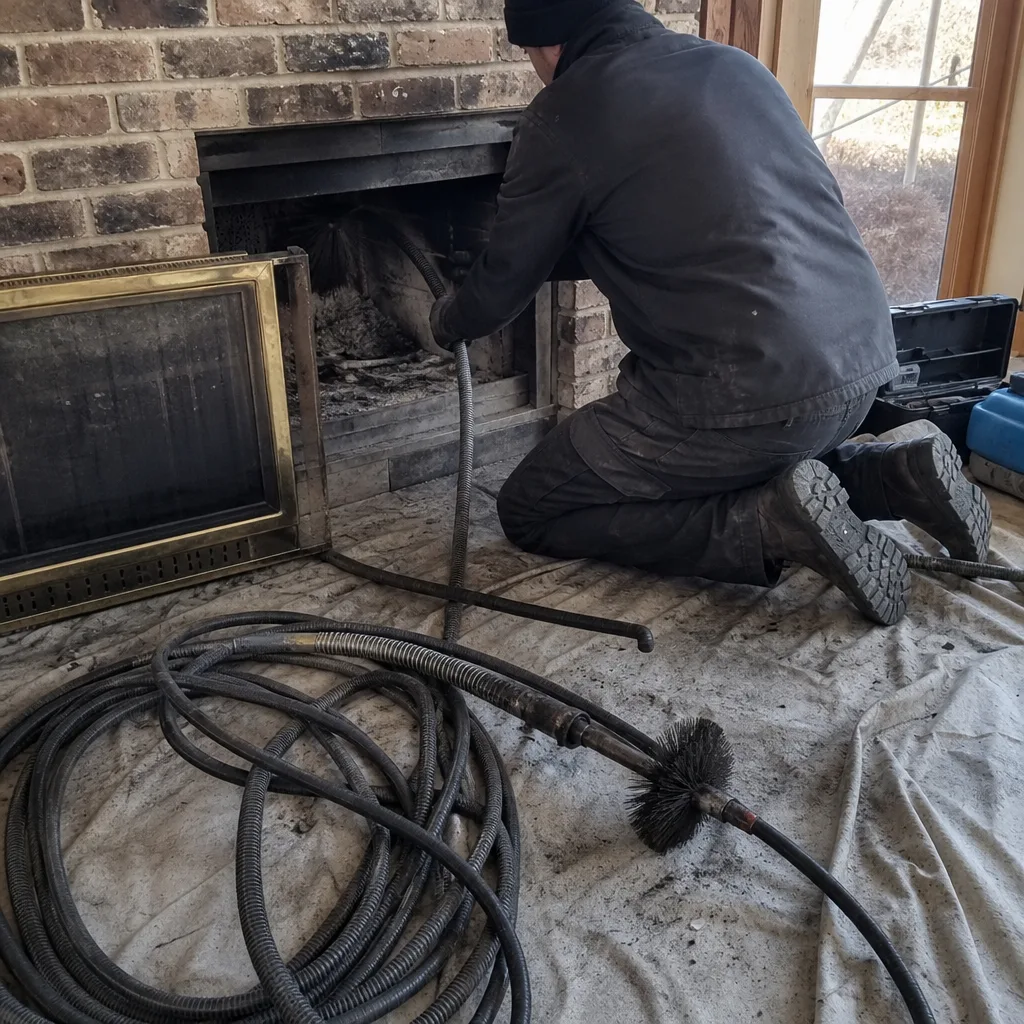 Before
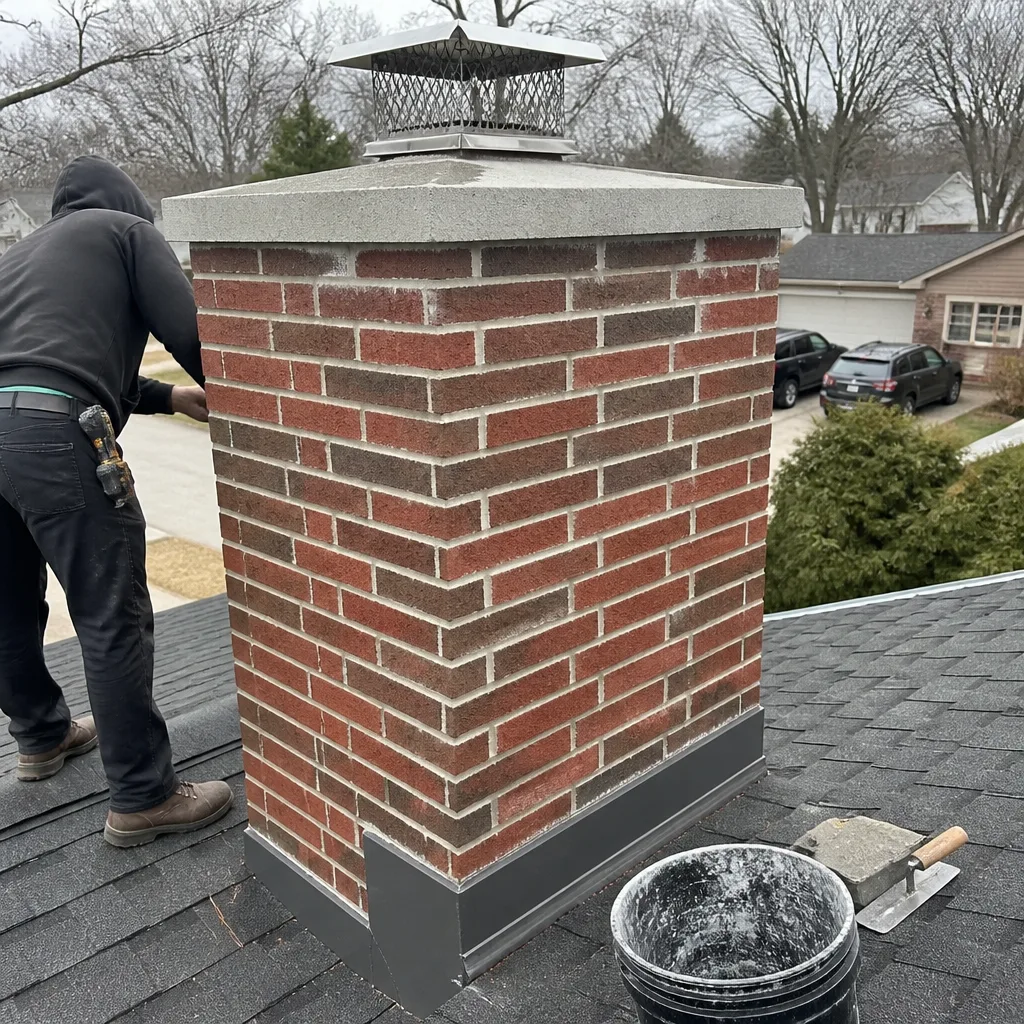 After
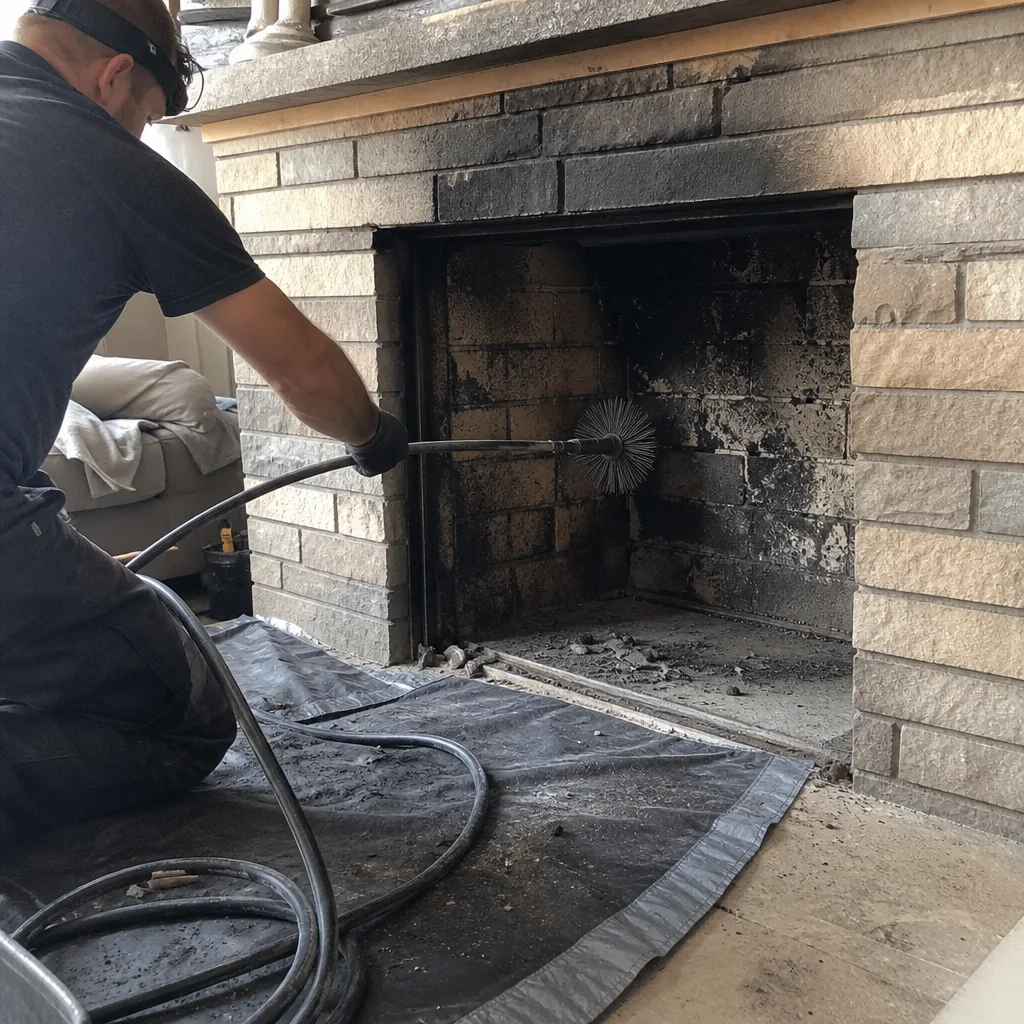 Before
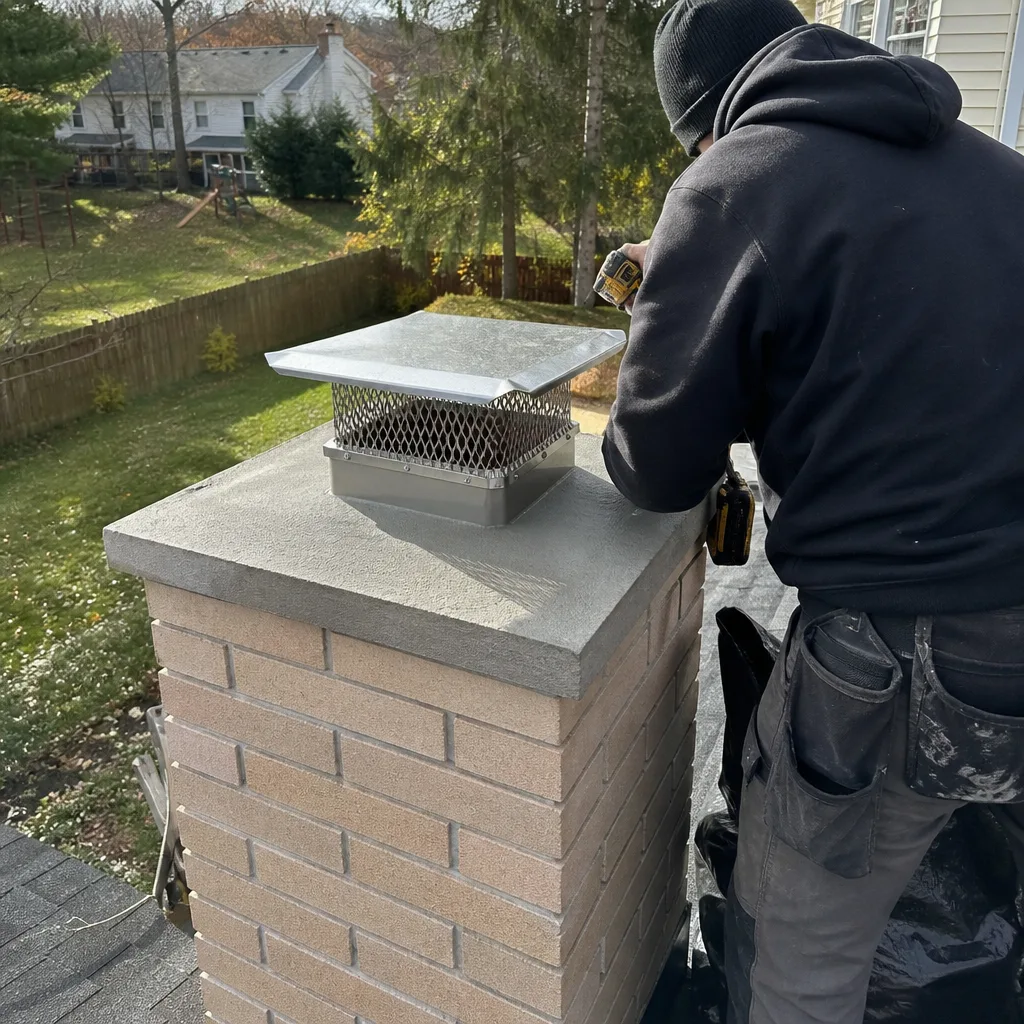 After
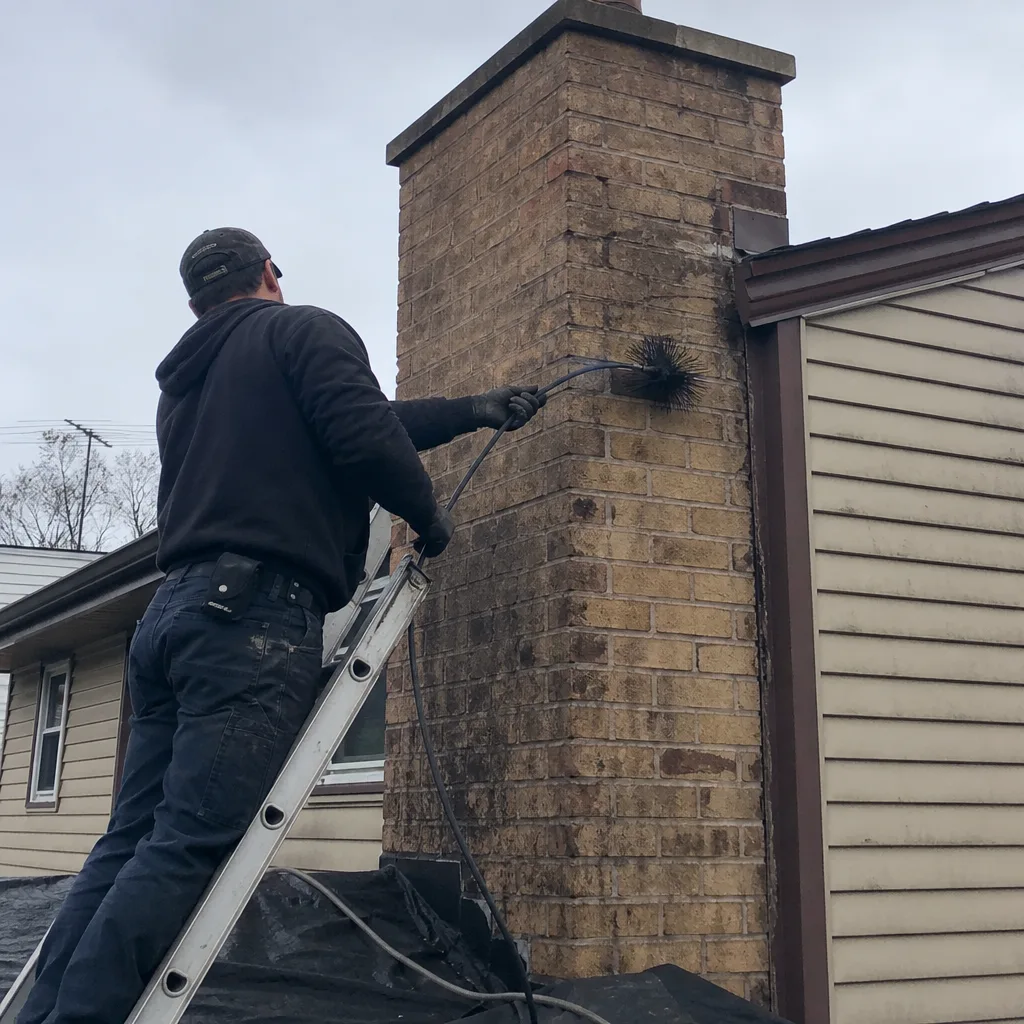 Before
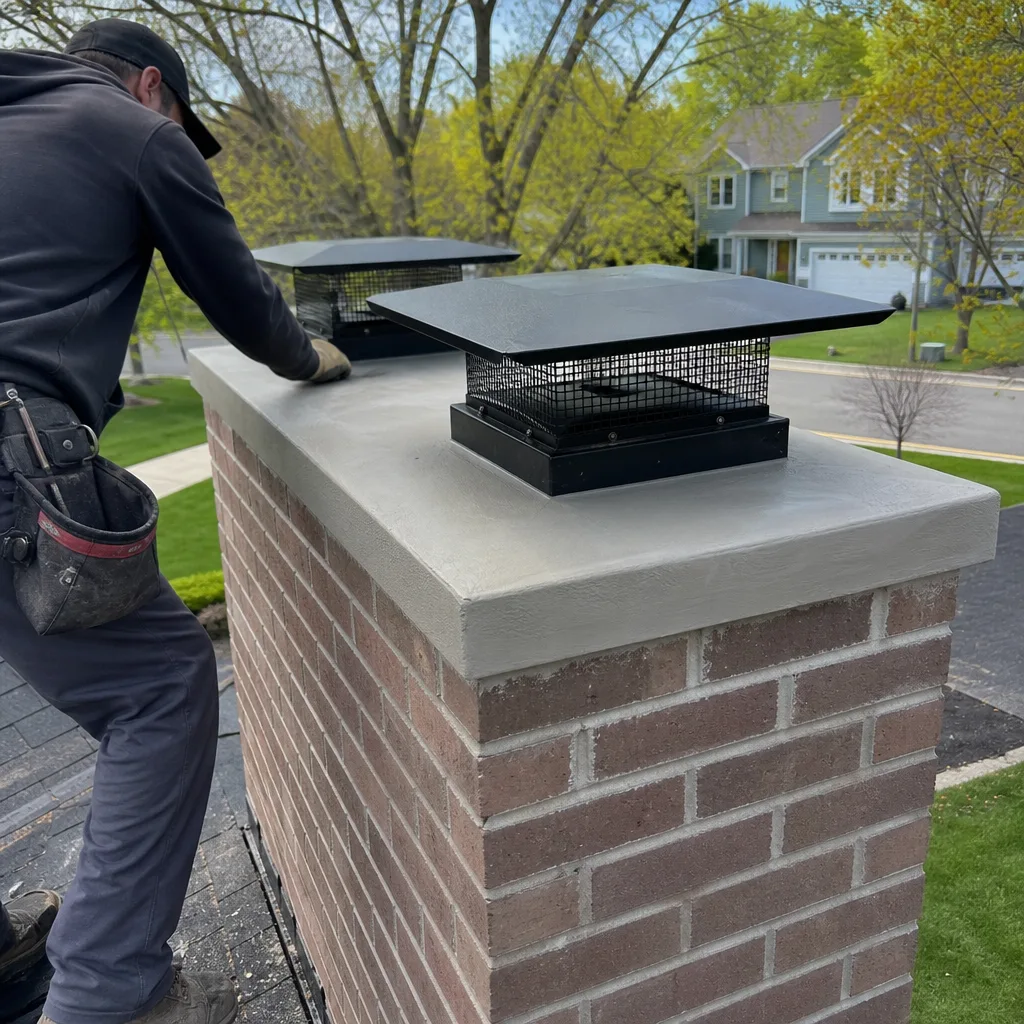 After
Common Chimney Sweep Problems We See in West Chicago Homes
- Storm-driven cap loss on unlined brick chimneys. The pre-1930 homes near the old depot frequently have bare flues or single-course clay tile set directly in the brick wythe. When prairie wind rips a cap off, rain goes straight down an unprotected flue and finds its way into the ceiling below.
- Freeze-thaw spalling of clay tile and crowns. West Chicago’s cold, wet winters and repeated melt cycles crack the crowns and tile on old masonry chimneys. Cracks that start as hairline gaps widen each season, admitting water that accelerates the damage.
- Roofline flashing failures after high-wind events. Wind off the open land west of town lifts loose flashing and works it free over time. A flashing failure often shows up as a slow ceiling stain, not a dramatic leak, so it goes unreported until the first heavy rain.
- Chase cover and cap failures on prefab fireplaces. The prefab chases in subdivisions like Prairie Meadows and Willow Creek use metal chase covers that corrode and crack under repeated rain and snow exposure. Water intrusion into the chase framing is the most common repair call we get from these neighborhoods.
Pricing for Chimney Sweep in West Chicago, IL
Expect to pay between $189 and $349 for a chimney sweep in West Chicago, with the lower end covering a straightforward cleaning on a well-maintained flue and the upper end covering a heavily creosoted older chimney that needs multiple rotary passes and a more involved inspection. The age and liner condition of the chimney drives most of the variance: the unlined 1890s stacks near the depot cost more to service than a clean prefab unit in Prairie Meadows because the older flue requires slower, more careful work. Reline and repair work is quoted separately after a camera inspection, and we don’t recommend anything you can’t see for yourself on the video. Call (844) 660-6510 for a free estimate.
We Also Serve Cities Near West Chicago
Duke Chimney Sweep also covers Carol Stream, Wheaton, Bloomingdale, and Bartlett, so if you’re just outside the West Chicago city limits, the same crew and the same truck can reach you. Our full venting system approach means we handle chimney sweeping, repair, and dryer vent cleaning across the whole western DuPage corridor. For a complete picture of what we do, see our Chimney Sweep in West Chicago service area page.
Serving West Chicago, IL — Our Local Coverage Area
We’re based in the West Chicago area and know this community well. Use the map below to see our service coverage — if you’re nearby, we can almost certainly help.
FAQs About Chimney Sweep in West Chicago
Walk outside and look for a cap that’s leaning, missing, or sitting askew on the flue, and check the roofline where the chimney meets the shingles for lifted or separated flashing. Inside, a new water stain on the ceiling near the chimney or a damp smell in the firebox after rain are both red flags. A displaced cap will let water run straight down an unlined flue, and in West Chicago’s older brick homes that water travels into the wythe and shows up as a spreading stain one or two floors down. Call (844) 660-6510 and we’ll get someone out to inspect it before the next storm.
Yes, if the original chimney has no liner or the clay tile is cracked, the flue is not safe for combustion by today’s standards. West Chicago’s pre-1930 housing stock frequently has bare brick flues or single-course clay tile set directly in the masonry, and decades of freeze-thaw have opened cracks that let heat and gases reach combustible framing. We’ll confirm the condition with a camera inspection, then give you two realistic options: HeatShield resurfacing if the structure is sound, or a DuraFlex liner if the flue is irregular or too compromised to resurface. Either path restores the chimney for use without tearing apart original plaster.
Do a visual check of the crown and cap from the ground, confirm the damper opens and closes freely, and look inside the firebox for any fallen mortar pieces or white staining on the brick, which indicates water penetration. In West Chicago specifically, check the flashing at the roofline because prairie wind loosens it more aggressively here than in more sheltered neighboring towns. When we arrive for a seasonal sweep, we include all of these checks as part of the Level 1 inspection, and we’ll show you video of anything that needs follow-up.
West Chicago’s original chimneys were built with single-course clay tile set directly into the brick wythe, with no air gap or proper expansion joint, and that construction combined with the town’s exposure to open wind and hard freeze-thaw cycles spalls tile more aggressively than the newer, lined chimneys common in Wheaton. Your neighbor in Wheaton likely has a 20th-century chimney with a proper liner system, while your downtown West Chicago stack is fighting a structural reality it was never designed to endure. The good news is that this condition is repairable without a full rebuild in most cases.
Every single year if you burn wood, no exceptions for pre-1930 masonry chimneys in West Chicago. The combination of restricted draft from spalled tile and glazed creosote accumulation means these older flues hit a hazardous condition faster than modern lined chimneys. Gas fireplaces can typically go 2 years between cleanings, but we still recommend an annual visual inspection on gas flues in older homes because mortar deterioration doesn’t pause just because you’re not burning wood. Call (844) 660-6510 and we’ll get you on the schedule before the burning season backs up.
Written by Rob Szymanowski, Owner at Duke Chimney Sweep, serving West Chicago and the surrounding western suburbs.